Why is my AC not cooling? A dirty filter, incorrect thermostat setting, frozen coil, refrigerant problem, or outdoor-unit fault can leave an air conditioner running without cooling. Start with the thermostat and filter; switch cooling off if you see ice, smell burning, or the breaker trips repeatedly, and contact an HVAC professional if basic checks do not help.
Why is my AC running but not cooling?
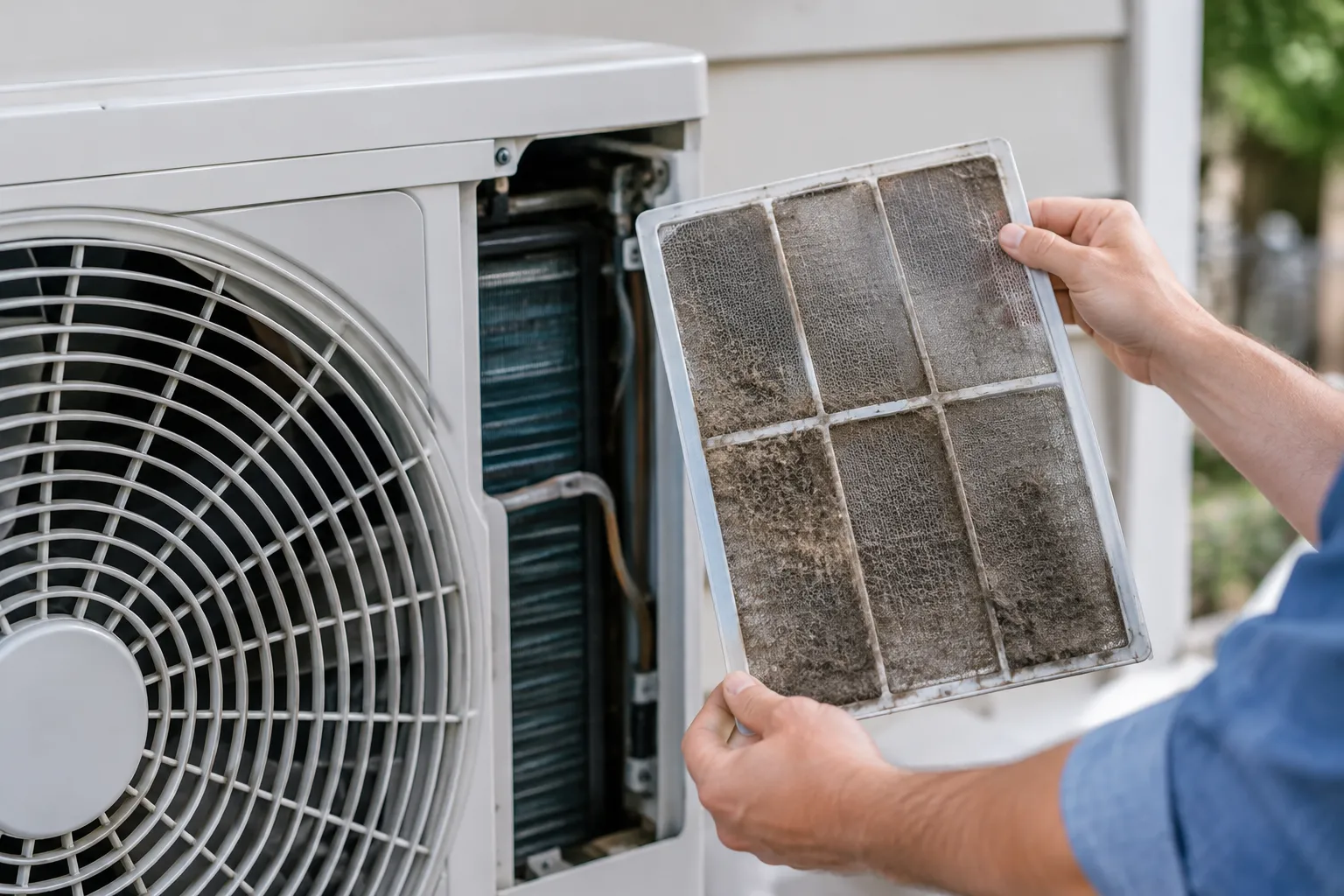
An AC that runs without cooling may have restricted airflow, incorrect settings, ice on a coil, a refrigerant issue, or trouble with the outdoor unit. Check only accessible settings and filters; stop using the system if warning signs point to a safety or equipment fault.
A dirty air filter can restrict airflow, while a thermostat set to the wrong mode or temperature may keep the system from cooling as expected. Ice buildup can also obstruct airflow. Problems involving refrigerant, a compressor, or internal electrical components need professional diagnosis, not a homeowner repair.
First, note what the system is doing: Is air coming from the vents? Does it feel warm or simply less cool than expected? Is the outdoor unit running? Are there unusual sounds, odors, or visible ice? These observations can help you describe the problem when seeking HVAC AC repair.
If the system is blowing warm air but there is no ice, burning odor, or repeated breaker trip, check the thermostat and filter before deciding what to do next. If you find ice, a burning smell, or recurring electrical problems, turn cooling off and arrange professional help rather than continuing to run the AC.

Check the thermostat and air filter first
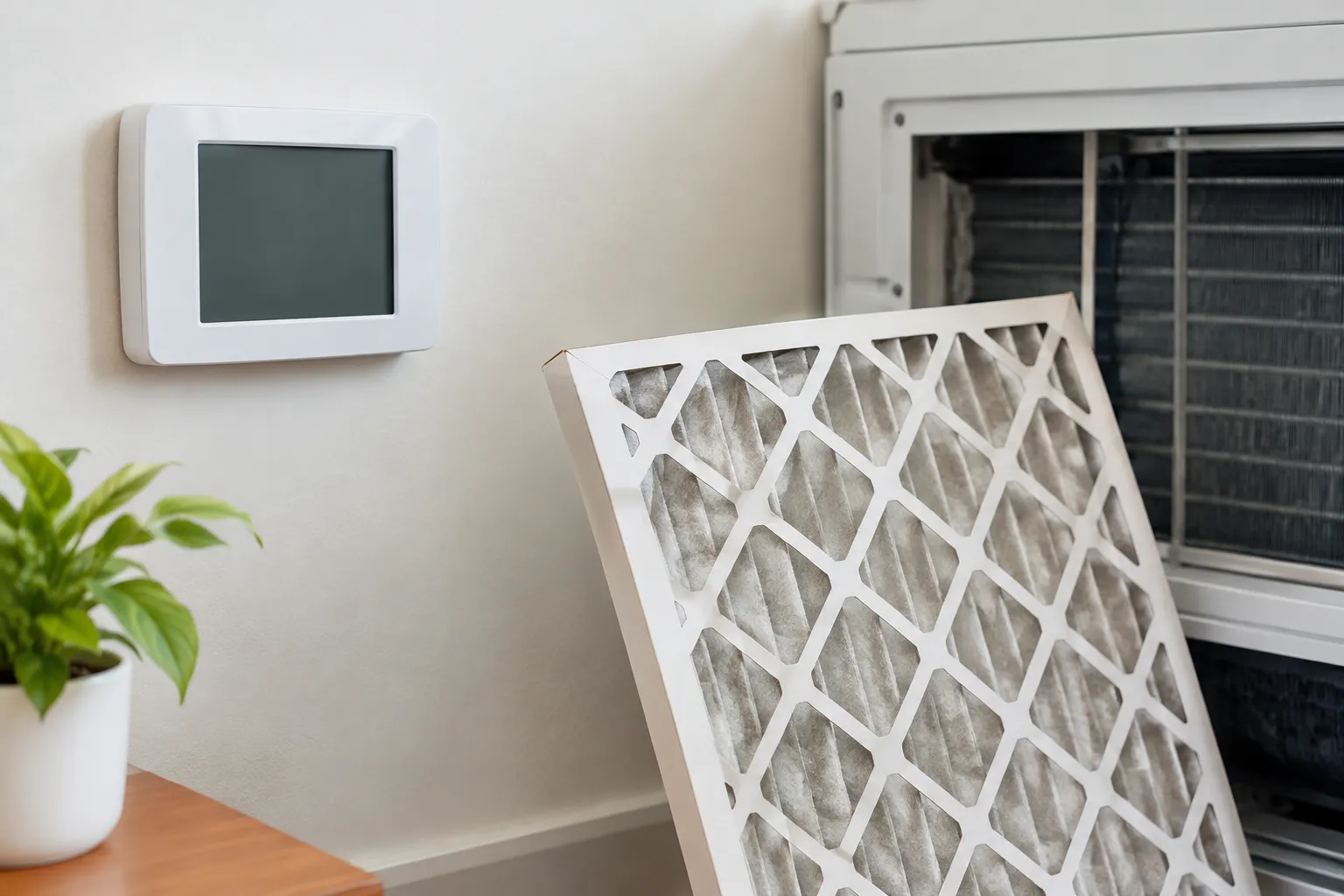
Confirm that the thermostat is set to Cool and that its temperature setting calls for cooling; then inspect the air filter and replace it if dirty, following the equipment manufacturer’s directions.
Make sure the thermostat is not set to Fan only, which can circulate air without calling for cooling. Check that its set temperature is lower than the current room temperature. If the settings look right, wait briefly to see whether the system responds. Avoid repeatedly changing settings or cycling the system on and off.
Next, locate the air filter using the equipment instructions or the filter’s existing position. If it is visibly dirty, replace it with the type and size specified for the system, and follow the airflow-direction marking on the filter. Do not run the equipment without a filter unless the manufacturer specifically directs it.
ENERGY STAR recommends checking HVAC filters monthly and includes air-conditioner and heat-pump maintenance in its maintenance checklist. A filter check is a straightforward first step, but it will not fix a refrigerant leak, compressor fault, or electrical problem.
If the thermostat and filter seem fine but cooling remains weak, write down what you checked and what changed. That record can help narrow the issue when you speak with a professional. For other practical home upkeep, browse our home repair and maintenance guides.
Look for signs of a frozen coil or outdoor-unit problem
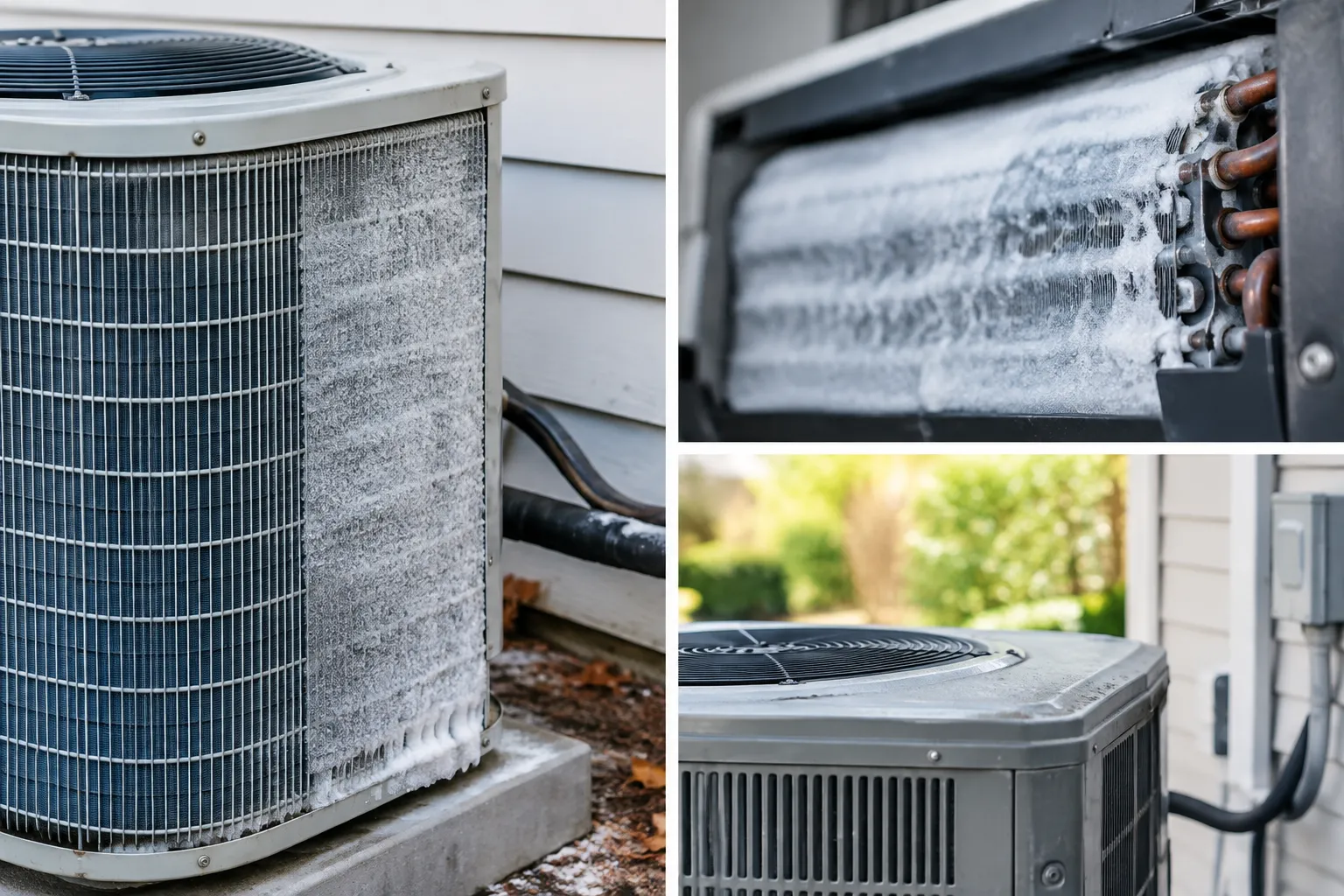
Ice, poor airflow, unusual odors, or an outdoor unit that is not operating normally can point to problems beyond a thermostat or filter check. Observe from a safe distance, and do not open equipment or attempt internal repairs.
Ice on the indoor unit or refrigerant lines
Ice on the indoor equipment or refrigerant lines can signal restricted airflow or a refrigerant problem; turn off cooling and contact an HVAC professional rather than scraping ice or handling the lines.
You may see frost or ice on accessible refrigerant lines near the outdoor unit, or notice weak airflow at the vents. Do not chip or scrape ice, remove equipment panels, or use tools to reach internal parts. If you can do so safely, switch the system from cooling to off and arrange service. Running a system with visible ice may leave the underlying problem unresolved.
Low refrigerant can be associated with a leak, but visible ice alone does not establish the cause. Refrigerant work is not a DIY task. The EPA explains that technicians handling refrigerant in covered HVAC service must meet applicable Section 608 certification requirements; its homeowner refrigerant guidance also addresses residential AC service.
Problems around the outdoor condenser
Look for obvious debris or blockage around the outdoor unit from a safe position, but do not open it, reach inside, or touch wiring; persistent cooling loss or unusual noises call for professional diagnosis.
Leaves or other visible material around the unit may be worth noting, but avoid dismantling equipment or trying to straighten components. Keep clear of moving parts and electrical connections. If the unit is not running, makes an unusual sound, or cooling remains poor after basic checks, report those details to an HVAC professional. A condenser, compressor, or electrical fault cannot be confirmed through a visual check alone.
Do not assume that clearing visible debris will fix warm air. If the system continues to struggle, stop troubleshooting beyond accessible observations and ask for an assessment. Our practical home improvement advice can help with general maintenance questions, but internal AC faults require the appropriate HVAC expertise.
Repeated breaker trips or unusual odors
If the AC trips a breaker repeatedly or produces a burning or otherwise concerning odor, stop using it and seek professional help instead of resetting the breaker again.
Repeated trips or burning smells can indicate an electrical or equipment problem. Do not open the electrical panel to investigate the AC circuit, remove equipment covers, or keep restarting the system to see whether the warning returns. If there is a burning odor, switch the system off if you can do so without approaching a hazard, and contact a qualified professional.
Mention the odor, breaker behavior, sounds, and any loss of cooling when requesting service. If smoke or an immediate hazard is present, move away and contact emergency services as appropriate. A routine filter change is not a substitute for addressing an electrical warning.
If basic checks do not restore cooling, call an HVAC professional
If the thermostat and filter checks do not restore cooling, or you suspect a refrigerant, compressor, or internal electrical issue, arrange professional diagnosis rather than attempting a repair.
Refrigerant circuits and internal electrical components are not homeowner repair tasks. A technician can determine whether the cause involves airflow, refrigerant, the compressor, or another system fault. When contacting a provider, share the AC’s symptoms, when they began, what you checked, whether ice appeared, and whether the breaker tripped or an odor occurred. That gives the professional useful context without requiring you to open the equipment.
If you switch the AC off, wait at least three minutes before restarting it. Then make one restart attempt only if there are no warning signs such as ice, repeated breaker trips, or a burning odor. Follow the equipment manufacturer’s instructions if they call for a longer wait. If cooling still does not return, leave the system off and arrange service.
Before choosing a provider, describe the symptoms and ask what the proposed diagnostic visit or repair covers. If you receive an estimate, ask which issue it addresses and whether additional work would require approval. A clear explanation helps you compare options without attempting a hazardous repair yourself.
AC Cooling FAQs
Why isn’t my air conditioner working in my apartment?
A dirty filter, incorrect thermostat setting, frozen coil, or equipment fault can stop an apartment AC from cooling. Check accessible settings and the filter, then contact your landlord or property manager about service.
Why is my AC blowing warm air only?
Warm air can result from incorrect thermostat settings, restricted airflow, or a system fault involving refrigerant or equipment. Check the thermostat and filter; switch cooling off if you see ice or notice an electrical warning.
Why is my AC running but not cooling?
An AC may run without cooling because of a dirty filter, thermostat setting, frozen coil, refrigerant problem, or outdoor-unit fault. Check the thermostat and filter first, then seek professional help if cooling does not return.
Recommended next steps
Start with checks you can make without opening the equipment, then stop and arrange service if warning signs appear or cooling remains off; refrigerant and internal electrical repairs belong to qualified professionals.
- Confirm that the thermostat is set to Cool and calls for cooling.
- Inspect the air filter and replace it according to the manufacturer’s directions if it is dirty.
- Look for visible ice, unusual odors, repeated breaker trips, or unusual outdoor-unit behavior without opening equipment.
- Turn cooling off and contact an HVAC professional if you find ice, smell burning, or experience repeated breaker trips.
- Describe the symptoms and checks you completed when arranging service, and wait at least three minutes before any restart if no warning signs are present.