
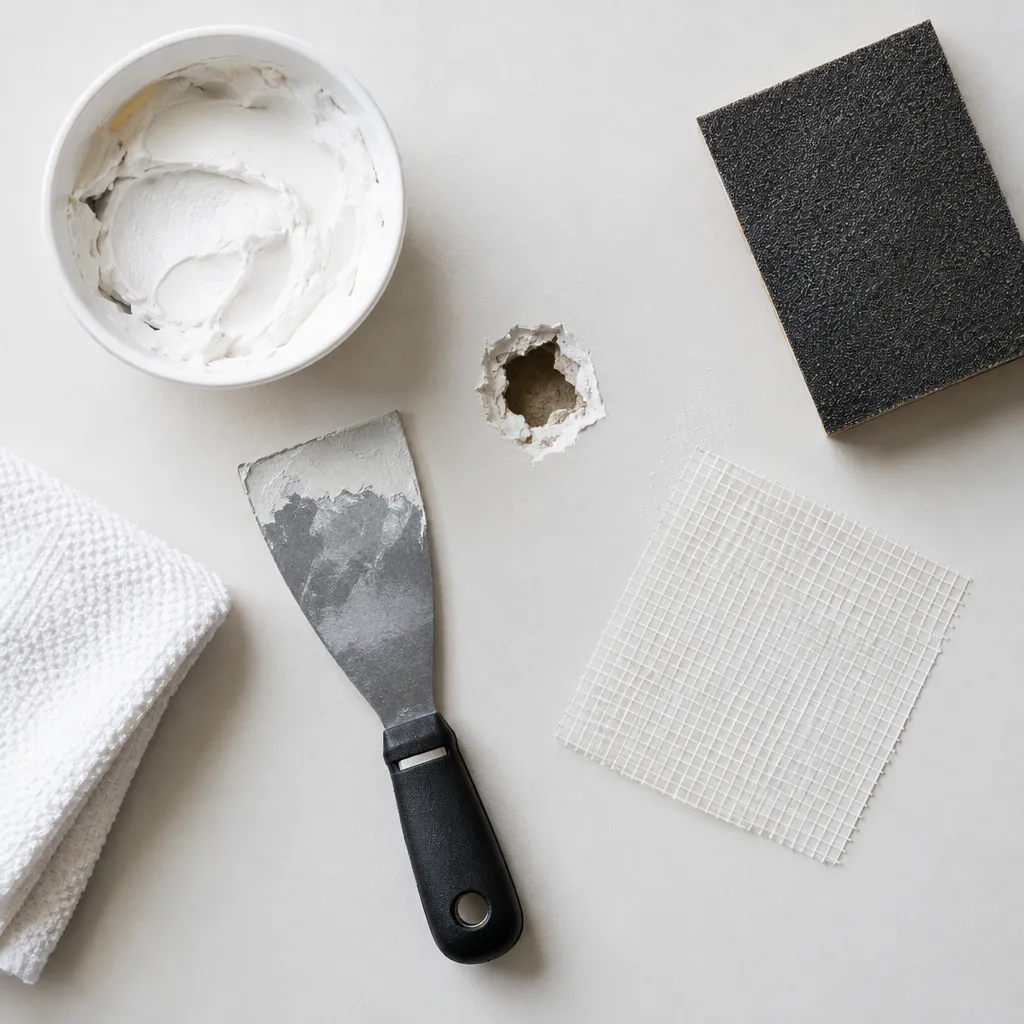
1. Patch a small hole in drywall
A small hole limited to the drywall can often be patched with a patch kit, putty knife, and sanding block. Check first for moisture or damage behind the surface; a damp, moldy, or spreading area needs assessment before you cover it.
Apply the patch and joint compound according to the kit directions, let the compound dry, then sand it smooth. Keep dust contained and follow the product label. Once the surface is ready, prime and paint it. For more DIY project guidance, choose a task that matches the damage you can see.

2. Recaulk a bathtub or shower seam
Recaulking can help renew a failing seam when the surrounding surfaces are firm and dry. You’ll need a caulk-removal tool, a cleaning cloth, and bathroom-grade caulk; check the product label for application and curing instructions.
Remove the old caulk, clean the joint, and let it dry completely before applying a steady bead. Smooth it using the method recommended on the label, then keep the area dry for the stated cure time. Stop if the surface feels soft or you see water damage: caulk won’t repair what’s underneath.
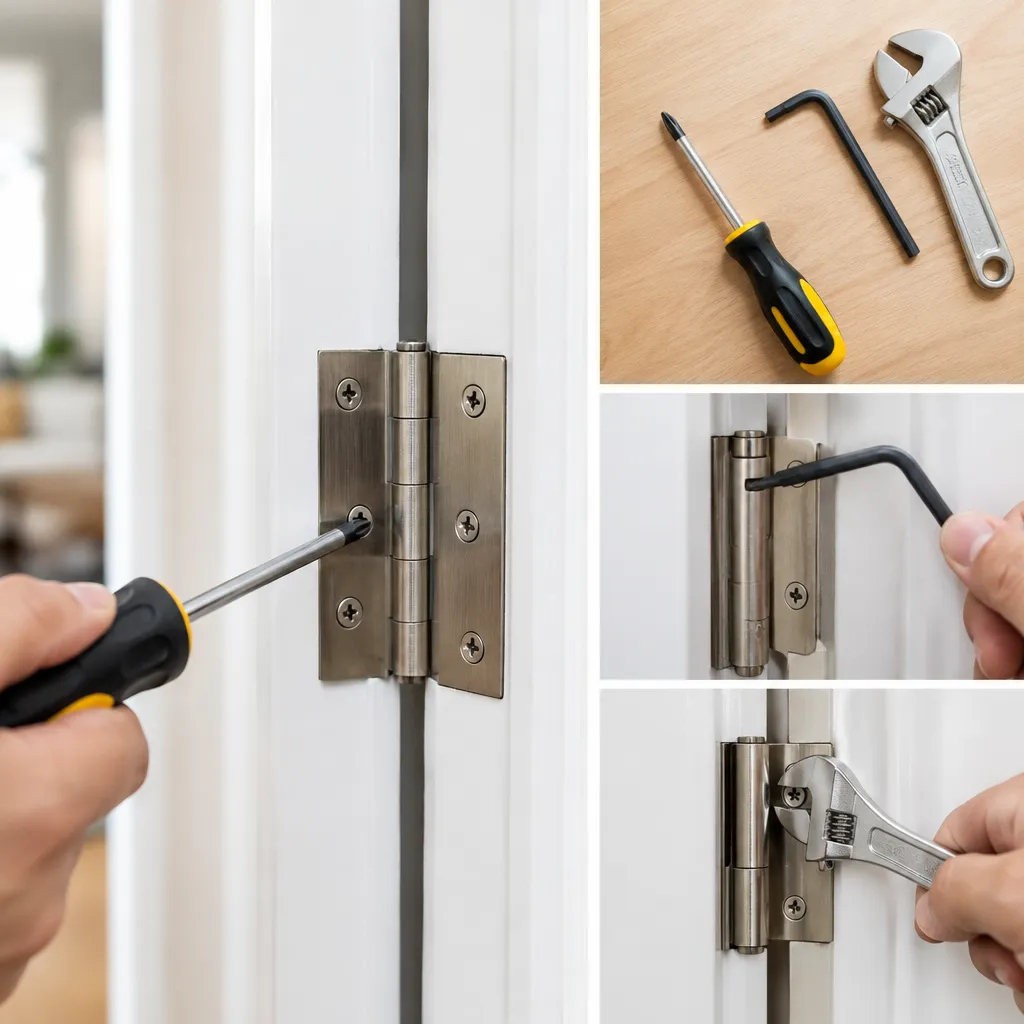
3. Tighten a loose door hinge
A loose hinge with intact screws and a sound frame is a reasonable repair to try with a screwdriver. Open the door enough to reach the hinge, then check whether the screws are loose or the hinge itself is bent.
Tighten loose screws without forcing them. Longer screws may help when a screw no longer grips, but use a length suited to the hinge and door frame. If the door sags or the frame is cracked or damaged, pause and get the underlying problem assessed rather than tightening harder.
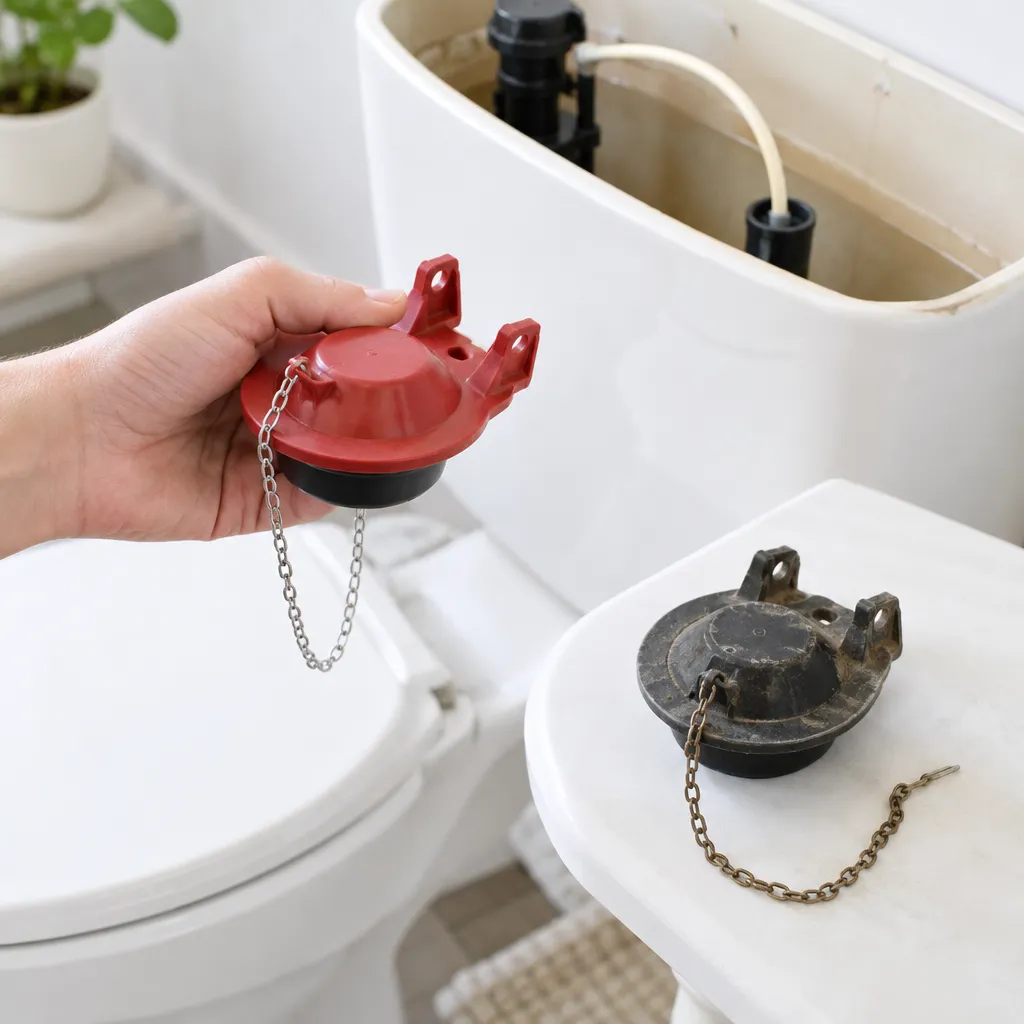
4. Replace a worn toilet flapper
A worn flapper can usually be replaced with a compatible part and basic hand tools. Shut off the toilet’s supply, flush to drain the tank, and check that the shutoff valve turns without sticking before removing the old flapper.
Fit the replacement according to its instructions and reconnect the chain so it moves freely. Turn the supply back on and flush to check the seal and connections. Stop if the shutoff valve sticks or any connection leaks; forcing a valve or continuing around a leak can make the problem worse.
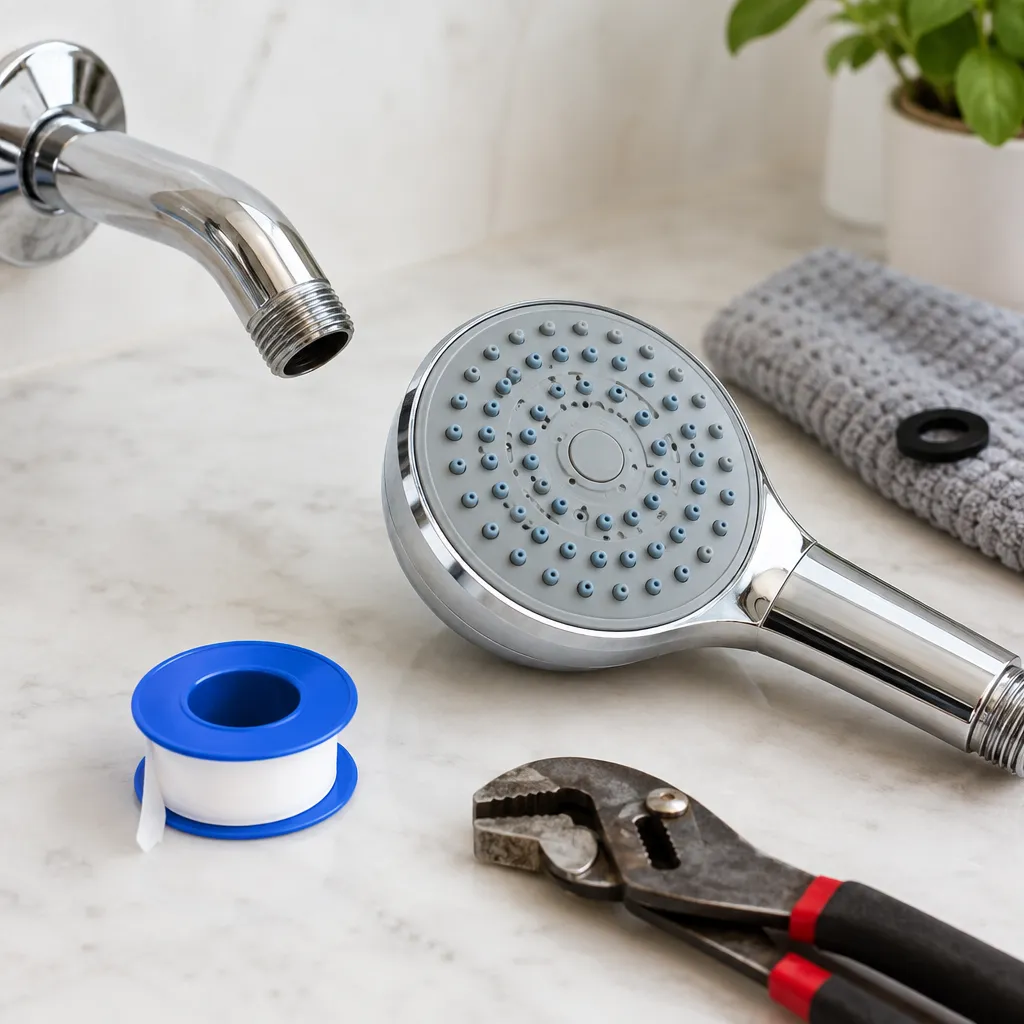
5. Replace a showerhead without damaging the pipe
A showerhead can be changed with a wrench and suitable thread tape if the pipe fitting is stable and not badly corroded. Protect the fitting with a cloth, then carefully loosen the old showerhead without twisting the pipe inside the wall.
Clean the exposed threads, apply thread tape as directed, and hand-tighten the replacement before checking for leaks. Use a wrench only as needed and avoid overtightening. If the pipe moves, feels unstable, or shows significant corrosion, stop and call a plumber.
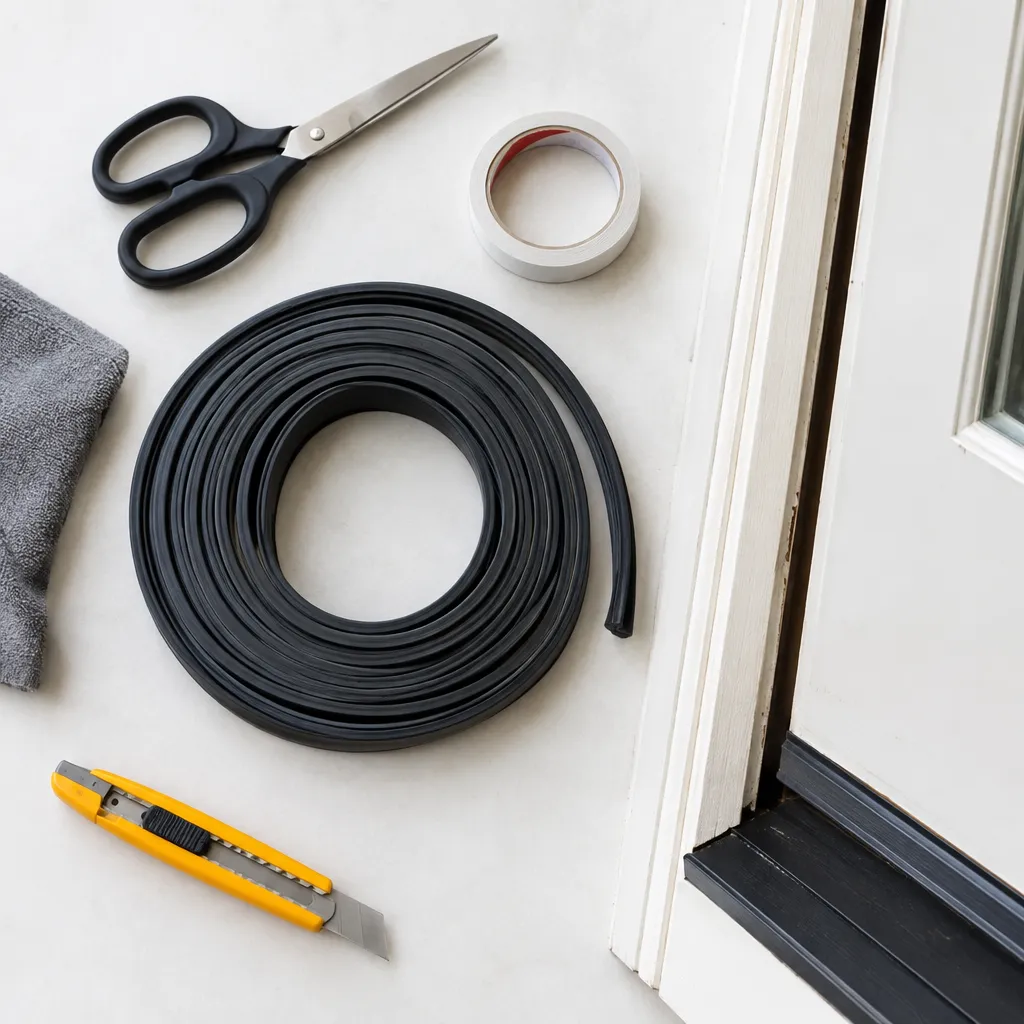
6. Install new weatherstripping around an exterior door
New weatherstripping can reduce a noticeable door-edge draft when the frame is sound and the gap is consistent. Check where air enters, measure the opening, and choose a seal that suits the door and its closing clearance.
Remove the old material, clean the surface, and install the replacement according to its directions. Close the door to confirm the seal makes contact without preventing the latch from working. A warped frame or uneven gap may point to a larger issue; have it assessed before trying to cover it with thicker weatherstripping. For other home repair and maintenance ideas, start with a visible symptom you can inspect safely.
DIY Home Repair Project FAQs
These answers help you choose a manageable repair, set a sensible scope, and recognize when a project needs more planning.
What are some easy home repairs I can do myself?
Tightening a loose hinge, patching a small drywall hole, or replacing a compatible toilet flapper can be approachable when the surrounding materials are sound. Stop if you find leaks, concealed damage, or a stuck shutoff valve.
What home renovation projects can I do for under $10,000?
The budget depends on the project’s scope, materials, local labor, and any hidden damage. To compare options, price the materials and permits you need, then leave room for problems uncovered after work begins.
What are some good DIY projects I can do at home?
Choose a project with a visible, limited problem, such as recaulking a sound tub seam or replacing door weatherstripping. Check the required tools and product directions before buying materials or starting.
What are the easiest DIY home improvements?
Small cosmetic repairs and simple maintenance tasks are often more manageable than work involving wiring, plumbing changes, structural framing, or hidden damage. Pick a task you can stop and inspect at each step.
Recommended next steps
Choose one contained repair, inspect the surrounding area, and gather the right materials before starting.
- List the repairs you’ve noticed and put active water problems or visible damage first.
- Inspect your chosen repair for moisture, corrosion, cracks, or signs the damage extends beyond the surface.
- Check the replacement part or material label for compatibility, tools, and application instructions.
- Set out the tools you need and protect nearby surfaces before beginning.
- Stop if the repair reveals concealed damage, a leak, or a problem with wiring or structural parts, and arrange a qualified professional’s assessment.
- Test the repair after completion and monitor the area for signs the problem returns; use the House Project Lab home improvement guides to choose a suitable next project.