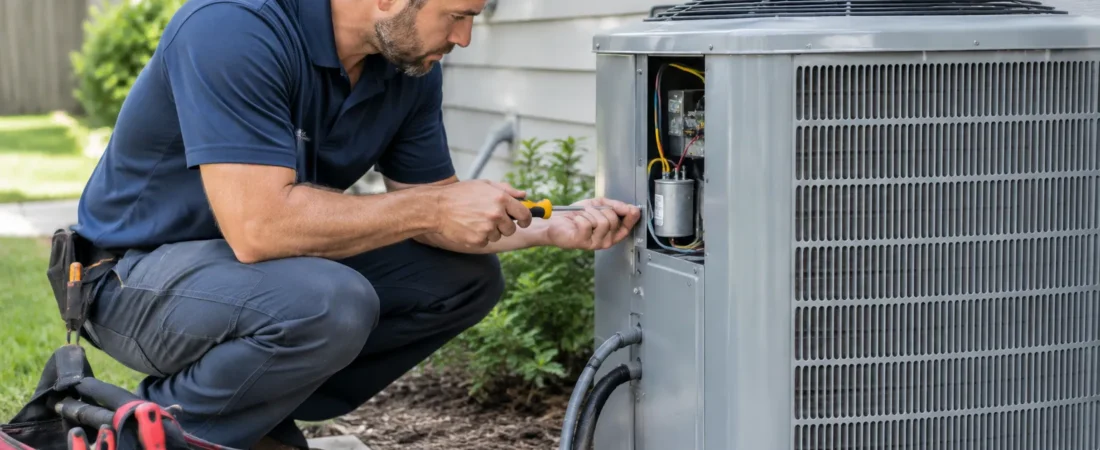
When your air conditioner stops cooling, makes an unusual noise, or leaks, the first decision is whether to try a basic check or arrange professional service. This guide to HVAC air conditioner repair explains what to report, what is safe to inspect, and how to compare a technician’s diagnosis and repair proposal.
Describe the AC problem before you book
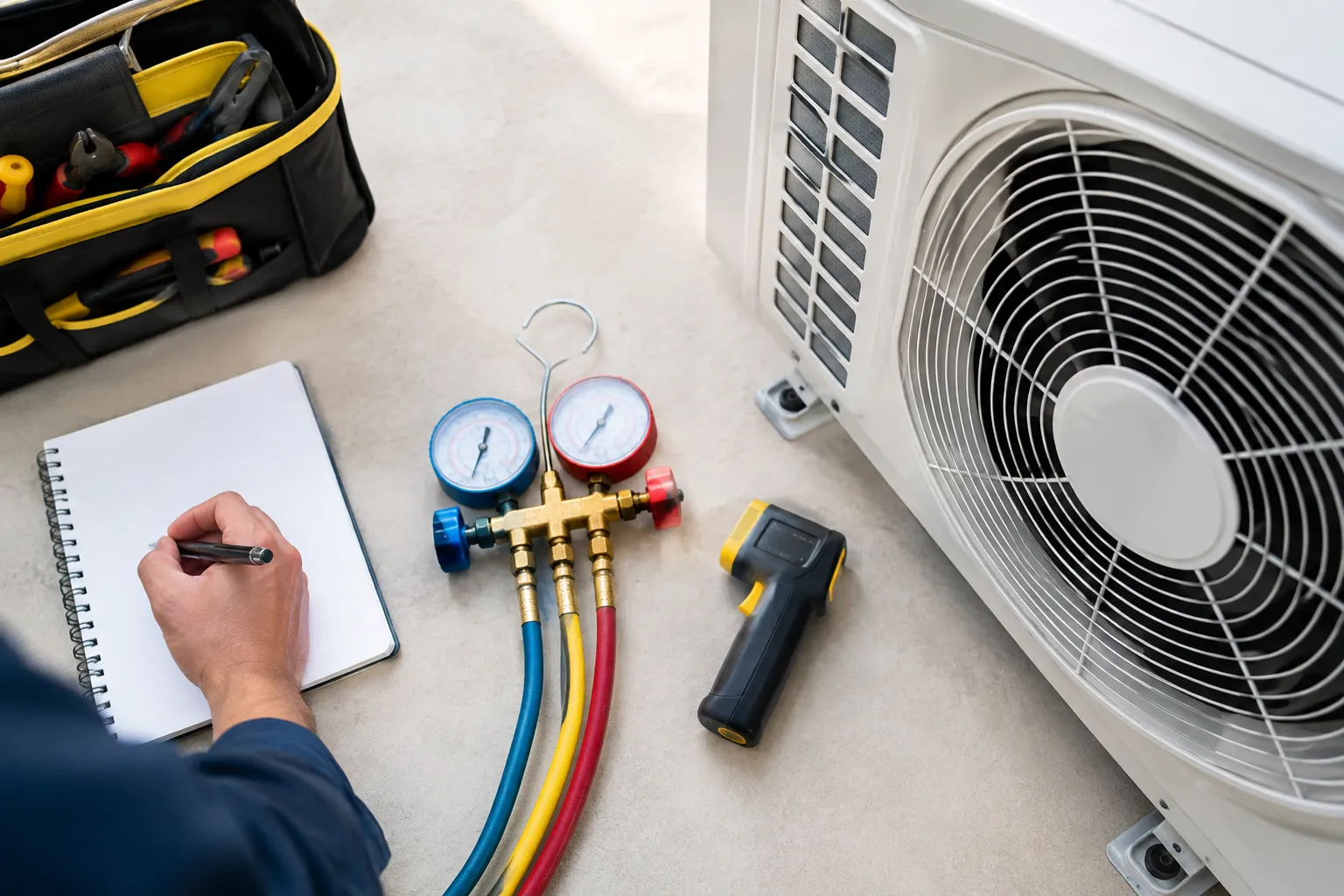
Clear observations help a technician narrow down the problem and decide what to bring or inspect. Before calling about air conditioner unit repair, note:
- When the issue started and whether it is constant or intermittent.
- Which rooms are affected and whether the system cools any part of the home normally.
- Whether air is coming from the vents and, if so, whether it feels weaker or warmer than usual.
- Any new noises, unusual odors, water around the indoor unit, or ice on accessible components.
- Whether the thermostat display or system behavior has changed.
- Any recent power interruption, filter change, maintenance, or work near the equipment.
You do not need to diagnose the cause. For example, “the upstairs vents have weak airflow, and the indoor unit has been dripping since yesterday” is more useful than guessing that a particular part has failed.
If water is actively damaging flooring or a ceiling, prioritize limiting the damage safely and tell the service provider. For help deciding which home repair to tackle first, explore our home repair guidance.
Try safe checks before requesting air conditioner unit repair
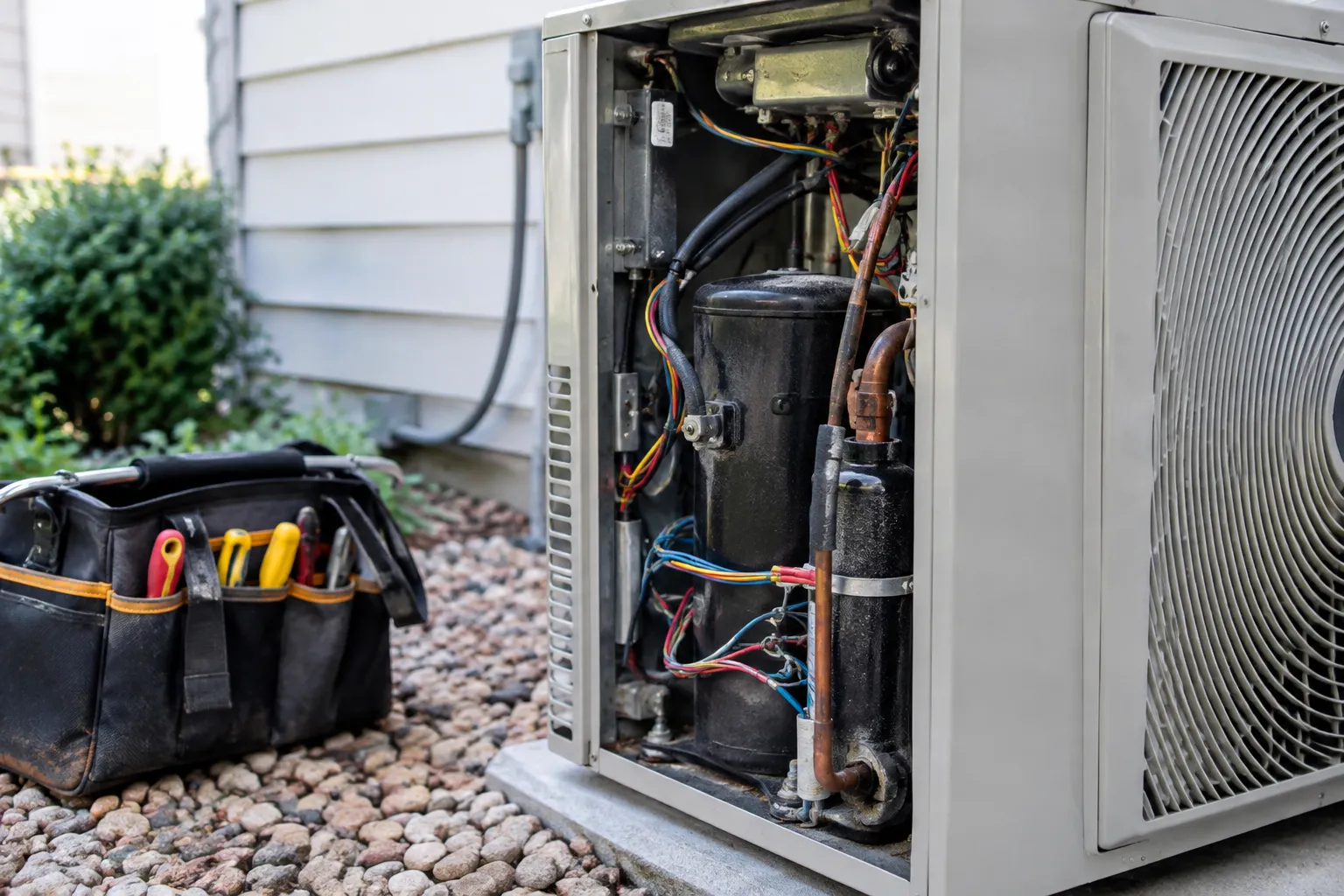
A few low-risk checks can rule out simple issues. They are not a substitute for diagnosis, and you should stop if a check would require opening equipment or handling wiring, refrigerant, or moving parts.
- Confirm the thermostat is set to cooling and that the set temperature is below the current room temperature. Check that the display is on and the system is not set to a schedule or mode you did not intend.
- Look at the air filter. If it is visibly dirty, replace it with the correct type and size specified for your system. A clogged filter can restrict airflow, but changing it may not resolve other faults.
- Make sure supply vents and return grilles are not blocked by furniture, rugs, or curtains. Do not remove covers or reach inside.
- From a safe distance, look for visible water, ice, or damage around the equipment. Do not chip away ice or touch wet electrical components.
- If the system is making a burning smell, repeatedly tripping a breaker, leaking heavily, or producing loud or unusual mechanical noises, turn it off if you can do so safely and contact a qualified professional. Do not keep resetting a tripping breaker.
Avoid opening electrical panels or the air conditioner cabinet, testing live components, or attempting refrigerant work. For more on deciding what a repair service may involve, see our air conditioner repair guidance.
What an HVAC air conditioner repair diagnosis should include
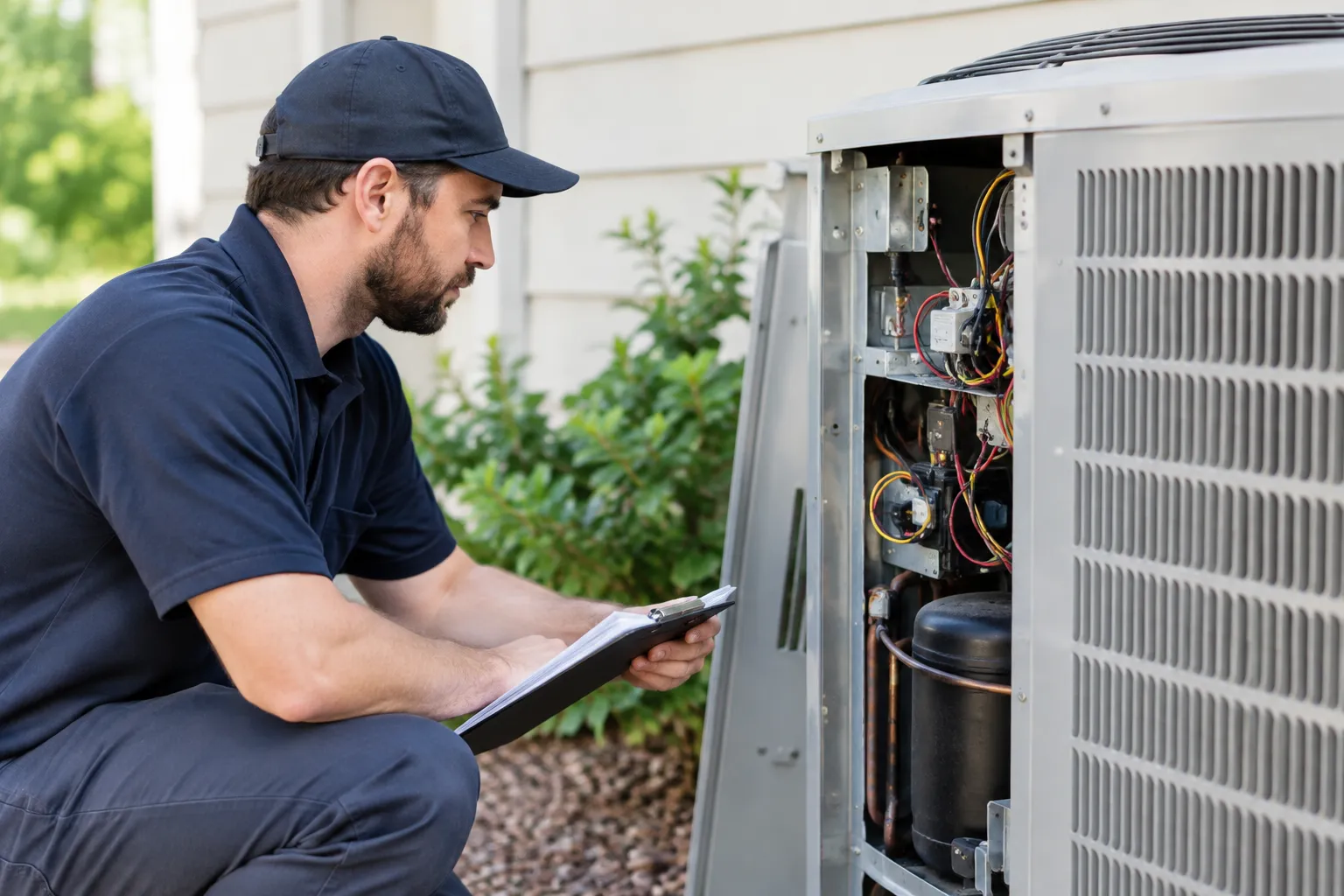
A useful diagnosis connects your reported symptoms to observations and tests, rather than jumping straight to a part replacement. The technician should inspect the relevant equipment, explain what they found in plain language, and distinguish confirmed findings from possible causes that need further testing.
The assessment may involve checking the thermostat, airflow, filters, accessible indoor and outdoor equipment, and system operation. The appropriate checks depend on the symptom and system. Ask what was inspected, what evidence supports the proposed repair, and whether there are other plausible causes.
A diagnosis should also clarify whether the system can be operated safely while you decide. If the technician identifies a safety concern or risk of further damage, ask what should remain off and why. Routine air conditioner maintenance can help keep a system in view between repairs, but maintenance does not replace troubleshooting when a fault appears.
Compare repair options by scope, safeguards, and follow-up
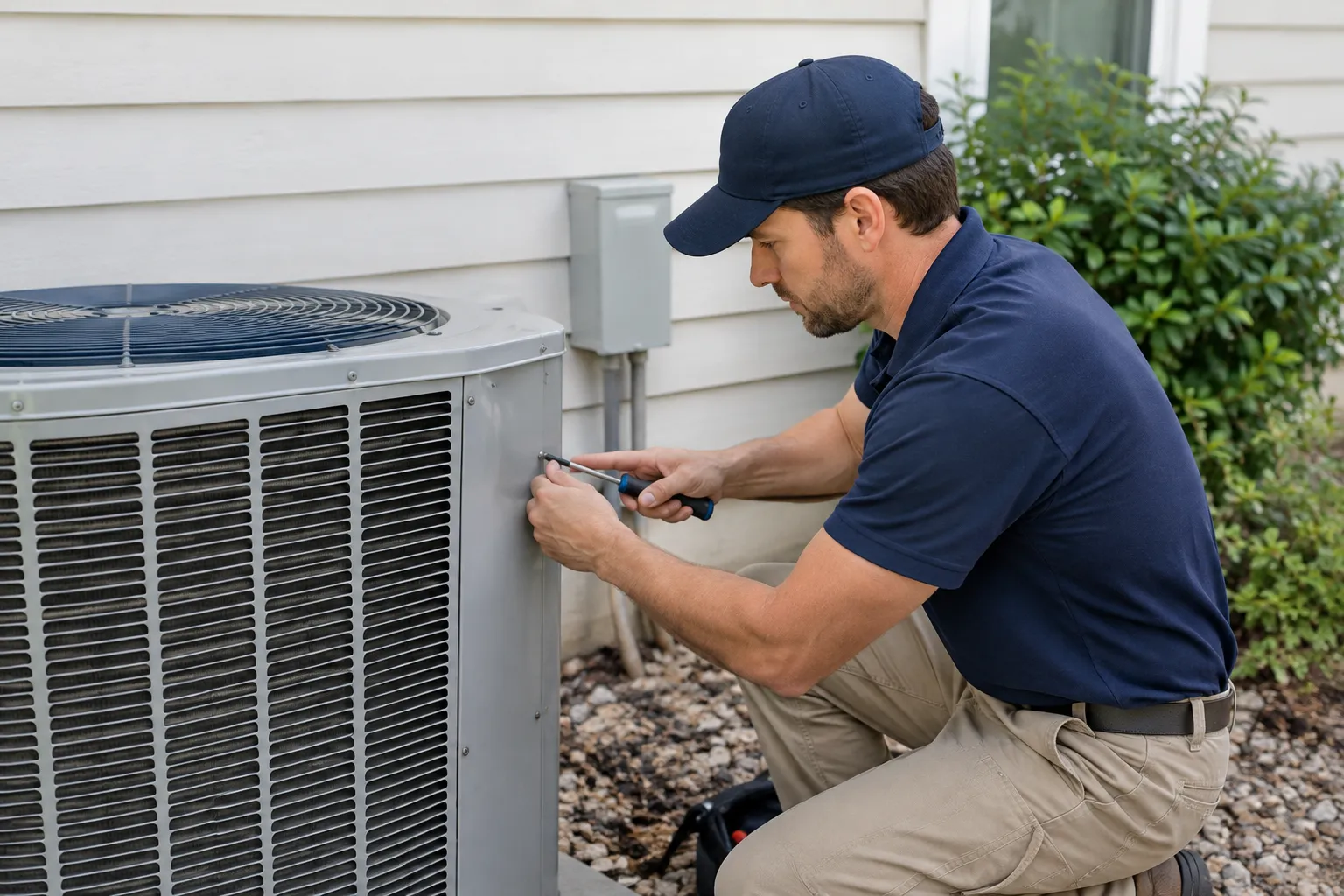
When comparing HVAC air conditioner repair options, look beyond the final recommendation. A useful proposal makes the work understandable: what will be repaired, why it is needed, what is included, and what happens if the repair does not solve the symptom.
Consider whether the explanation matches what you observed, whether the scope is specific, and whether the provider will seek approval before doing additional work. If the diagnosis is unclear or the proposed repair is extensive, you can ask for a written explanation or another assessment before authorizing work. The tradeoff is that another opinion can take time, while approving a poorly explained repair leaves you uncertain about what you are paying for.
Check what the estimate includes
Ask whether the estimate covers the diagnostic visit, parts, labor, and any follow-up testing. Confirm what is excluded and whether the provider will contact you for approval if additional work is needed.
A proposal that names the repair and its scope is easier to compare than one that lists only a general description. If the technician expects additional issues may be found after opening or testing equipment, ask how those discoveries will be communicated and approved. Do not assume that a diagnostic charge, parts, or return visit is included; ask the provider to spell out the terms.
Ask about qualifications and repair coverage
Confirm that the technician meets applicable state or local licensing requirements for the work. If a certification is relevant to the task, ask what it covers. Requirements can vary by location and type of work, so check with the appropriate local or state authority if you are unsure.
Ask what warranty, if any, applies to parts and labor, how long coverage lasts, and what could void it. Get the terms in writing and clarify who handles a return visit if the same problem comes back. The best fit is a service option whose qualifications, scope, and coverage are clear—not simply the one with the shortest explanation or the fastest promised appointment.
Clarify timing and next steps
Ask when work can begin, whether a part needs to be ordered, and whether the system should remain off until the repair. If cooling does not return or the same symptom recurs, find out whom to contact and whether another diagnostic visit is covered.
A realistic timeline may depend on the fault, parts availability, and the work required. Get a clear next step rather than relying on a vague promise that the problem will be handled later.
Prepare for the technician and agree on the next step
Before the appointment, make the equipment accessible without opening or dismantling it. Keep your notes handy and, if safe, record when the issue occurs or what the system does. Share any visible leak, odor, noise, or ice, but do not touch suspected electrical or refrigerant components.
Before approving air conditioner unit repair, confirm:
- What the technician found and how it relates to the symptom.
- Which work is proposed and what it includes.
- Whether additional work requires your approval.
- What warranty or follow-up applies.
- Whether the system is safe to run while you wait or after the repair.
If the problem continues, report exactly what changed and what did not. That gives the service provider a clearer basis for follow-up and helps you avoid repeating checks that have already been done.
HVAC Repair FAQs
How much is a typical HVAC service call?
A typical HVAC service-call charge varies by location, provider, timing, and whether diagnosis is included; ask for the diagnostic fee and any after-hours charges before booking. Confirm whether that fee is credited toward repair work.
What is the most common problem in an AC unit?
A dirty air filter is a common cause of restricted airflow, but weak cooling can also have other causes. Check the filter safely, and arrange diagnosis if the problem remains or warning signs appear.
How long does an air conditioner repair usually take?
A repair may take one visit or longer if the fault requires extensive diagnosis or a part that is not on hand. Ask the provider for an estimated work and parts timeline after the diagnosis.
Is it worth repairing an air conditioner?
Repair may make sense when the fault is clearly diagnosed and the scope and coverage are acceptable to you. Compare the written repair proposal with the system’s condition, repair history, and the cost of other options.
How do I fix my AC if it is not blowing cool air?
Check the thermostat settings, filter, and blocked vents first; stop if you notice ice, a leak, burning odor, or electrical trouble. If cooling does not return, arrange professional diagnosis rather than opening the equipment.
How do I reset an AC that is not cooling?
Use the reset procedure in the system or thermostat manual, if one is specified, and avoid repeatedly switching the breaker. If the breaker trips again or the unit still will not cool, leave it off and contact a technician.
Should I turn off my AC if it is not cooling?
Yes, turn it off if it is making unusual noises, producing a burning smell, leaking heavily, icing up, or repeatedly tripping a breaker. If none of these signs is present, avoid prolonged operation that is not helping and arrange diagnosis.
What is the $5,000 rule for HVAC?
The “$5,000 rule” is a rough comparison sometimes used to weigh a repair against replacement: multiply the system’s age by the estimated repair cost and compare the result with $5,000. It is only a heuristic, not a universal decision rule; system condition, repair history, and the written options matter too.
Recommended next steps
Write down the symptoms, try only the safe checks, and contact a service provider if the issue remains or warning signs are present. Compare proposals by diagnosis, repair scope, coverage, and follow-up—not by an unexplained total alone.