
Air conditioner maintenance is mostly a matter of keeping airflow clear, checking for drainage problems, and noticing changes before they turn into larger repairs. This guide walks through the seasonal checks homeowners can handle safely—and the warning signs that mean it is time to stop and call an HVAC technician.
Before cooling season, get the system ready
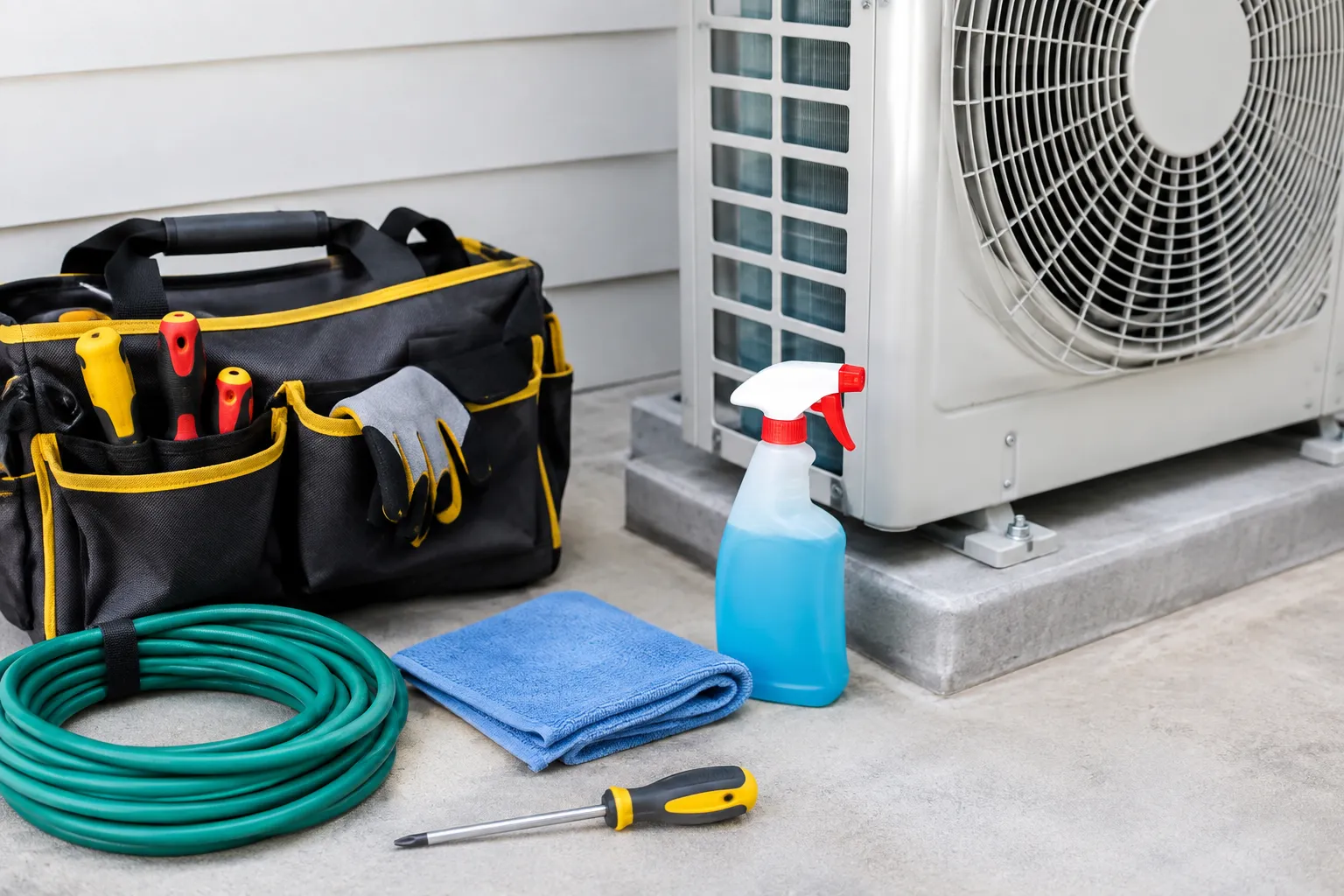
Before you run the air conditioner regularly, check the parts you can safely reach: the filter, visible outdoor-unit area, thermostat, vents, and any accessible condensate drain. These basic air conditioner maintenance tasks can help you spot an obvious problem early, but they do not replace a professional inspection when the system needs repair.
If you are working through a broader list of household upkeep, our home maintenance guides can help you organize other routine checks. For this system, start with the filter and follow the equipment manufacturer’s instructions. Turn the system off before cleaning or inspecting equipment, and do not remove panels to reach internal components.
Check the filter and replace it when needed
A dirty or incorrectly installed filter can restrict airflow. Find the filter at the return-air grille or in the air handler, then note its size, which is usually printed on the frame. If you cannot read it, check the equipment documentation or measure the existing filter before buying a replacement.
Look for an arrow on the filter frame. It should point in the direction of airflow—toward the air handler, not back into the room. Match the replacement filter’s dimensions and type to the equipment requirements. A filter that does not fit properly can let air bypass its filtering material.
Check the filter regularly during the cooling season. How often it needs changing depends on the filter and household conditions, including pets, dust, and how much the system runs. Follow the filter and equipment instructions, and check more often if the filter looks loaded with dust or airflow seems reduced. Do not assume that every filter has the same replacement schedule.
Clear the outdoor unit and inspect accessible coils
Leaves, grass, and other loose debris can collect around the outdoor condenser. With the system off, remove debris from the surrounding area by hand or with a soft brush. Keep plants, stored items, and other obstructions away from the unit according to the manufacturer’s clearance guidance.
You can look at the exterior coil surface for visible buildup, but the thin fins can bend easily. Do not scrape them, spray them with a pressure washer, or use harsh cleaners. Do not remove the unit’s panels or reach inside. If the coil looks heavily clogged or damaged, leave cleaning and repair to a qualified technician.
Test the thermostat and condensate drain
Set the thermostat to cooling and choose a setting below the current room temperature. Check that the display responds and that the system starts as expected. If it uses batteries, replace them when the display indicates they are low or the thermostat behaves erratically. A basic thermostat check cannot diagnose a system fault, so note any unusual delay, repeated cycling, or failure to start.
Look at the visible portion of the condensate drain and around the indoor unit. The drain carries moisture removed from indoor air away from the system. Standing water, dampness, or water stains near the equipment may indicate a blockage, leak, or other issue. Do not disassemble the drain assembly or pour chemicals into it unless the manufacturer specifically directs you to do so. If water is collecting or the drain appears blocked, stop and arrange service.
During cooling season, protect airflow and drainage
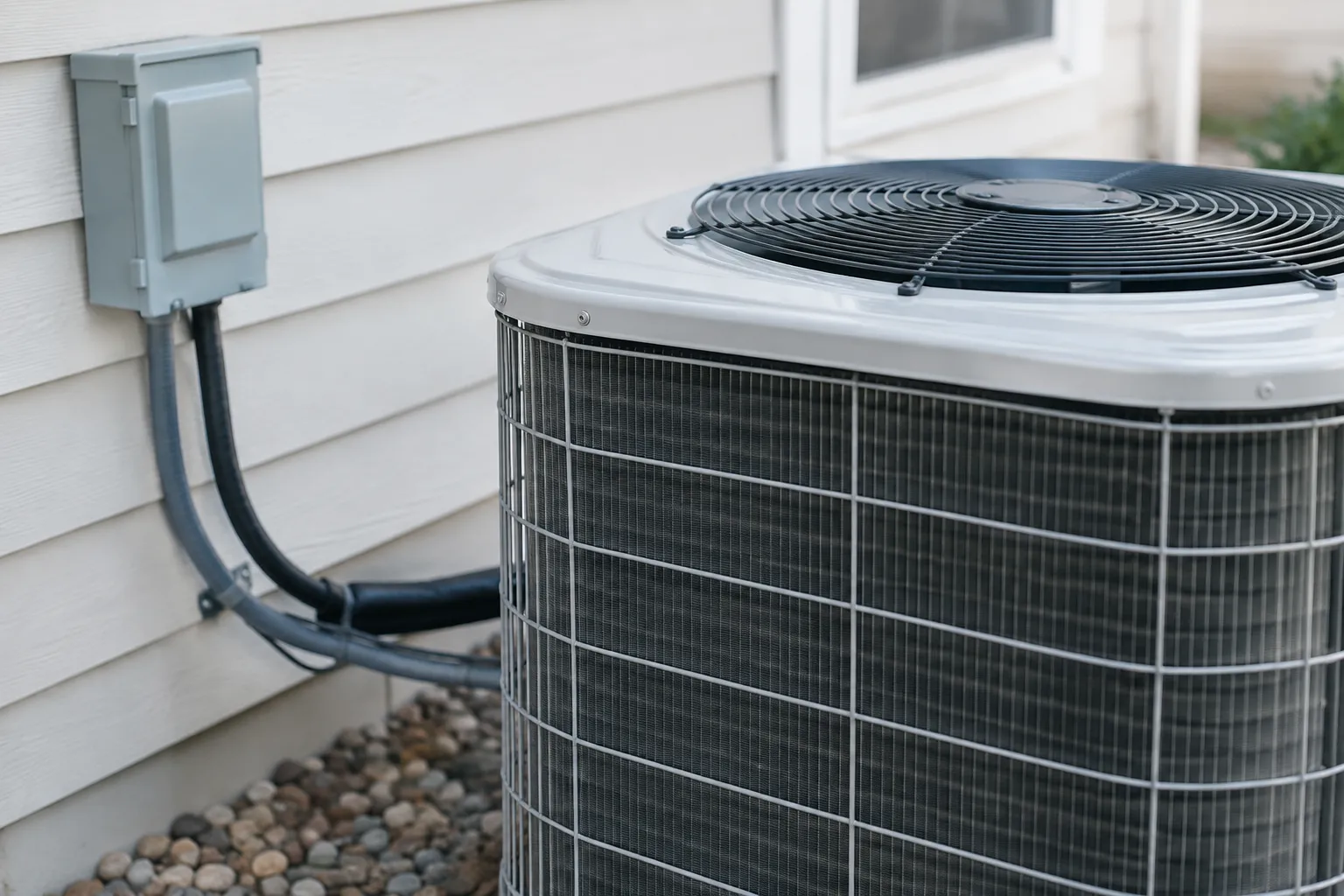
Once the system is in regular use, make quick checks part of your routine. You do not need to take the equipment apart: observe how it runs, check the filter, keep vents unobstructed, and watch for water or changes in cooling.
House Project Lab’s About page explains the site’s focus on practical home improvement and repair guidance. For day-to-day air conditioner maintenance, the useful habit is to notice small changes and write them down rather than repeatedly adjusting the system without knowing what changed.
Keep filters and supply vents clear
Check the filter at regular intervals during heavy use and replace it when needed, following its instructions and the equipment requirements. A visibly loaded filter, weak airflow, or a filter that does not sit securely deserves attention.
Keep supply vents and return grilles clear of furniture, curtains, rugs, and stored items. Supply vents deliver conditioned air to rooms; return grilles let air flow back toward the system. Blocking either can interfere with airflow. If one room consistently feels different from the rest, first check that its vents are open and unobstructed. Persistent uneven cooling may have another cause and should not be treated as a reason to alter internal equipment.
Keep the outdoor unit’s surrounding area free of loose debris as it accumulates. Avoid trimming or clearing plants while the equipment is running, and do not reach through the grille.
Watch for drainage and cooling changes
Look for water near the indoor unit and any visible condensate drain outlet. A small amount of water where it should not be may be an early sign of a drainage problem; recurring water, a growing wet area, or damage to nearby materials calls for service. Do not ignore it—moisture can damage surrounding surfaces.
Notice whether airflow or cooling changes. Weak airflow, unusually frequent starts and stops, or rooms that no longer cool as expected can result from more than one cause. Check the filter and make sure vents are open, but stop if those simple checks do not help. Avoid repeatedly lowering the thermostat to force a result; it will not fix a mechanical or drainage problem.
If ice appears on the indoor or outdoor equipment, turn cooling off and contact a technician. Do not chip away ice or keep running the system to see whether it clears. Ice can be associated with a problem that needs diagnosis, not just cleaning.
At season’s end, clean up and prepare for downtime
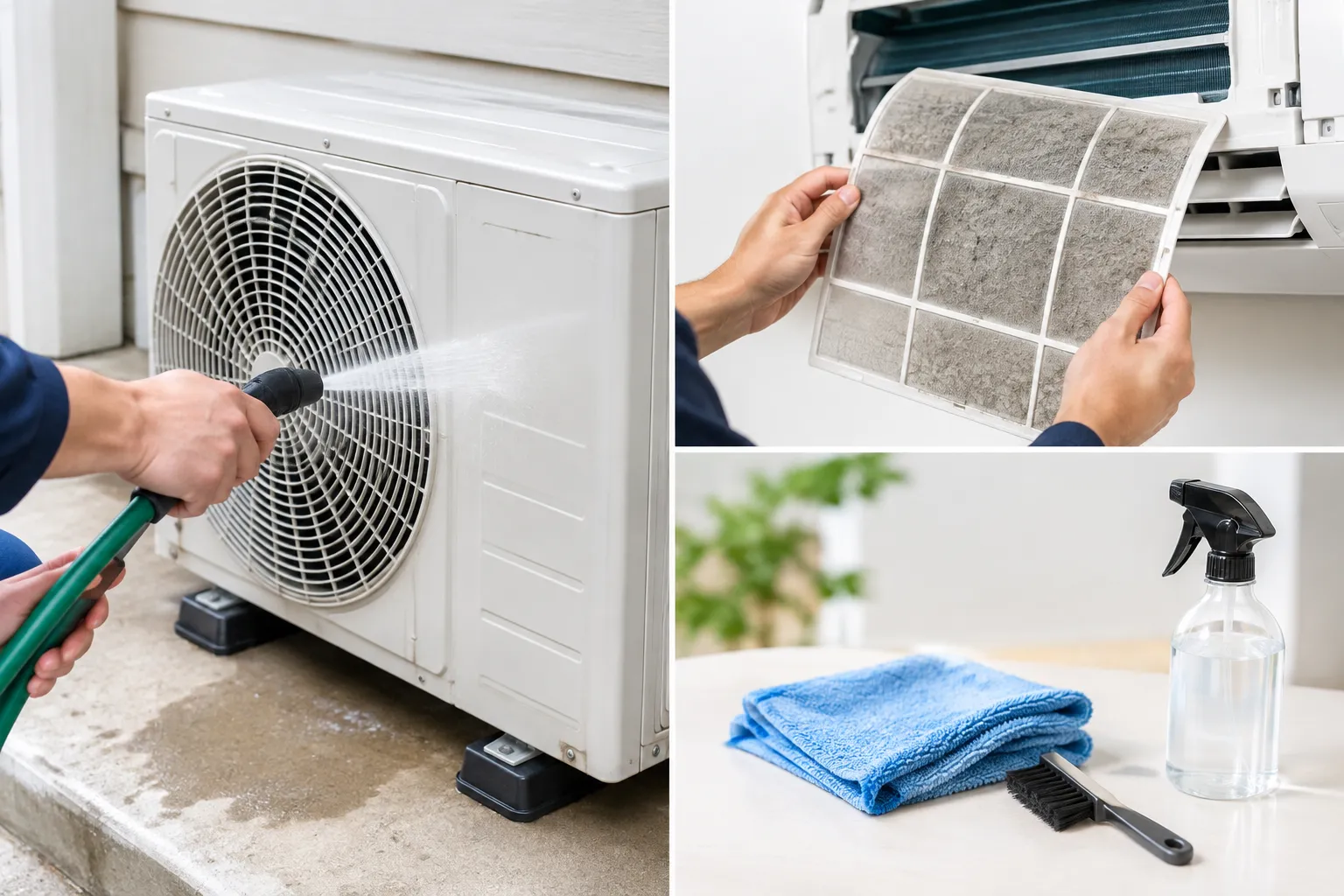
When you no longer need regular cooling, remove loose leaves and debris from around the outdoor unit with the system off. Check the manufacturer’s instructions before covering or otherwise protecting the equipment. Some systems have specific guidance for seasonal protection; an unsuitable cover or method can interfere with operation or trap moisture.
You can also record the filter size, the date you last changed it, and any symptoms you noticed during the season. That makes next season’s checks easier and gives a technician a clearer history if a problem returns. For a more detailed safety-focused walkthrough, see our safe AC maintenance steps.
Know when maintenance becomes a repair call
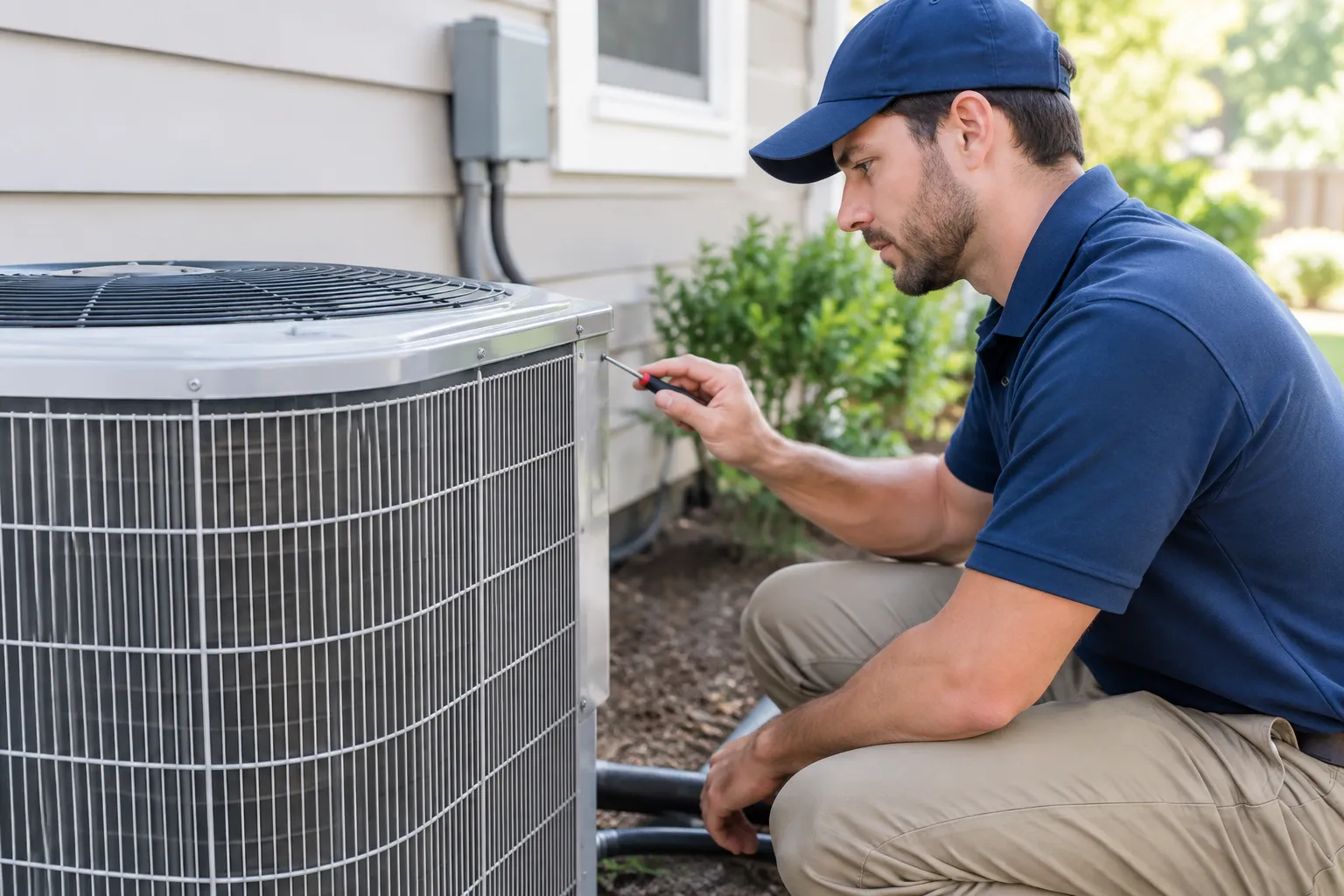
Routine maintenance is limited to checks and cleaning that the homeowner can safely perform using the equipment’s instructions. It does not include opening electrical compartments, diagnosing refrigerant problems, or taking apart the air handler or outdoor unit.
Stay within safe homeowner tasks
Before inspecting or cleaning equipment, follow the manufacturer’s directions for shutting it off. Do not assume that setting the thermostat to off makes every component safe to touch. If you are unsure how to disconnect power safely, do not proceed.
Stay on stable ground and do not climb, lean over equipment, or reach into a unit to clear debris. Do not open electrical compartments, handle wiring, or attempt refrigerant work. Refrigerant systems require specialized tools and training, and improper handling can be dangerous. Leave internal coil cleaning, electrical troubleshooting, and repairs to a qualified HVAC technician.
If a maintenance task reveals damaged wiring, a loose or damaged panel, a strong chemical odor, or water near electrical components, stop. Do not restart the system until the concern has been assessed.
Call a technician for warning signs
Turn off cooling and seek qualified help if the breaker trips repeatedly, you smell burning, ice forms on the equipment, or water continues to leak near the indoor unit. Do not keep resetting a breaker that trips again; repeated trips can indicate a fault that needs diagnosis.
Call for service if the system runs but does not cool properly after you have checked the filter, thermostat setting, and open vents. Persistent weak airflow, unusual cycling, or a change in sound can also signal a problem beyond routine upkeep. Share when the issue began, what you observed, and any basic checks you completed. That helps focus the conversation without requiring you to diagnose the equipment yourself.
Turn the checklist into a repeatable routine
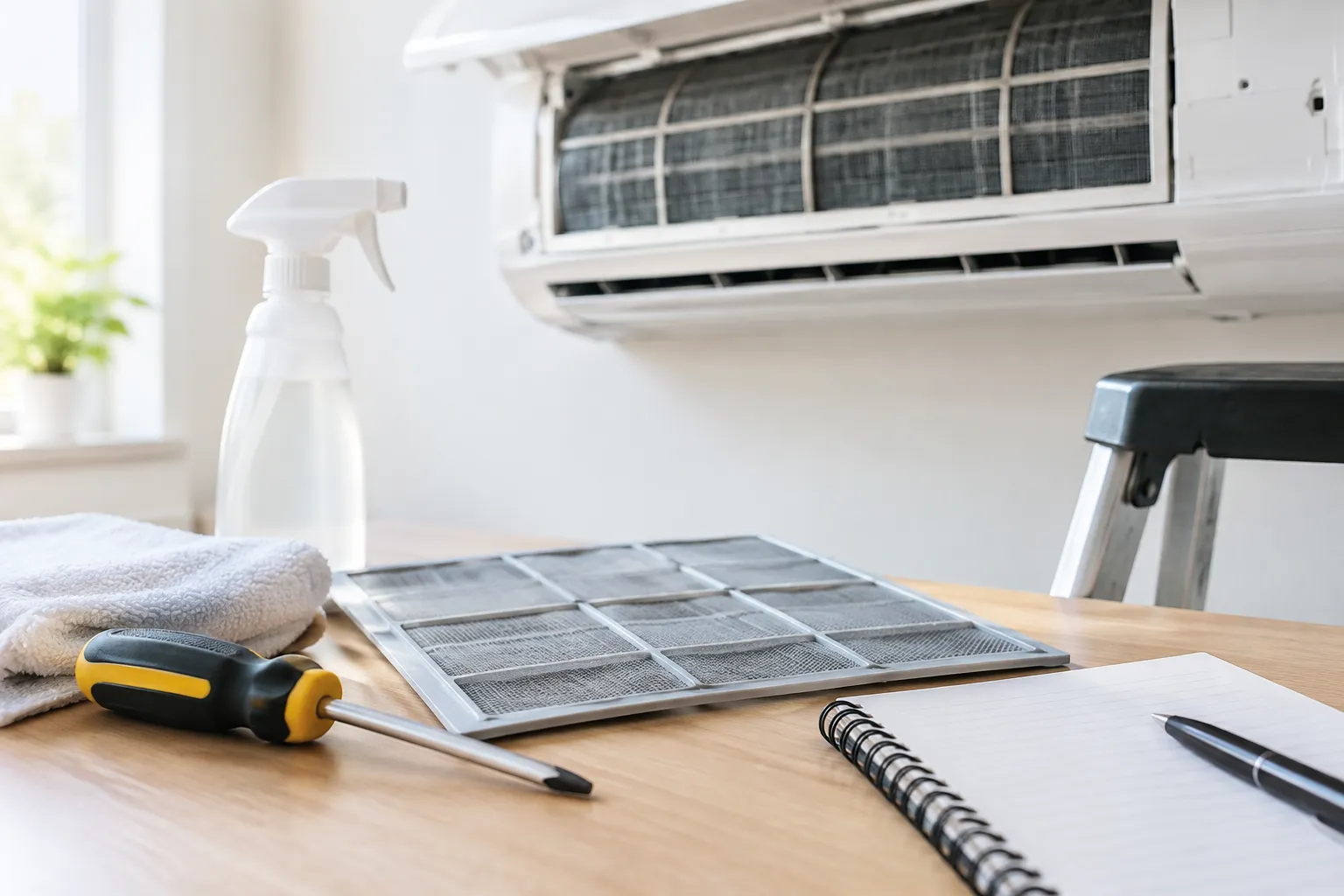
A simple record can make air conditioner maintenance easier to manage, especially if home repairs already feel like a long list. Use a calendar reminder at the start of the cooling season to check the filter, thermostat, outdoor-unit area, and visible drain. During regular use, check the filter and keep vents and the outdoor area clear. At the end of the season, follow the manufacturer’s guidance for downtime.
Keep a note of filter changes, water around the unit, cooling changes, unusual sounds, and any service visits. If the same symptom returns, the notes can help show whether it is new or recurring. Prioritize active leaks and electrical warning signs over cosmetic cleanup; water and electrical concerns should not wait behind lower-risk tasks.
Arrange professional service when basic checks do not resolve a problem or when equipment needs internal cleaning, repair, or diagnosis. A routine you can repeat is more useful than a long list of tasks you cannot safely complete.
Air Conditioner Maintenance FAQs
What maintenance is required for an air conditioner?
Routine air conditioner maintenance includes checking and replacing the filter as needed, keeping vents and the outdoor unit’s surrounding area clear, testing basic thermostat operation, and watching for drainage or cooling changes. Follow the equipment and filter instructions.
What is the three-minute rule for air conditioners?
The three-minute rule is a common recommendation to wait about three minutes before restarting an air conditioner after turning it off. The pause helps avoid an immediate restart; follow the manufacturer’s instructions for your system.
What does the $5,000 rule mean when replacing an air conditioner?
The $5,000 rule is a rough replacement heuristic: multiply the system’s age by the estimated repair cost, and consider replacement if the result exceeds $5,000. It is not a universal standard; condition, repair scope, and replacement options also matter.
How long does a typical air conditioner last?
Many central air conditioners last roughly 15 to 20 years, but service life varies with installation, use, climate, upkeep, and repair history. Check the equipment records and have a technician assess its condition rather than relying on age alone.
How often should a professional inspect an air conditioner?
Many homeowners arrange a professional inspection about once a year, often before the cooling season. The right schedule can vary with the system, manufacturer guidance, usage, and any recurring problems.
Is annual professional air conditioner maintenance worth it?
Annual service can help identify issues that routine homeowner checks may miss, such as internal wear or drainage concerns. Its value depends on the system’s condition and service needs; it does not guarantee that breakdowns will not occur.
How long does a professional air conditioner tune-up take?
A routine tune-up commonly takes about one to two hours, though the time varies with the equipment, its condition, and any issues the technician finds. Repairs or additional cleaning can extend the visit.
Why is my air conditioner running but not cooling the house?
Check that the thermostat is set to cooling, the filter is not clogged, and vents are open; if the house still does not cool, turn the system off and arrange service. Ice, weak airflow, unusual cycling, or a persistent problem needs diagnosis.
Recommended next steps
Start with the filter, then check that vents are open and the outdoor unit is clear of loose debris. Look for water near the indoor unit and note any change in cooling. If you find ice, a recurring breaker trip, a burning smell, persistent leaking, or poor cooling after these basic checks, stop troubleshooting and contact a qualified HVAC technician.