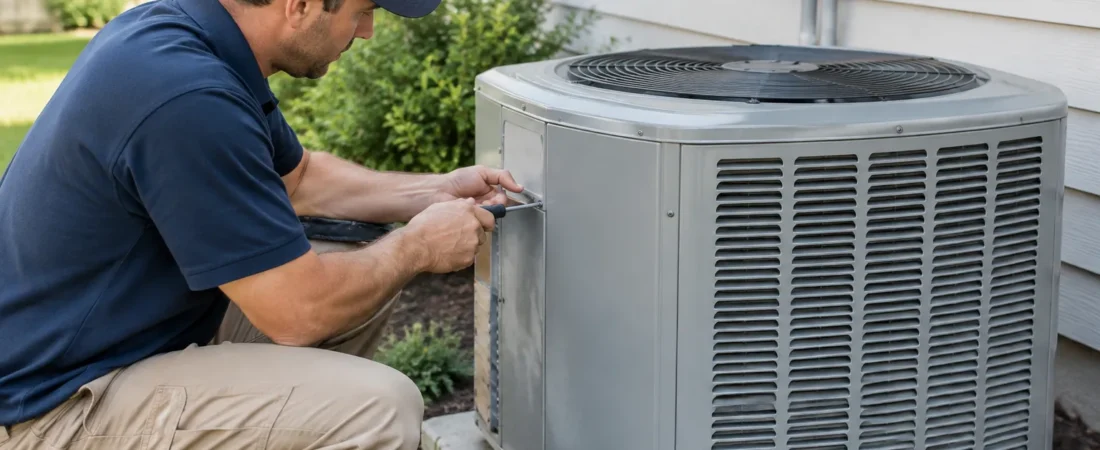
A dependable cooling season starts with a few basic checks: keep the air filter clean, leave the outdoor unit clear, and watch for signs that water is not draining. AC maintenance also includes knowing where homeowner upkeep should stop. This guide explains what you can check safely, how to plan seasonal checks, and when to contact a licensed HVAC professional.
Prepare for AC maintenance safely
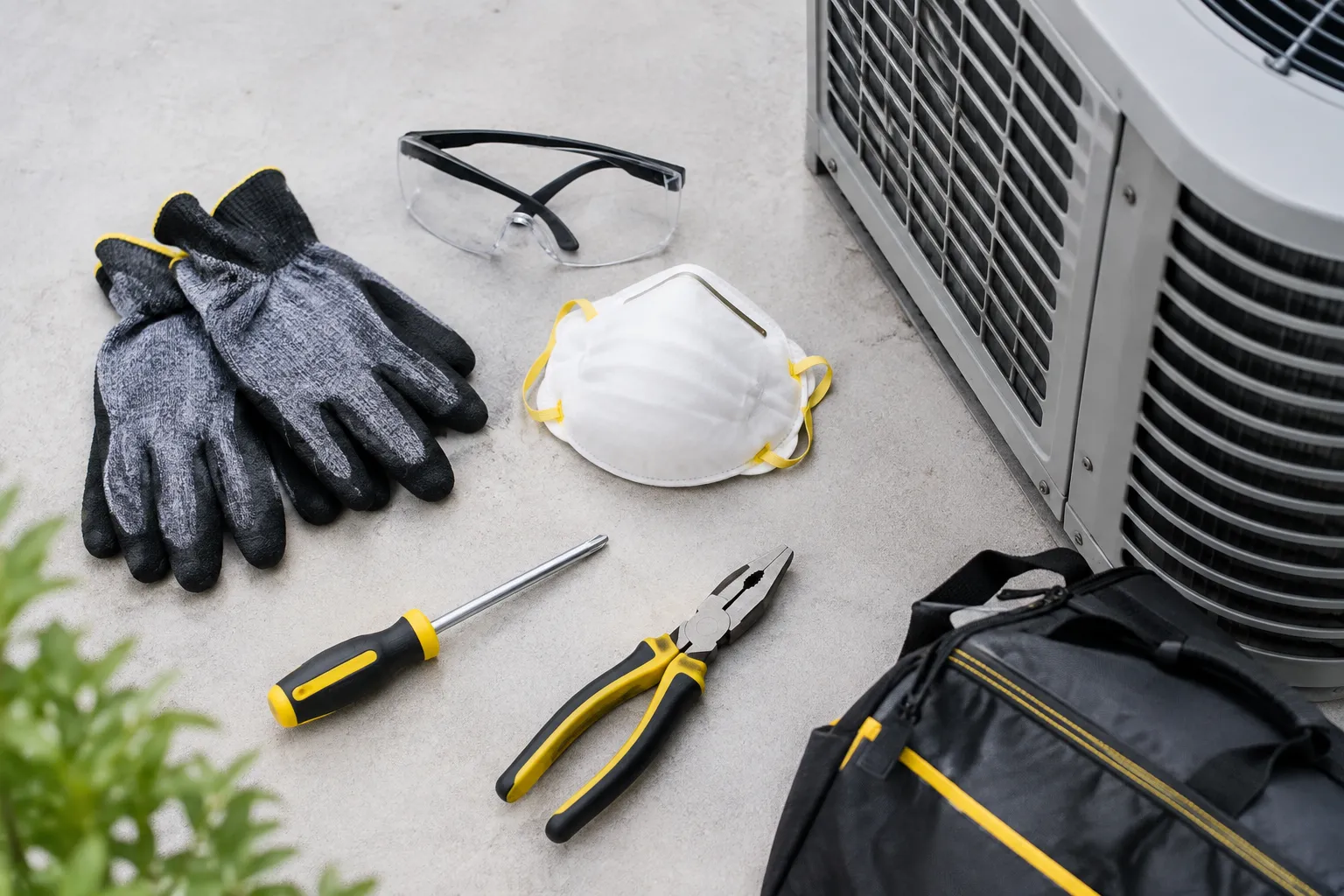
Before starting, identify the parts of the system you can reach without opening a sealed panel or touching wiring. Routine ac maintenance should not require you to handle refrigerant, electrical components, or moving parts.
If you are working through a longer home-maintenance list, you can use our home maintenance guides to help organize other routine checks around the house. For any AC task, stop if you are unsure what a component is or how to reach it safely.
Know which parts you can access
Most homeowners can locate and inspect the air filter, look around the outdoor unit, and check for visible signs of a condensate-drain problem. The filter may be in a return-air grille, a slot near the indoor air handler, or another location specified in the system’s documentation. If you cannot find it, check the unit manual or ask an HVAC technician rather than opening an unfamiliar compartment.
The outdoor unit is usually a cabinet outside the home. You can remove loose leaves and other debris from around it, but do not take off its panels or reach through the grille. The condensate drain is associated with the indoor cooling equipment and carries away water produced during operation. You can look for visible leaks or an accessible drain outlet, but do not dismantle the air handler to trace the line.
Set aside a few basic supplies before you begin:
- A replacement filter that matches the system’s required size and type
- Work gloves for handling yard debris
- A flashlight for visual checks
- The equipment manual, if available
Avoid working in standing water or around damaged wiring. If you see water near electrical equipment, smell something burning, or notice exposed or damaged wiring, stay clear and contact an appropriate professional.
Shut the system down before cleaning
For simple checks, turn cooling off at the thermostat first. This prevents the system from starting while you are handling the filter or clearing loose debris near the outdoor unit. Wait for moving parts to stop before approaching the equipment.
For tasks that require you to reach into or close to equipment, follow the manufacturer’s instructions for shutting off power. Depending on the system and the task, that may involve a service disconnect or circuit breaker. Do not open an electrical panel or handle a disconnect if you are unsure which control is correct or how to use it. If the system needs to be fully de-energized for work beyond basic visual checks, have a licensed HVAC professional handle it.
Never remove equipment panels to access wiring, motors, or other internal parts. A thermostat setting alone does not make internal electrical work safe.
Check and replace the air filter
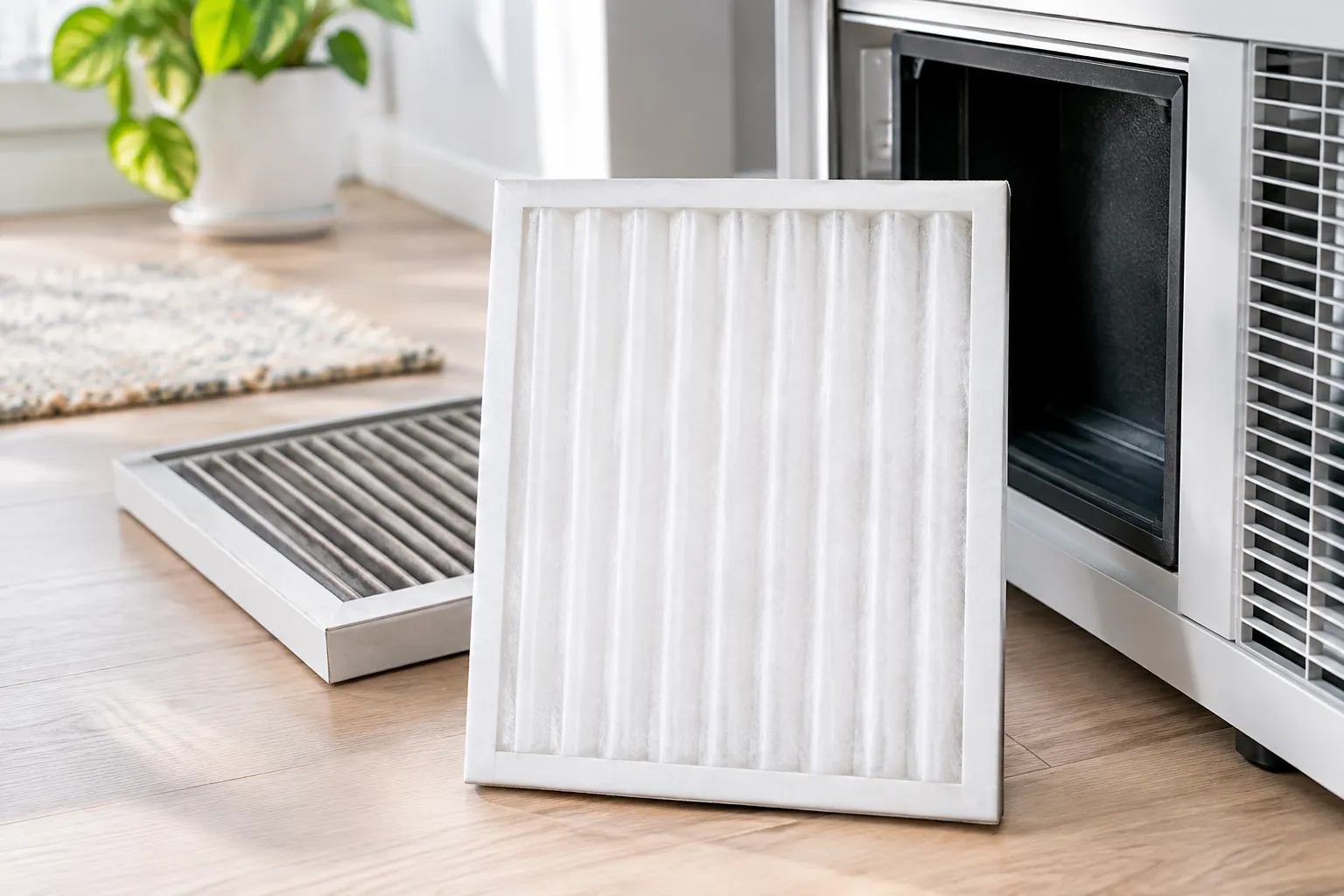
A dirty or incorrect filter can restrict airflow, so checking it is a sensible first step when cooling seems weak. Follow the filter schedule in your equipment documentation; the right replacement interval depends on the filter, system, and conditions in the home.
Switch the system off at the thermostat, then find the filter’s access point. Note the size printed on the old filter, or measure it if the label is missing. Check the equipment documentation for the filter type the system requires. A filter that does not fit properly can leave gaps or interfere with airflow.
Slide the filter out and inspect it. If it is visibly loaded with dust or debris, replace it with a compatible filter. Follow the airflow-direction arrow printed on the replacement, and make sure the filter sits squarely in its slot or grille. Do not force a filter that seems too large or too small. Instead, recheck the size and the installation location.
Write the replacement date on a calendar or set a reminder to inspect the filter again. If it looks dirty sooner than expected, check it more frequently and consider whether household conditions—such as renovation dust or pets—are contributing. If a clean, correctly installed filter does not resolve a persistent airflow problem, do not try to compensate by installing a filter that is not approved for the system. Have an HVAC professional assess it.
We aim to make practical homeowner guidance clear and approachable; you can learn more on our About page.
Clear debris around the outdoor unit
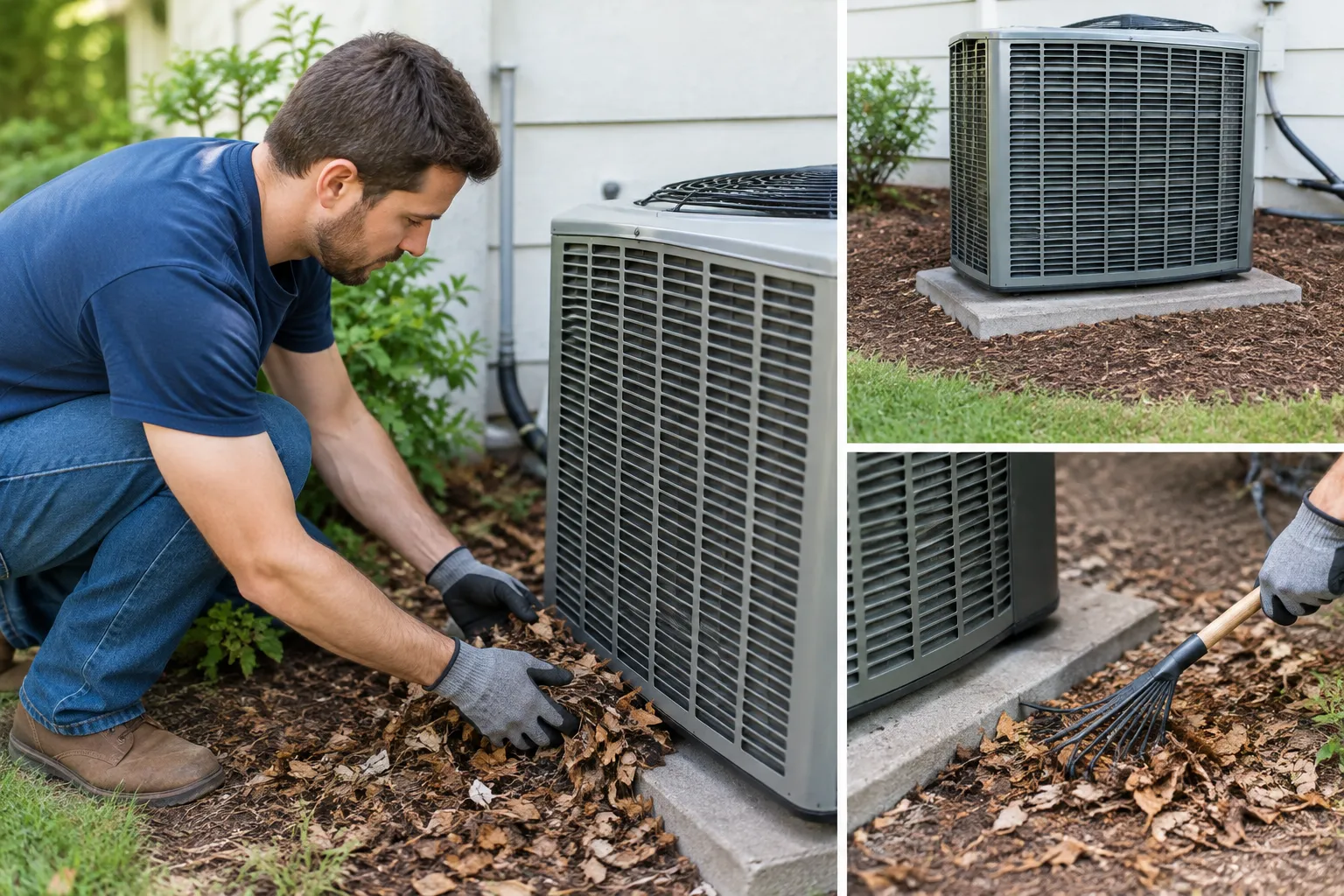
Air needs room to move through the outdoor condenser. Leaves, grass, and other loose debris piled against the cabinet can obstruct airflow, so include the area around the unit in your outdoor and yard upkeep.
With cooling off at the thermostat, remove loose leaves, weeds, and other debris from around the cabinet by hand or with a soft brush. Keep plants and stored items from crowding the unit. Follow the manufacturer’s instructions for the clearance it requires; avoid guessing at a specific distance if you do not have that information.
Do not lean tools against the cabinet or reach through its grille. The metal fins can bend easily, and contact with internal components can cause damage or injury. Avoid using a pressure washer: forceful water can bend fins or push debris farther inside. If the fins are visibly damaged, the cabinet is obstructed internally, or the unit needs more than gentle surface cleaning, stop and contact an HVAC professional.
Check that water can drain away from the area around the unit and that the cabinet is not buried by soil, mulch, or yard waste. If the unit appears to have shifted, is unusually loud, or has exposed wiring, leave it alone and arrange professional help.
Keep the condensate drain flowing
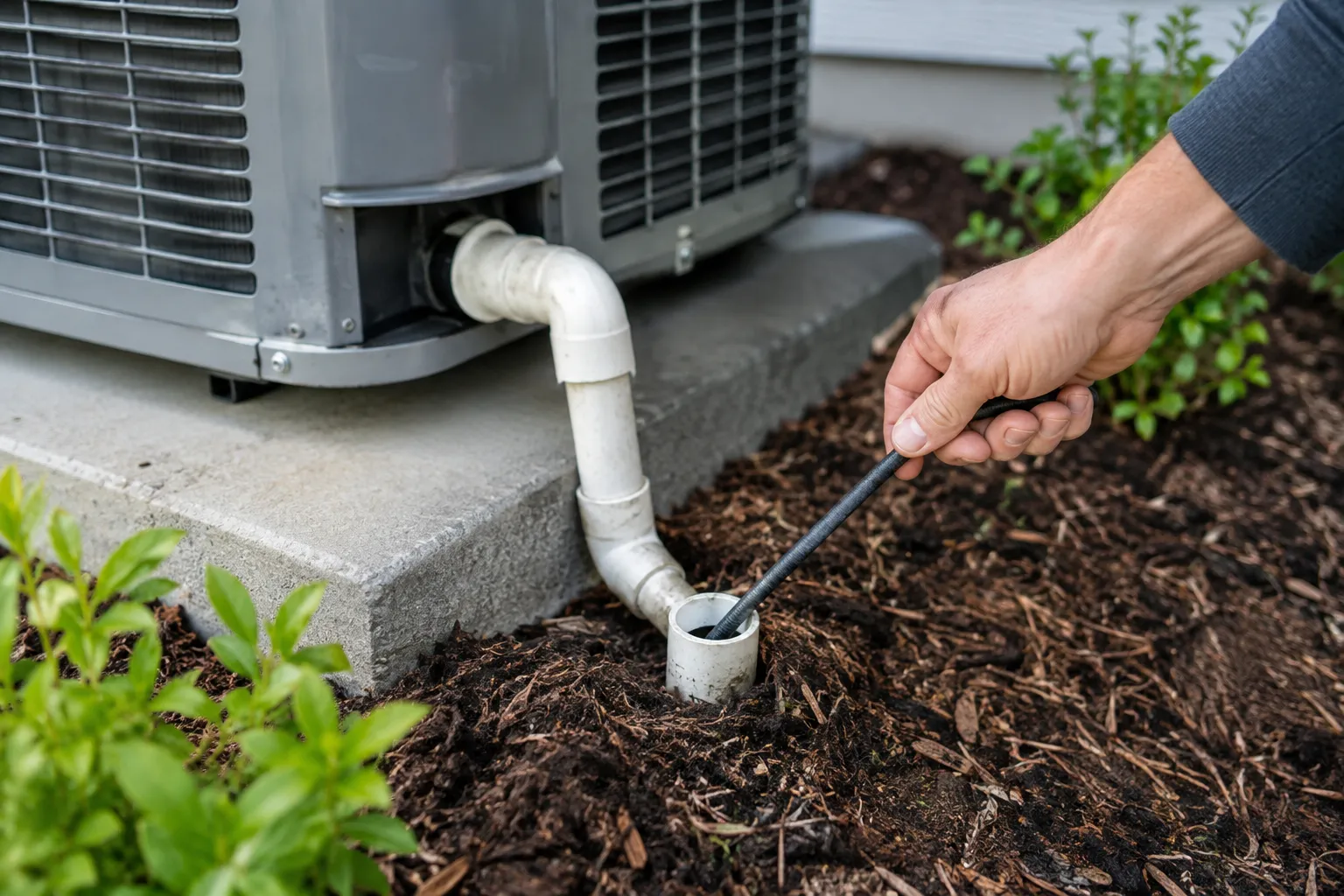
During cooling, the system produces condensate that should leave through a drain line. A blockage or drainage problem may show up as water around the indoor unit, a leak near the air handler, a full drain pan, or a safety switch that stops the system. Water near equipment can damage nearby materials, so treat a leak as a prompt to investigate rather than something to ignore.
First, turn cooling off at the thermostat if you see water around the indoor unit. Keep clear of any wet electrical components. If you can safely identify an accessible drain outlet, look for visible blockage or standing water without removing covers or dismantling the system. Check the area for signs of a leak, but do not assume every pool of water comes from the AC.
Some systems have an accessible drain-line cleanout, but configurations differ. Do not pour cleaners or other substances into a drain unless the manufacturer’s instructions specifically permit it. Avoid pushing tools into the line or taking apart piping if you are not familiar with the system. Those steps can cause damage or leave a blockage unresolved.
If water continues to appear, the drain pan is full, the system shuts off, or you cannot tell where the leak is coming from, contact a licensed HVAC professional. If the leak is close to wiring or other electrical equipment, do not touch it.
Plan seasonal checks and professional service
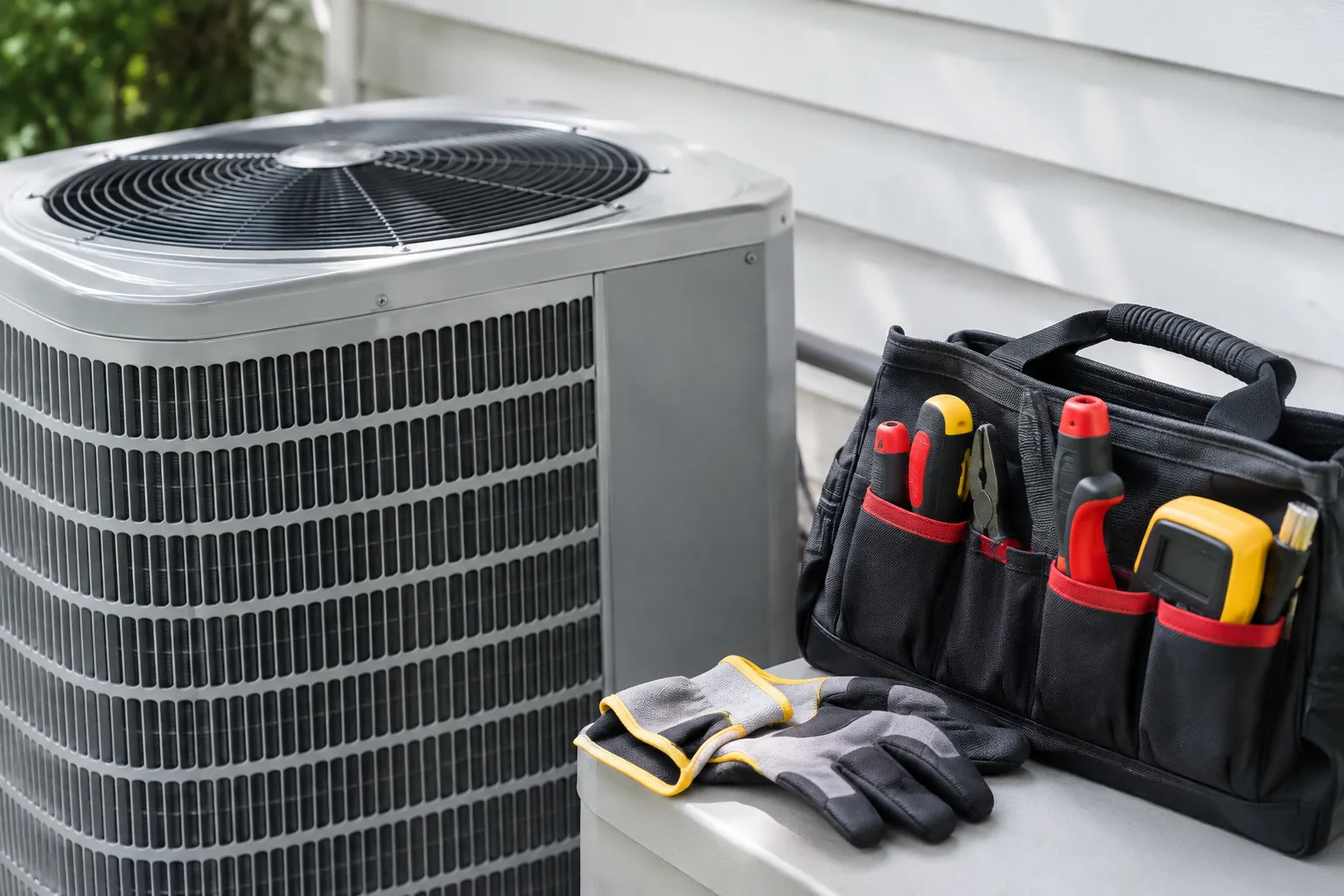
A straightforward routine helps catch visible problems before the system is needed every day. The schedule should suit your equipment instructions and local conditions, not a one-size-fits-all calendar. Keep notes on filter changes, unusual operation, and any service visits so you can describe changes clearly if you need help.
Check cooling before hot weather arrives
Before regular cooling begins, make sure the thermostat is set to cooling and the air filter is in place. Look around the outdoor unit for leaves, vegetation, or items that could restrict airflow. Check the accessible area around the indoor equipment for signs of water or damage.
Then run the system briefly while you stay nearby. Listen for new or harsh noises, notice any unusual odor, and look for water where it should not be. Confirm that air is coming from the supply vents. If the system does not start, cools poorly, leaks, or makes a concerning sound, switch it off and arrange an assessment rather than repeatedly restarting it.
This is a basic operational check, not a substitute for internal inspection or repairs. If your equipment manual calls for specific seasonal steps, follow those instructions or ask a technician to explain them.
Watch for changes during the season
During regular use, pay attention to changes rather than trying to diagnose every symptom yourself. A drop in airflow, rooms that are not cooling as usual, repeated cycling, a new odor, or water near the equipment may signal a problem that needs attention.
Check the filter first if airflow has weakened, and make sure the outdoor unit is not surrounded by loose debris. If those basic checks do not address the issue, do not keep changing settings or opening equipment panels in search of a fix. A system that is making a loud or sudden noise, leaking water, or showing signs of electrical trouble should be turned off until it can be assessed.
If you notice a burning smell, smoke, sparks, or exposed wiring, keep away from the equipment and seek appropriate professional help promptly. When the problem is uncertain, a clear description of what changed and when it started can help a technician assess what to check.
Leave technical repairs to a licensed professional
Homeowner upkeep generally means inspecting and replacing an accessible filter, clearing loose debris around the outdoor cabinet, and noticing visible signs of trouble. Work on wiring, refrigerant, motors, capacitors, fan blades, and internal components is not routine cleaning. These tasks can involve electrical hazards, specialized equipment, or risks of damaging the system.
Do not open sealed sections, add refrigerant, bypass safety switches, or try to repair wiring. Refrigerant handling and electrical diagnosis require appropriate training and equipment. A licensed HVAC professional should also assess repeated shutdowns, ice on the equipment, persistent leaks, weak cooling that remains after basic checks, or unusual mechanical noise.
When arranging service, describe the symptoms, when they occur, and what basic checks you have already made. Ask what inspection or repair is proposed and whether the technician is licensed for the work in your area.
AC Maintenance FAQs
What maintenance should be done on an AC unit?
Check and replace the air filter as needed, keep the outdoor unit clear of loose debris, and look for signs of condensate leaks or unusual operation. Leave internal, electrical, and refrigerant work to a licensed HVAC professional.
What is the most common reason an air conditioner stops cooling?
A dirty air filter is one common cause of reduced cooling, but thermostat settings, electrical faults, refrigerant problems, or other system issues can also be responsible. Check the filter and thermostat first; if cooling does not return, arrange professional diagnosis.
How much does a professional AC maintenance visit usually cost?
The cost varies by location, system, and what the visit includes. Ask local HVAC companies for an itemized estimate and clarify whether it covers an inspection only or any cleaning, parts, or repairs.
How often should a licensed technician inspect a home AC system?
Many homeowners arrange a professional inspection about once a year, often before the main cooling season, while following the system manufacturer’s guidance. More frequent attention may be appropriate if the equipment has recurring problems or its documentation calls for it.
Does regular AC maintenance help reduce energy use?
It can help the system operate without avoidable airflow restrictions, particularly when a dirty filter or blocked outdoor unit is limiting performance. Maintenance cannot guarantee lower bills, since energy use also depends on the system, weather, settings, and home.
Why can an air conditioner’s evaporator coil freeze?
Restricted airflow or a system fault can cause an evaporator coil to freeze; possible causes include a dirty filter or a refrigerant-related problem. Turn cooling off and contact an HVAC professional rather than chipping at the ice or opening the equipment.
How long does a typical AC maintenance appointment take?
Appointment length varies with the system, its condition, and the work included. Ask the service provider for an estimated time when booking, and allow for a longer visit if a problem needs diagnosis.
Should I turn off my air conditioner if it is making an unusual noise?
Yes—turn cooling off if the noise is sudden, loud, or accompanied by poor performance, a burning smell, or visible damage. Do not open the equipment; arrange professional assessment before restarting it if the sound continues or seems concerning.
Set a routine and call for help when needed
Add a filter check and outdoor-unit cleanup to your home-maintenance calendar, then make a brief visual check before regular cooling starts. During the season, note changes in airflow, cooling, sound, or drainage. A simple log can help you see whether an issue is new or recurring.
Start with visible, low-risk checks, and stop if a task requires opening equipment, touching wiring, or diagnosing a mechanical or refrigerant problem. If water is reaching building materials, prioritize addressing the leak to limit further damage. When the cause is unclear or basic upkeep does not resolve the symptom, contact a licensed HVAC professional.
For other practical home and yard upkeep, return to our home maintenance advice.