
When your air conditioner stops cooling, start AC repair by checking what changed and completing only safe, user-accessible checks. This guide explains what different problems may indicate, when to stop troubleshooting, and what to expect when you call a technician.
Match AC repair needs to what may be wrong
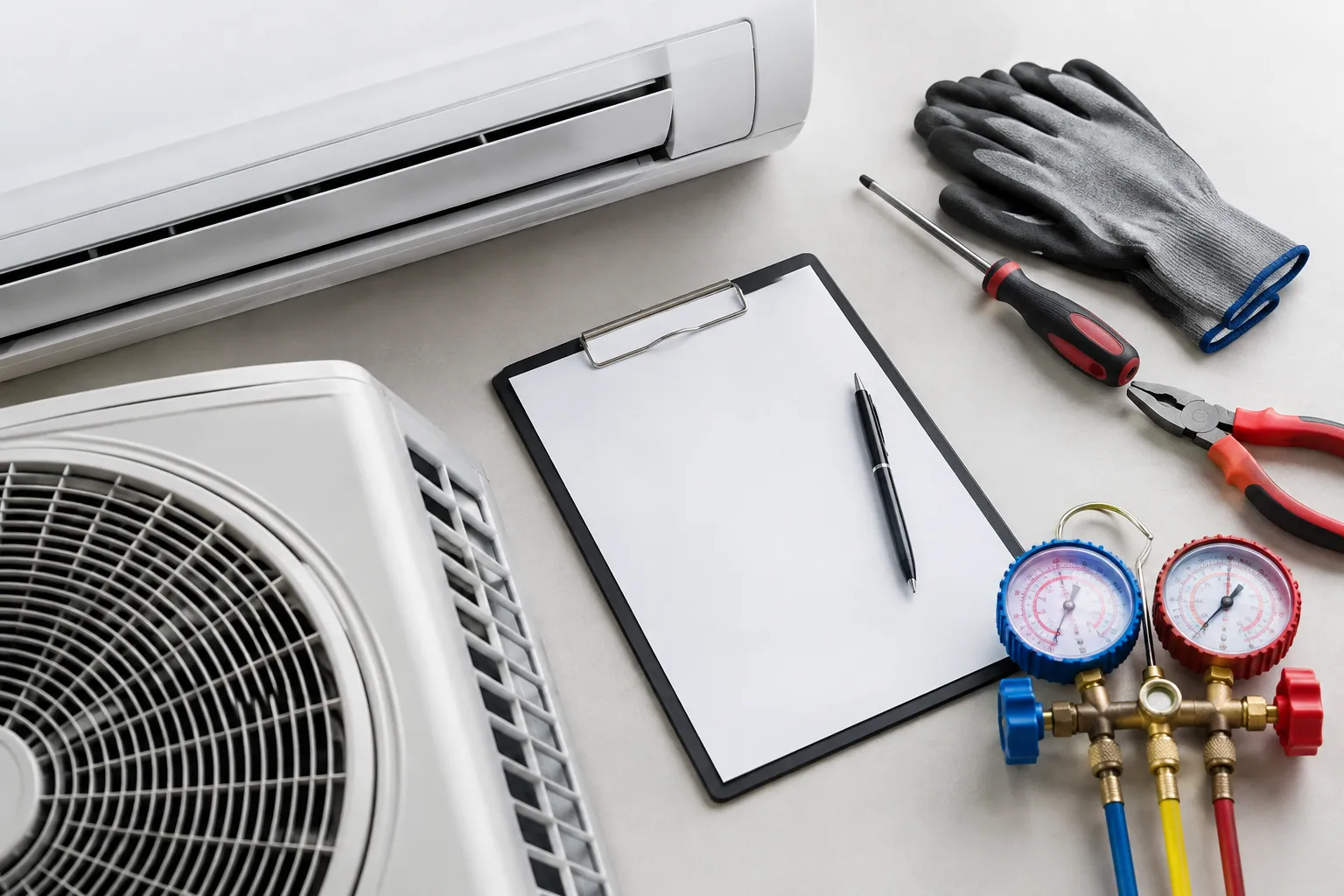
Start by noting what changed and when. An air conditioner that runs but does not cool may have a thermostat setting issue, restricted airflow, a dirty coil, a refrigerant problem, or another fault. Weak airflow, water near the indoor unit, and frequent starts and stops each suggest different possibilities, but inspection is needed to identify the cause.
Common problems and what they may indicate:
- Weak airflow from the vents can be associated with a clogged filter, blocked return grille, or equipment problem.
- Warm air from the vents may result from incorrect thermostat settings, airflow restrictions, or a fault that needs diagnosis.
- Water near the indoor unit may come from a condensate drainage issue or another source. If water is near electrical equipment, do not touch the equipment.
- Short cycling—when the system starts and stops repeatedly—can have several causes, including airflow or control problems. Repeated shutdowns warrant professional attention.
- Ice on refrigerant lines or the indoor unit can occur when airflow or system operation is impaired. Do not chip away at ice or keep running the system in an attempt to clear it.
These are clues, not diagnoses. Write down whether the system runs continuously, whether the problem affects the whole home or one area, and whether you noticed a new sound, smell, or leak. That record can make it easier to explain the issue when seeking home repair guides or professional help.
Try these safe AC repair checks before calling
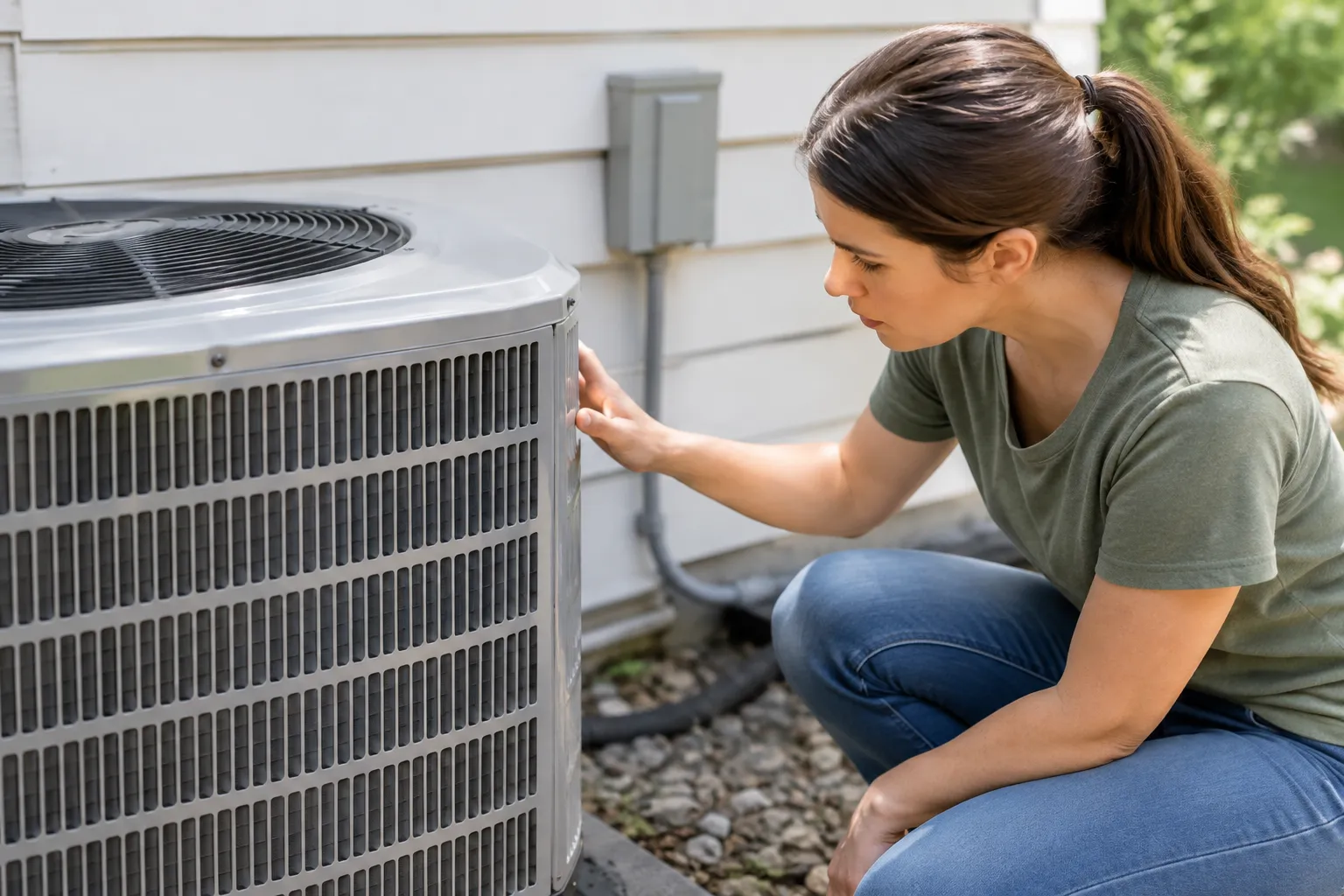
Keep checks limited to controls and parts the manufacturer identifies as user-accessible. Do not remove equipment panels, reach inside the unit, or handle wiring.
- Check the thermostat. Confirm it is set to cooling, the target temperature is below the room temperature, and the fan setting is what you intend. If the thermostat uses batteries, check its instructions for replacement.
- Inspect the air filter. If it is visibly dirty, replace or clean it according to the filter and system instructions. Use the correct size and type; do not run the system without a filter unless the manufacturer specifically directs it.
- Look for blocked airflow. Make sure supply vents and return grilles are not covered by furniture, rugs, or curtains. Keep the outdoor unit’s visible airflow area clear of loose debris, but do not open it or reach inside.
- Check the breaker only from the closed electrical panel. If the AC breaker has tripped, do not repeatedly reset it. If you are unsure how to check the panel safely, leave it alone and call a qualified professional.
After a simple correction, allow the system time to respond according to its instructions. If cooling does not return or the breaker trips again, stop troubleshooting. For more on deciding between service options, see our air conditioner repair guidance.
Know when to stop troubleshooting and call a technician
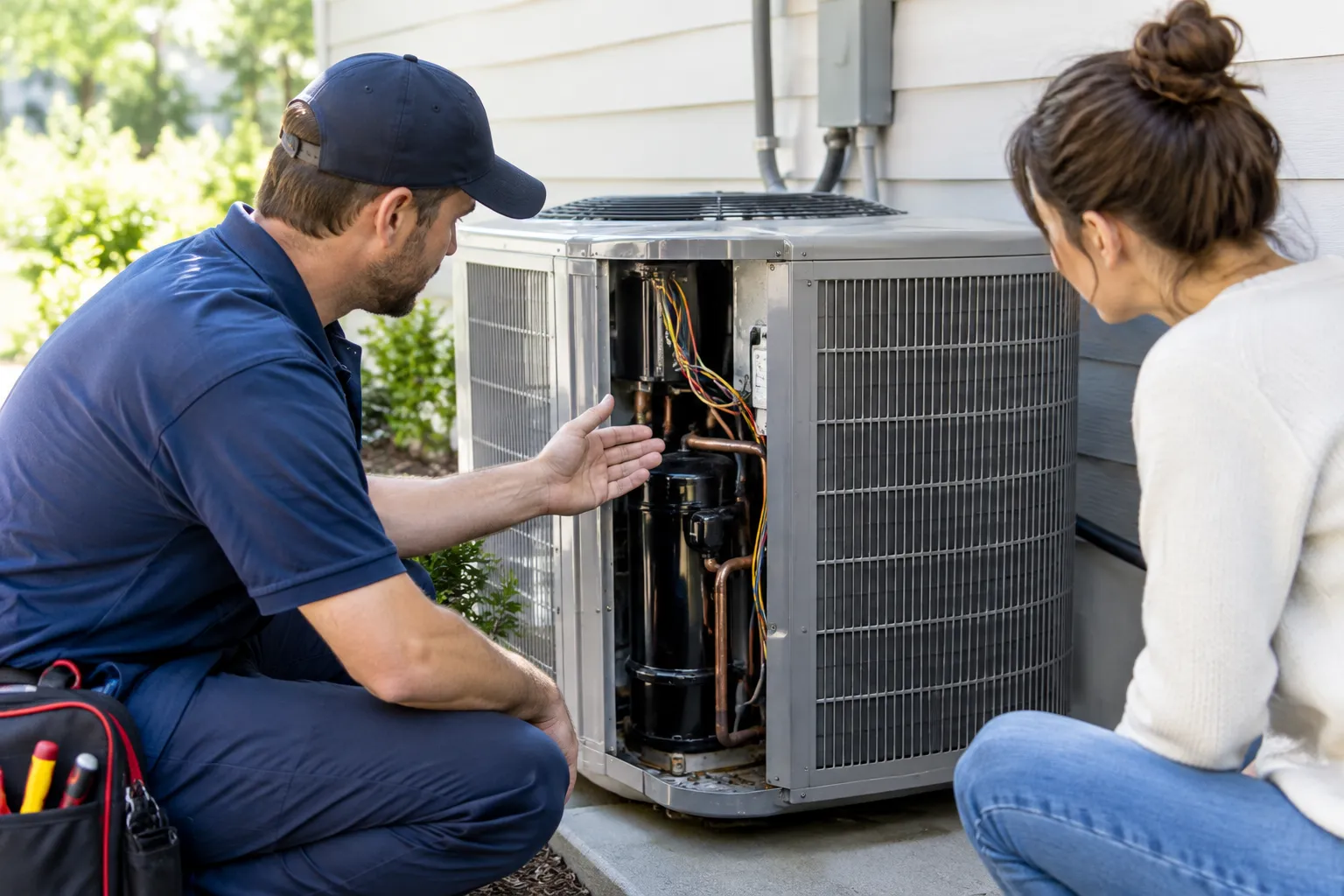
Stop and contact a qualified HVAC technician if you notice burning or electrical smells, sparks, damaged wiring, a breaker that trips again, loud or unfamiliar mechanical noises, repeated shutdowns, or suspected refrigerant trouble. Do not touch exposed wires, open sealed equipment, or try to locate or repair a refrigerant leak.
Refrigerant is handled as part of specialized HVAC work; suspected leaks call for a technician rather than a homeowner repair. If you see ice, turn the system off and arrange an assessment rather than continuing to run it. If water is spreading, keep clear of electrical equipment and address immediate household safety concerns without opening the AC unit.
Contact a qualified HVAC technician when the issue involves a recurring fault, possible refrigerant trouble, electrical concerns, or a problem that safe checks do not resolve. For related service considerations, read about HVAC air conditioner repair.
What to expect from professional AC repair
A technician will typically ask what the system is doing, when the problem began, and what checks you have already tried. They may inspect accessible components, test system operation, and investigate the cause before proposing a repair. The exact process depends on the symptoms and equipment.
Before work begins, ask what the diagnosis indicates, which repair is being proposed, and what the estimate includes. If the explanation is unclear, ask for it in plain language. You can also ask whether the repair addresses the underlying cause or only a visible symptom, and whether there are alternative options.
When comparing estimates, look beyond the total. Check whether each estimate describes the work, parts, any diagnostic or service charges, and applicable warranty terms. Ask how approval works if the technician finds another issue after starting. If a repair appears to be expanding beyond the original problem, pause and request an explanation before authorizing additional work.
If you are seeking local service, look for providers who serve your area and can explain their diagnostic process and estimate before proceeding. Keep your symptom notes and any prior service records handy; they can help the conversation stay focused.
AC Repair FAQ
What is the average cost to repair an air conditioner?
There is no single reliable average for every AC repair; cost depends on the fault, parts, labor, and local service terms. Request an itemized estimate after diagnosis and compare the scope of work.
What is the $5,000 AC rule, and should I use it to decide whether to repair or replace my system?
The “$5,000 rule” is a rule of thumb that multiplies a system’s age by an estimated repair cost to help frame a repair-or-replace decision. Treat it as a prompt for comparison, not a substitute for assessing condition, repair history, and replacement options.
How long does an air conditioner usually last?
Many central air conditioners last roughly 15 to 20 years, but actual service life varies with use, maintenance, installation, and climate. Age alone does not determine whether repair or replacement makes more sense.
Which air conditioner part most commonly fails?
No single part is always the most common failure across AC systems and conditions. A technician needs to diagnose the specific problem rather than assume a component has failed.
How long does a typical AC repair appointment take?
Appointment length varies with the problem, diagnostic needs, parts availability, and work required. Ask the provider for an estimated time after they understand the issue and assess the system.
Is it better to repair an older air conditioner or replace it?
Compare the repair estimate and the system’s condition, age, service history, and expected future needs with the cost and terms of replacement options. Ask the technician to explain the tradeoffs before deciding.
How often should an air conditioner be professionally inspected?
Many homeowners arrange professional AC maintenance once a year, often before the cooling season. Follow the equipment manufacturer’s maintenance guidance and arrange service sooner if the system develops a problem.
Can a clogged air filter cause an air conditioner to freeze up?
Yes. A clogged filter can restrict airflow and contribute to ice forming on the system, though other faults can also cause freezing. Turn the system off and seek service if ice returns or does not clear as directed by the manufacturer.
Arrange AC repair when simple checks are not enough
If the thermostat, filter, and visible airflow checks do not resolve the issue, stop there rather than opening equipment or repeatedly restarting the system. When arranging AC repair, describe the problem, when it began, any unusual sounds or smells, and the safe checks you have completed. Mention recurring shutdowns, ice, water, or a tripped breaker.
Choose a technician who explains the diagnosis and estimate clearly, and ask questions before approving work you do not understand. A clear record of what happened and a defined scope help you decide whether the proposed next step fits the problem.