
An air conditioner that runs but does not cool, makes a new noise, or leaks water may need attention—but the symptom alone rarely identifies the cause. This guide to air conditioner unit repairs explains what you can safely check, what information to gather, and when to stop troubleshooting and arrange professional service.
Warning signs your air conditioner may need repair
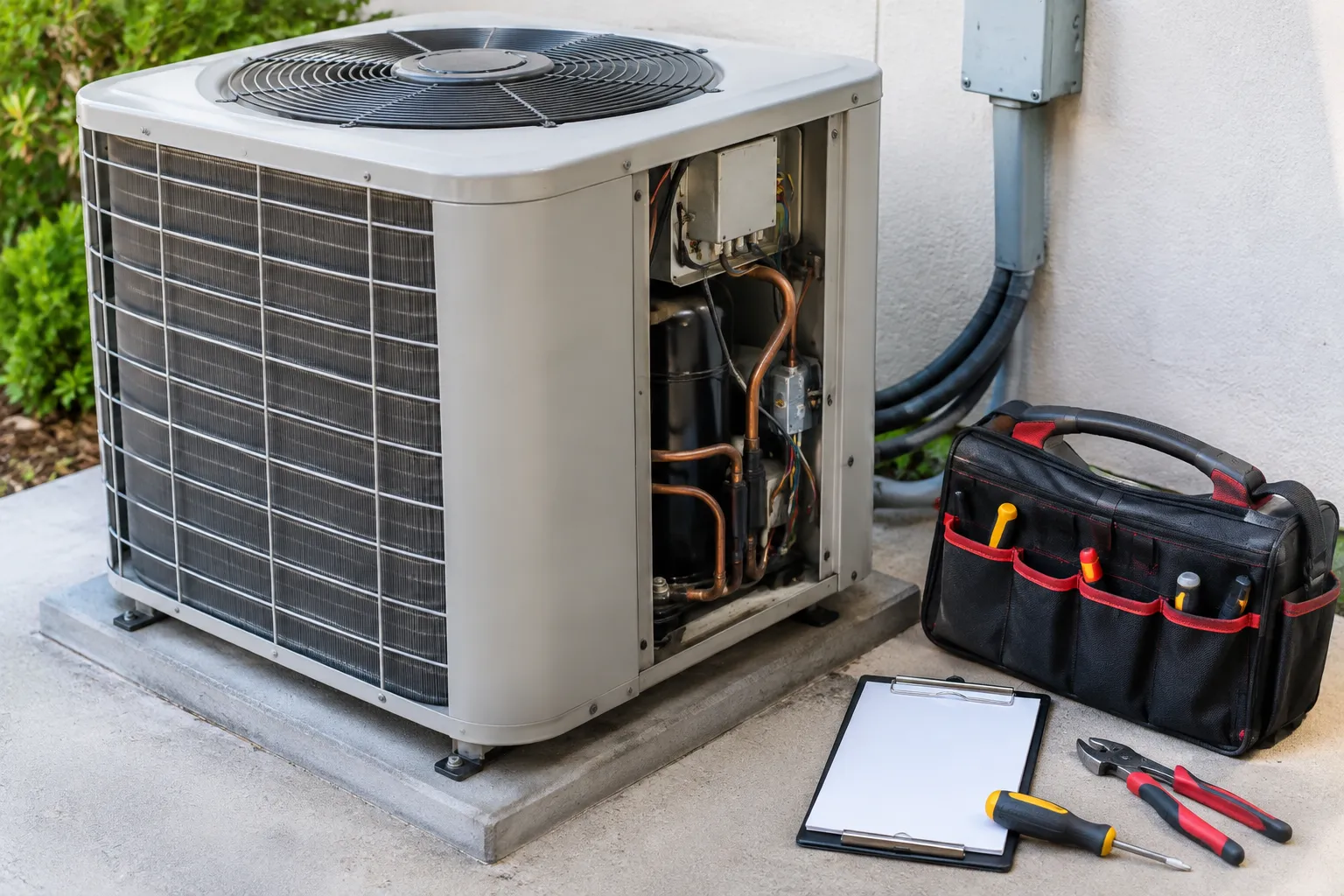
A change in how the system sounds, smells, or cools is worth noting, especially if it persists after basic checks. These signs do not confirm a specific fault, but they can help you decide what to do next.
- Weak airflow: Air from the vents may feel faint or uneven. A dirty filter or blocked vent can restrict airflow, but persistent weakness may point to a problem that needs inspection.
- Poor cooling: If the system runs but the rooms stay warm, note whether the issue affects the whole home or just certain rooms. The cause could involve airflow, controls, or the cooling system itself.
- Unusual sounds: Rattling, buzzing, grinding, or repeated clicking can signal a loose or malfunctioning part. A sudden or loud noise deserves attention; avoid opening the equipment to investigate.
- Unfamiliar odors: A musty smell may come from moisture or buildup, while a burning or electrical odor is a reason to turn the system off if you can do so safely and contact a professional.
- Water near the indoor unit: A puddle or active leak can damage nearby flooring or belongings. Protect the area and note where the water appears rather than dismantling the unit.
- Frequent starts and stops: Repeated cycling may relate to settings, airflow, or equipment operation. Record how often it happens and under what conditions.
- Ice on a coil or line: Ice is not a normal sign of cooling. Turn off cooling and arrange an assessment; do not chip or scrape the ice.
If several home repairs are competing for attention, prioritize active leaks or conditions that could damage the home, then document the AC symptoms and decide on the next step. Our home repair guidance offers a place to start when you are sorting through practical repair decisions.
Safe checks to make before calling for service
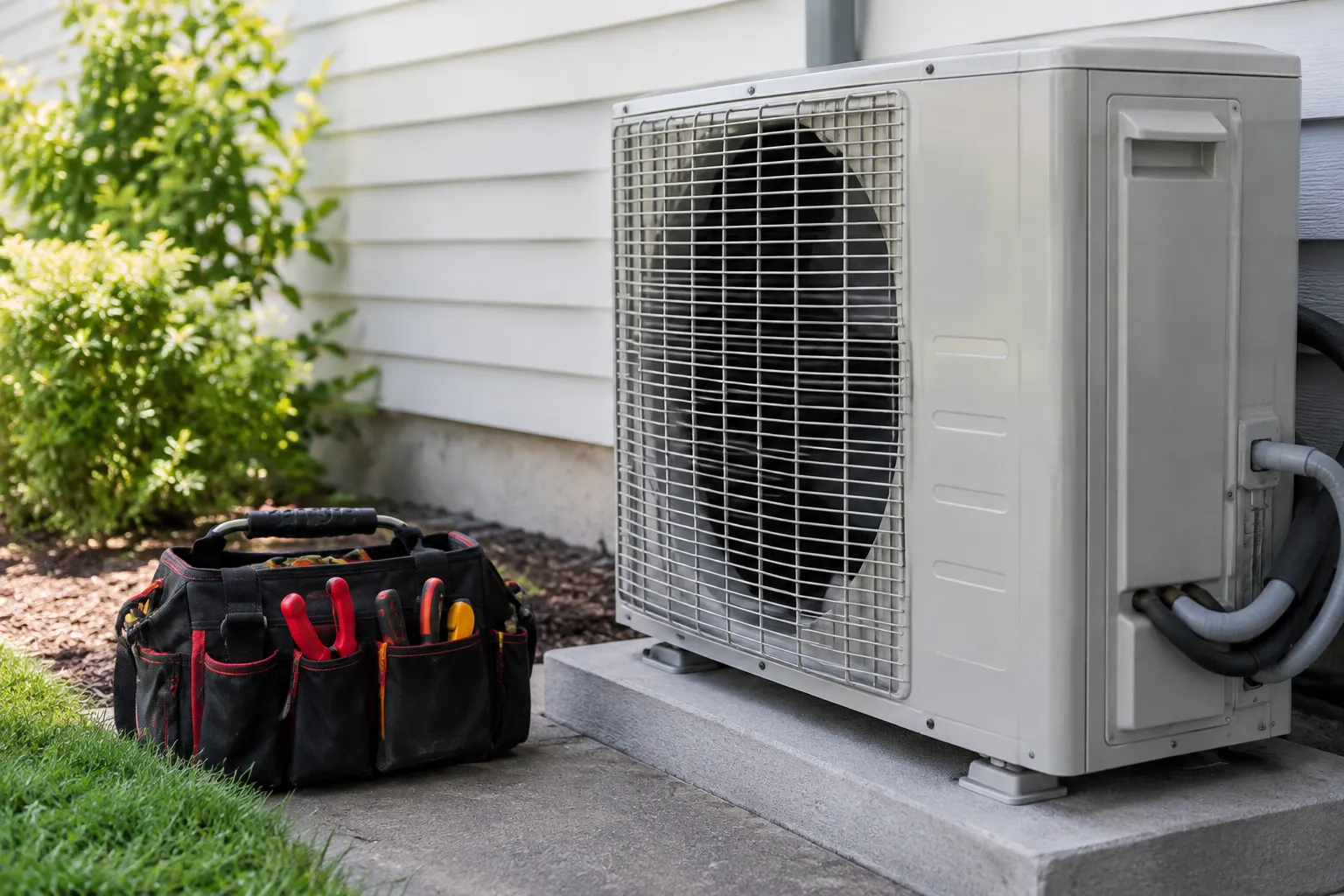
A few user-level checks may identify a simple issue or give a technician useful context. Do not remove access panels, reach into equipment, or touch wiring, capacitors, refrigerant lines, or other internal components.
- Check the thermostat. Confirm it is set to cooling, the temperature setting is below the room temperature, and the fan setting is what you expect. If the display is blank or settings do not respond, note that.
- Look at the air filter. If it is visibly dirty, replace it according to the system or filter instructions. Check the correct size and orientation before installing a replacement.
- Make sure supply vents are open and unobstructed. Move furniture, curtains, or other items that block airflow. Avoid closing many vents as a way to force more air elsewhere.
- Observe the outdoor unit from a safe distance. Note whether leaves, branches, or other debris are crowded around it. Clear only loose debris that is safely reachable from the outside; do not remove panels or reach through the grille.
- Check what happens after a change. If you adjust the thermostat or replace a filter, note whether airflow or cooling changes. Avoid repeated switching or trying improvised resets.
For the next step, compare the symptoms with the available air conditioner repair options. If a basic check does not resolve the problem, further troubleshooting may involve parts that are not safe for a homeowner to handle.
Details that help diagnose air conditioner unit repairs

Before booking service, write down what changed and what you have already checked. Specific observations can help a technician narrow down the issue without guessing from a broad description such as “the AC is broken.”
Include:
- When it began: Note the day or approximate time, and whether the change happened suddenly or gradually.
- What the system was doing: Record whether it was starting, running continuously, or cycling on and off when you noticed the problem.
- Which areas are affected: Is cooling weak throughout the home, or only in one room or zone? Mention any difference between floors if relevant.
- Thermostat information: Share the displayed setting and room temperature, if shown. These readings are useful context, not proof of a particular fault.
- The exact symptom: Describe the sound, odor, airflow change, visible water, or ice. A photo of a leak or exterior condition may help, provided you do not approach or open equipment to take it.
- Recent changes or work: Mention a replaced filter, thermostat adjustment, maintenance visit, power interruption, or other change you noticed before the symptom began.
- What you have tried: List the safe checks you completed and whether anything changed afterward.
For broader context on hvac air conditioner repair, review the kinds of service issues that may follow from these observations. If the problem has expanded or the cause remains unclear, pause rather than treating repeated trial-and-error as a repair plan.
Which AC repairs need a qualified professional
Repairs involving electrical components, refrigerant, or sealed-system parts should be handled by trained service professionals. These components can present electrical or equipment hazards, and refrigerant work requires appropriate expertise and equipment. Do not open the unit or attempt to top up refrigerant.
A technician may ask about the symptoms and checks you observed, then inspect the equipment and discuss possible causes and repair choices. Ask what was found, which work is being proposed, and whether more than one repair approach is appropriate. If the inspection reveals a larger issue, take time to understand the scope before authorizing additional work.
If there is a burning smell, exposed wiring, sparking, or another immediate safety concern, stop using the system. Turn it off using a control you can reach safely, and contact a qualified professional for guidance on your situation.
Air Conditioner Repair FAQs
What is the average cost to repair an air conditioner?
There is no single average that applies to every repair: the price depends on the fault, equipment, parts, and local service costs. Request an itemized estimate that identifies the diagnosis, proposed work, and any additional charges.
What is the most common problem in an AC unit?
Restricted airflow from a dirty filter is a common issue to check, but weak cooling can have other causes. Start with the filter and vents; if the symptom remains, arrange an assessment rather than assuming the cause.
How do I fix my AC if it is not cooling?
Check the thermostat settings, filter, and blocked vents first, then observe whether the system responds. If cooling does not return or you see ice, water, or damage, stop troubleshooting and arrange service.
How do I reset an AC that is not cooling?
Use the reset procedure in the equipment or thermostat manufacturer’s instructions; there is no universal reset sequence for every system. Do not repeatedly switch breakers or open equipment to force a reset.
Why is my air conditioner blowing air but not getting colder?
The system may have an airflow, control, or cooling problem, and blowing air alone does not identify which one. Check the thermostat and filter, then arrange service if the air remains warm.
Why is my air conditioner coil or line covered in ice?
Ice can form when the system is not operating as it should, including when airflow is restricted. Turn off cooling, do not chip the ice, and arrange a professional inspection.
Why is water leaking from my air conditioner?
Water may be escaping because of a drainage or moisture-management issue, but the location of the leak matters. Protect nearby surfaces, note where the water appears, and contact a professional if it continues or is near electrical equipment.
Is it safe to keep running an air conditioner that is making unusual noises?
A new or worsening noise is a reason to stop and assess rather than assume the system is safe to run. Turn it off if the noise is loud or accompanied by a burning smell, sparking, or poor operation.
Arrange service and prepare for the visit
If safe checks do not resolve the symptom, contact a qualified HVAC professional and describe what you observed. Share when it started, which rooms are affected, any thermostat readings, and what changed after basic checks.
Turn the system off if it presents an immediate safety concern, such as a burning smell, sparking, or visible electrical damage. If water is actively spreading, protect nearby belongings without opening the unit or approaching electrical components. A clear record of symptoms can make the conversation about air conditioner unit repairs more focused and help you understand the next steps before work begins.