Cheapest Home Improvement Projects with Biggest Impact (2026-2027 Ranked Guide)
Most “budget home improvement” lists throw out vague advice like “paint a room for under $200” without telling you which room, which color, or why it actually matters to your home’s value. This guide does things differently.
Below, we’ve ranked the cheapest home improvement projects with the biggest impact by three factors: visual transformation, functional improvement, and resale relevance. You’ll get real cost breakdowns, honest timelines, skill-level assessments, and the pitfalls that waste money. Let’s get into it.
How to Prioritize Cheap Projects Based on Your Situation
Before you grab a paintbrush, answer two questions:
- Are you improving for resale or personal enjoyment? Resale projects should align with local buyer expectations (more on regional variation below). Personal enjoyment projects can reflect your taste more freely.
- What’s your home’s biggest liability right now? Functional problems (drafty doors, dim lighting, dated fixtures) almost always outrank aesthetic issues in terms of impact per dollar.
If you’re unsure where your home stands cost-wise, the How Much Does Home Repair Cost? 2026-2027 Guide is a solid starting point before you budget anything.
The Projects, Ranked by Impact-to-Cost Ratio
1. Interior Paint — The Highest ROI Project, Period
Estimated Cost: $80–$350 per room (DIY materials only)
Time Investment: 4–8 hours per room
Skill Level: Beginner
Impact: Visual transformation + resale signal
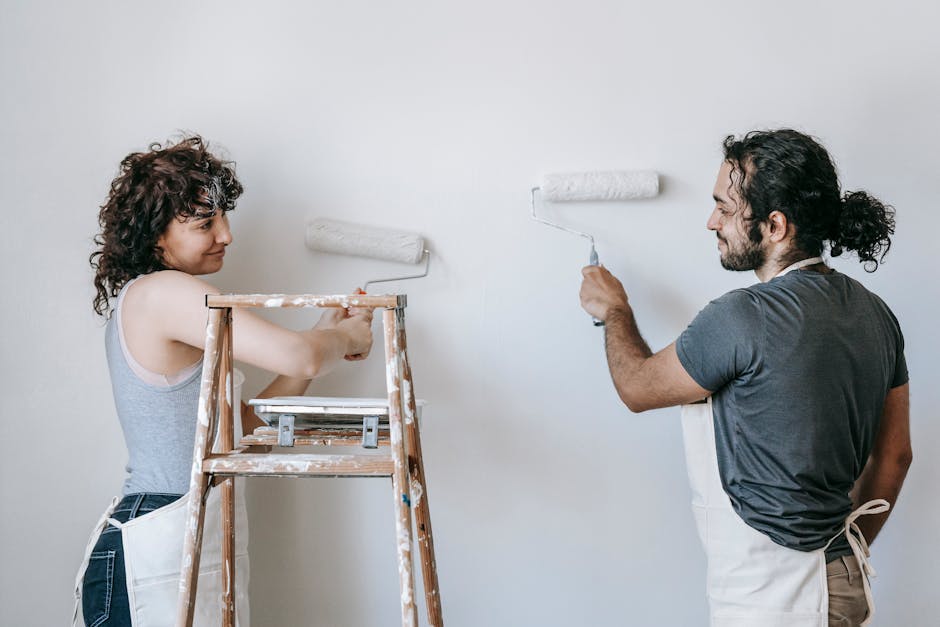
Fresh interior paint is the single most cost-effective improvement most homeowners can make. It removes evidence of wear, makes spaces feel larger or cozier depending on the palette, and signals to buyers that a home has been cared for.
2026-2027 color psychology note: Warm whites (Benjamin Moore “White Dove,” Sherwin-Williams “Alabaster”) dominate buyer-preferred palettes in most U.S. markets. Deep earth tones (terracotta, sage green, warm clay) are trending in primary bedrooms and dining rooms. Avoid stark cool grays — they’ve peaked and can now feel dated in many markets.
What to buy: One gallon of quality paint covers roughly 400 sq ft. Budget for primer separately if you’re covering dark colors. Brands like Behr Premium Plus (available at Home Depot, $35–$45/gallon) and Sherwin-Williams SuperPaint ($70/gallon) offer meaningful durability differences worth the price split.
Common mistake: Skipping prep work. Dirty or unprimed walls cause paint to peel within 12–18 months, wasting the entire investment. Clean walls with TSP substitute, fill nail holes, and tape carefully.
Regional note: In Sun Belt markets (Texas, Florida, Arizona), light and neutral palettes remain strongly preferred by buyers. In Northeast and Pacific Northwest markets, buyers are more accepting of moody, saturated accent walls.
2. Cabinet Hardware Replacement
Estimated Cost: $60–$200 for a full kitchen
Time Investment: 1–3 hours
Skill Level: Beginner
Impact: Kitchen modernization without renovation cost
Swapping out dated brass or basic builder-grade pulls for matte black, brushed nickel, or unlacquered brass hardware is one of the fastest visual upgrades available. It signals a kitchen renovation without the $15,000 price tag.
What to buy: Measure your existing hole spacing (most standard is 3″ or 3.75″ center-to-center). Bulk packs from Amazon, Lowe’s, or Cabinet Hardware Barn range from $3–$8 per pull. Budget $80–$130 for a 10-cabinet kitchen.
Skill caveat: If your cabinets have mismatched existing holes, you’ll need to fill and redrill — which requires wood filler, sanding, and touch-up paint. That adds complexity.
3. Lighting Fixture and Bulb Upgrades
Estimated Cost: $40–$300 depending on fixture replacement vs. bulb-only swap
Time Investment: 30 minutes–3 hours
Skill Level: Beginner to Intermediate
Impact: Dramatic mood and functionality improvement
Lighting is one of the most underestimated levers in home improvement. Outdated boob lights and yellowed plastic fixtures make spaces look cheap regardless of everything else you’ve done.
Two-tier approach:
- Quick win: Replace all bulbs with warm-white LEDs (2700K–3000K color temperature). A 10-pack of quality A19 LEDs runs $12–$18. This alone improves ambiance significantly.
- Medium project: Replace a dated dining room chandelier or entryway fixture. Flush-mount and semi-flush fixtures in the $60–$150 range at Home Depot or Wayfair can completely transform a room’s character.
Permit note: Replacing a fixture on an existing circuit (same wiring, same location) typically does not require a permit in most U.S. jurisdictions. Adding new circuits or moving fixture locations usually does.
4. Weatherstripping and Door Seal Upgrades
Estimated Cost: $20–$80 per door
Time Investment: 1–2 hours
Skill Level: Beginner
Impact: Functional (energy savings) + comfort + inspection credibility
This is the rare cheap project that pays you back monthly. Drafty doors and windows are one of the top energy-loss culprits in U.S. homes. Self-adhesive foam weatherstripping (V-strip for sides, door sweep for bottoms) is available at any hardware store and requires no special tools.
For homeowners prepping for resale, functional improvements like this also perform well during buyer inspections — preventing last-minute negotiation pressure. For more on when functional issues become negotiation liabilities, check the Emergency Home Repair Service: 2026-2027 Guide to Free & Low-Cost Help.
5. Front Door and Entryway Refresh
Estimated Cost: $30–$150 (paint + hardware)
Time Investment: 3–5 hours
Skill Level: Beginner to Intermediate
Impact: Curb appeal + first impression for buyers and guests
Real estate research consistently identifies curb appeal as a top driver of buyer perception — and the front door is the focal point. A freshly painted door in a bold, intentional color (deep navy, forest green, classic red) paired with new house numbers and a polished kickplate can change an entire home’s street presence for under $100.
What to buy: Exterior door paint (semi-gloss or high-gloss finish for durability), new deadbolt hardware if dated, brass or matte black house numbers. Total: $80–$150.
Seasonal timing: Paint exterior doors in dry weather above 50°F. In northern climates, spring and fall are ideal. Avoid summer humidity in Gulf Coast states.
6. Bathroom Caulking and Fixture Touch-Ups
Estimated Cost: $15–$60
Time Investment: 2–4 hours
Skill Level: Beginner
Impact: Cleanliness signal + mold prevention
Cracked, discolored grout and failing caulk around tubs and sinks are among the first things buyers and home inspectors notice. Recaulking is genuinely cheap, but it requires patience to do it right.
Process: Remove old caulk with a caulk remover tool ($8), clean the surface thoroughly with isopropyl alcohol, apply painter’s tape for clean lines, apply new silicone caulk (mold-resistant, ~$8–$12 per tube), and smooth with a wet finger. Let cure 24 hours before moisture exposure.
Common mistake: Applying new caulk over old caulk. It peels within months and looks worse than the original problem.
7. Basic Landscaping and Curb Appeal
Estimated Cost: $50–$300 depending on scope
Time Investment: Half-day to full weekend
Skill Level: Beginner
Impact: First impression, neighborhood conformity signal
You don’t need professional landscaping to make a meaningful curb appeal improvement. Edge the lawn, add a fresh layer of dark mulch to beds ($4–$6 per bag at Home Depot), plant a few low-maintenance perennials, and trim overgrown shrubs.
Regional note: Drought-resistant landscaping (native grasses, succulents, decomposed granite) adds value in Western and Sun Belt markets where water conservation is increasingly a buyer priority. Lush green lawns remain preferred in Midwest and Southeast markets.
Seasonal timing: Spring planting maximizes establishment time. Fall is ideal for overseeding lawns in cooler climates.
8. Light Switch and Outlet Plate Replacement
Estimated Cost: $20–$60 for a full home
Time Investment: 1–2 hours
Skill Level: Beginner
Impact: Subtle but cumulative — removes evidence of age and neglect
Yellowed, cracked, or mismatched outlet plates are one of those details buyers notice subconsciously. A full set of white Decora-style plates runs $15–$30 for most homes. This is a 90-minute project with a screwdriver.
Upgrade option: Swap standard switches for rocker-style or Decora switches ($1.50–$3 each at hardware stores) for a more modern look. This requires basic electrical work but is well within DIY territory if you’re comfortable turning off circuits.
Projects to Avoid (They Sound Cheap, But Aren’t)
Not every “budget” project delivers. Here are a few traps:
- Peel-and-stick backsplash tiles: They look cheap in person, don’t adhere long-term in humid conditions, and can actually hurt buyer perception.
- DIY popcorn ceiling removal without testing for asbestos: Homes built before 1980 may contain asbestos in popcorn texture. Testing is required ($30–$50 per sample) before any removal — skipping this is both a health and legal liability.
- Over-improving for your neighborhood: A $500 bathroom refresh adds value. A $4,000 DIY renovation in a market where comparable homes sell for $180K may not return the investment. See the Home Improvement Services Package Deals: 2026-2027 Buyer’s Guide for help scoping projects relative to market value.
DIY vs. Hiring Out: When Does the Math Change?
DIY is not always cheaper when you factor in tool purchases, mistakes, and time. For projects like painting a single room, replacing cabinet hardware, or swapping outlet plates — DIY almost always wins. For anything involving electrical panel work, load-bearing structures, or HVAC, the risk-adjusted cost of DIY is often higher than hiring a professional.
For a deeper breakdown of when to hire help, the How to Find a Reliable Service Business Near You (2026-2027) guide walks through vetting contractors without getting overcharged.
Quick Budget Allocation Strategy
If you have $500 or less to improve your home right now, here’s a prioritization framework:
| Budget | Highest-Impact Allocation |
|---|---|
| $100 | Front door paint + hardware + bulb upgrades |
| $200 | Add interior paint for main living area |
| $350 | Add cabinet hardware + bathroom recaulk |
| $500 | Add basic landscaping + weatherstripping |
Start with projects visible from the street or at point-of-entry — these provide the largest perception shift per dollar, whether you’re selling or just hosting.
Final Thoughts
The cheapest home improvement projects with the biggest impact aren’t magic — they work because they address what buyers and guests actually notice first: cleanliness signals, light quality, entry experience, and evidence of maintenance. None of the projects on this list require professional skills to attempt, though some benefit from extra care and patience.
For more on budgeting and scoping home projects strategically, explore House Project Lab — we cover the full spectrum from weekend DIY to knowing when to call in help.
If you’re planning home improvements as a business expense, understanding rental documentation like what is Ejari in Dubai can help with proper deductions.
Disclosure: This article may contain affiliate links to products we recommend. If you purchase through those links, we may earn a small commission at no additional cost to you. All product recommendations are based on research and editorial judgment.