
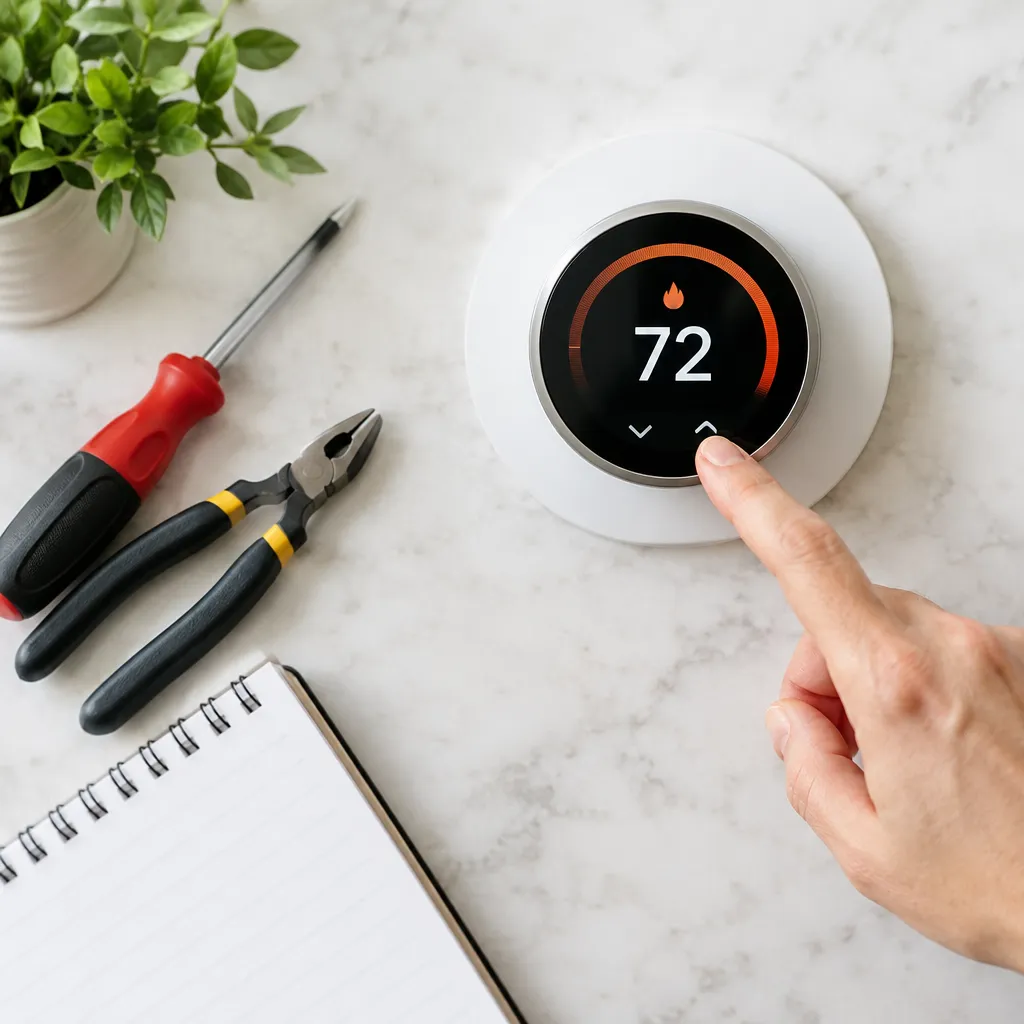
1. Confirm the thermostat is calling for heating or cooling
Check that the thermostat is set to the correct mode and that its setpoint is above the room temperature for heating or below it for cooling. Review the schedule, make sure the display is active, and replace batteries if the model uses them. If the settings look right but the system does not respond, note that before moving on. For other household repairs, explore our home repair guides.
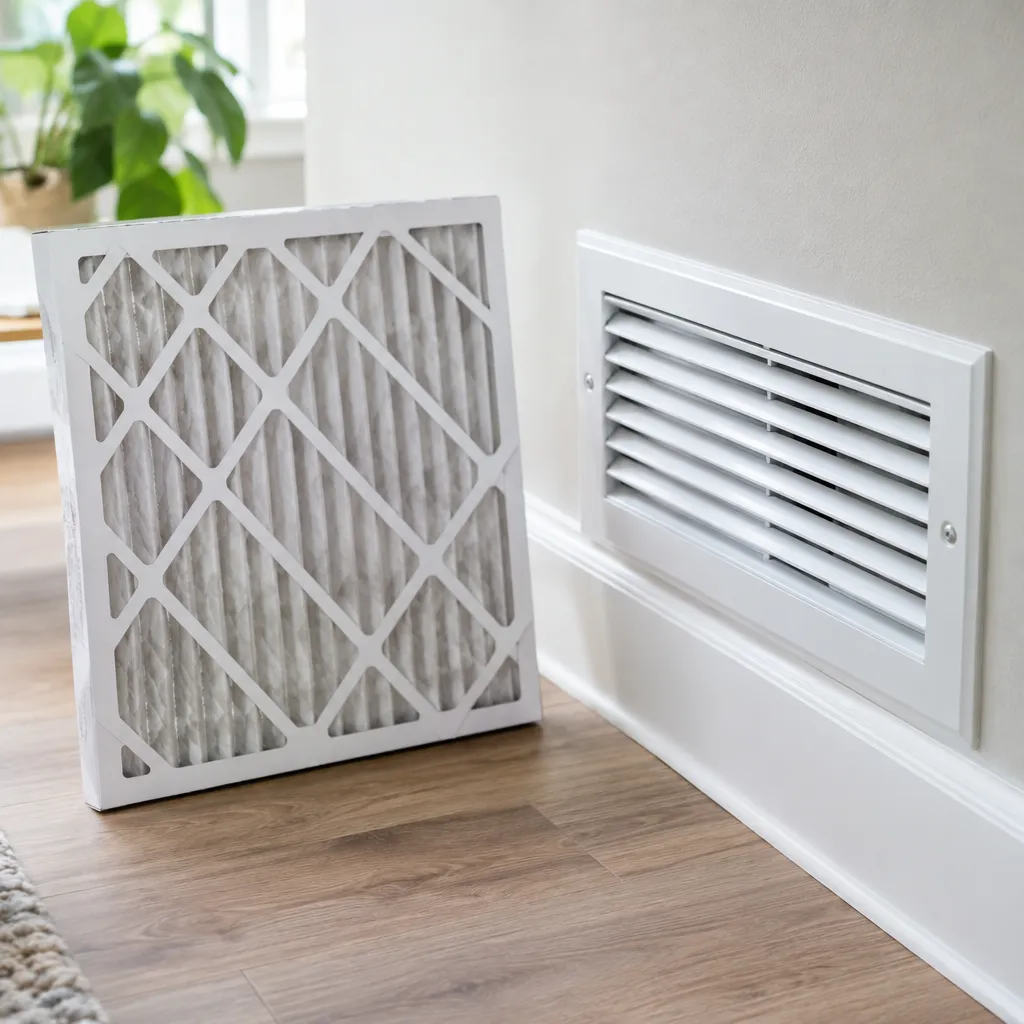
2. Check the air filter and visible supply vents
If the filter is easy to access, look for heavy dust buildup and check its replacement guidance before changing it. Make sure supply vents are not covered by furniture, rugs, or curtains. Do not remove equipment panels to inspect inside the system. These basic checks complement our HVAC maintenance advice, but they will not diagnose every airflow problem.

3. Look for a tripped HVAC breaker without opening panels
If you can safely access your home’s breaker panel, look for a clearly labeled HVAC breaker that is visibly in the tripped position. Do not remove the panel cover or touch wiring. A breaker that trips again after resetting is a reason to stop; repeated trips can signal a fault that requires professional diagnosis. Routine ac maintenance does not replace an electrical inspection.
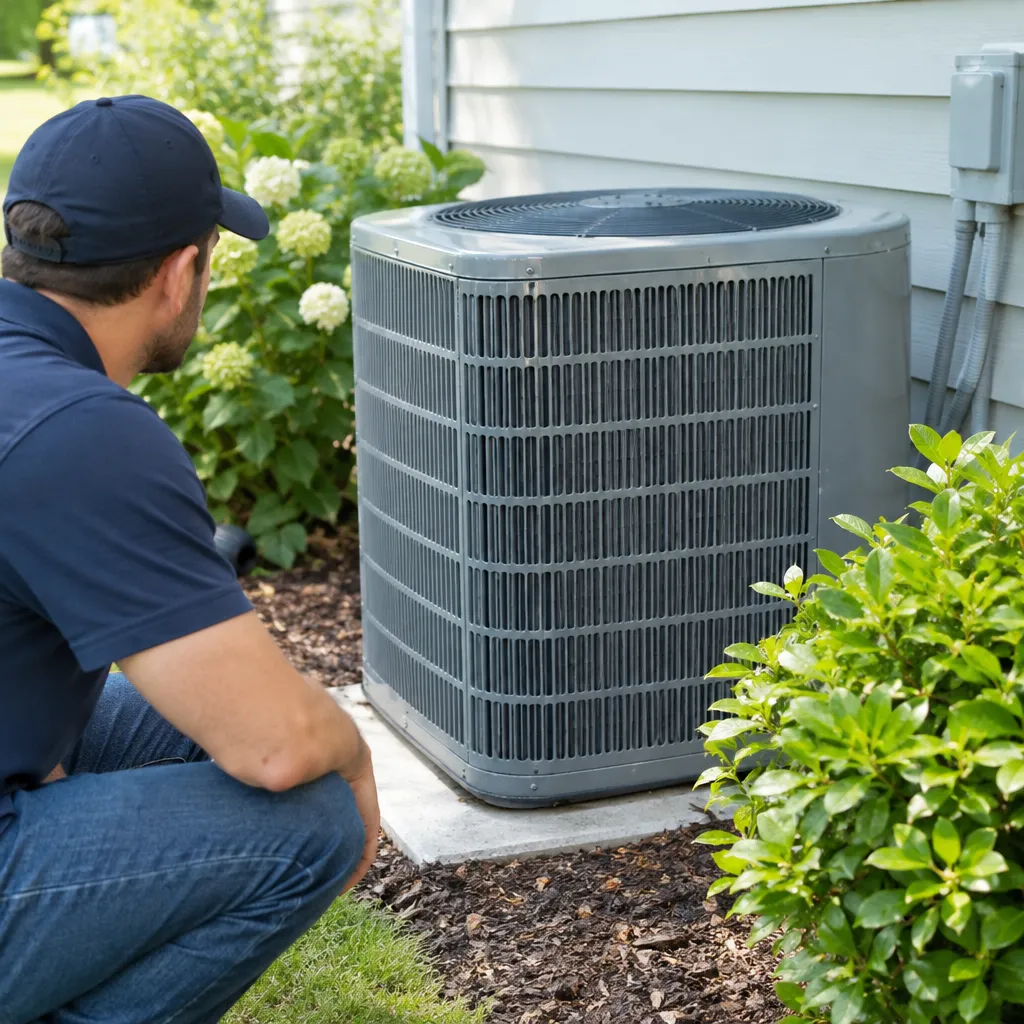
4. Inspect the outdoor unit for obvious airflow obstructions
From a safe distance, check whether leaves, snow, or other visible debris are crowding the outdoor unit. Keep hands and tools out of the equipment, and do not remove panels or reach through the grille. If clearing loose material around the unit is safe, do so without touching its components. Persistent poor operation, visible damage, or an obstruction you cannot safely clear calls for a technician.
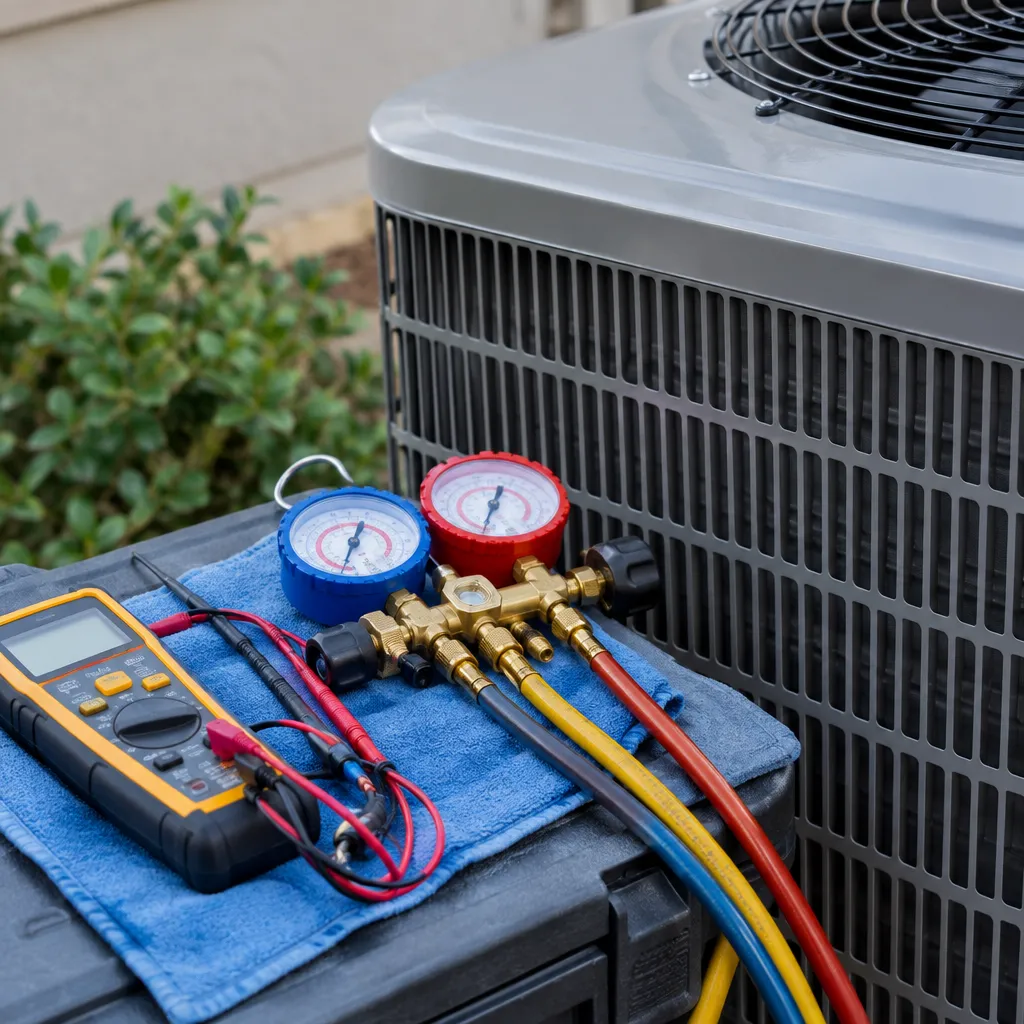
5. Note unusual sounds, smells, moisture, or ice
Pay attention to new grinding, banging, or repeated clicking, as well as burning or unusual odors. Look for water around indoor equipment and visible ice on accessible surfaces, but do not chip ice or open the unit. Turn the system off only if you can do so safely; a burning smell, active leak, or suspected refrigerant issue warrants prompt professional help.
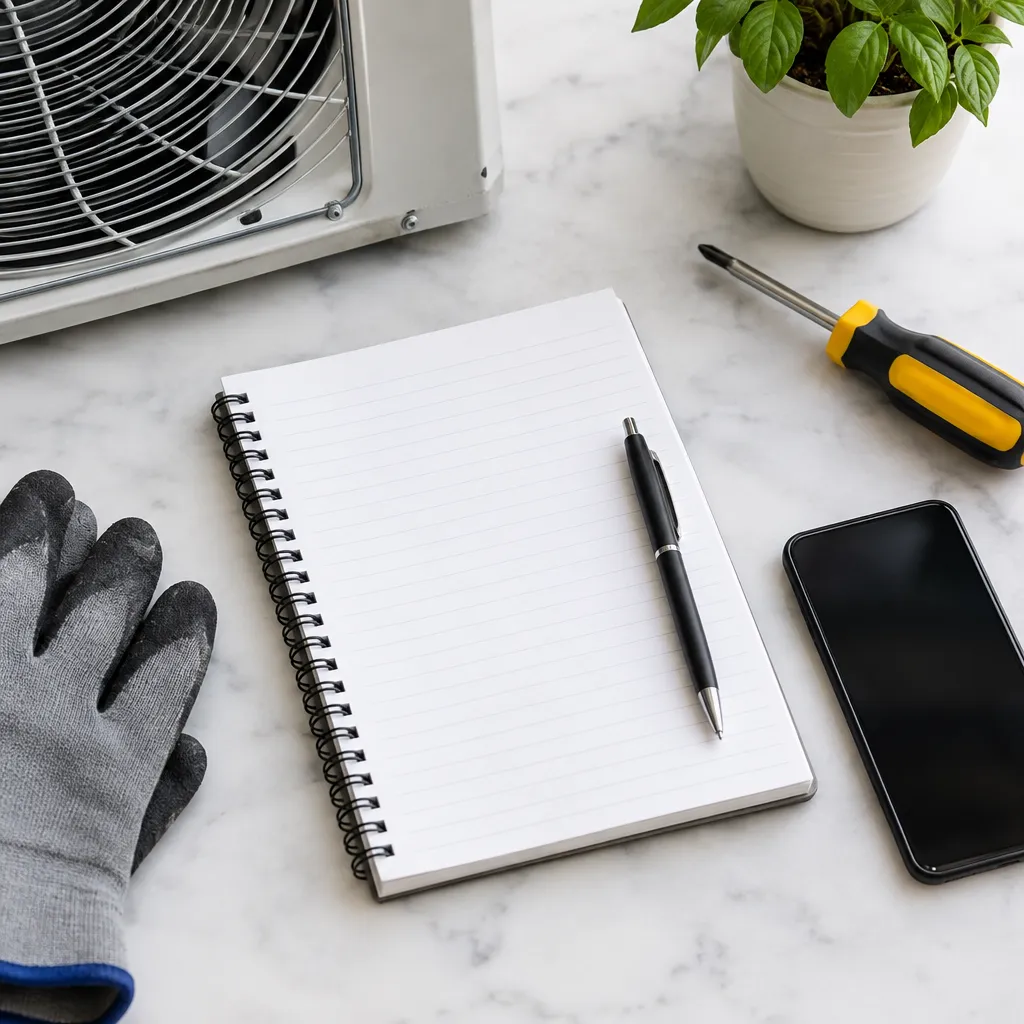
6. Record when the system starts, stops, or changes behavior
Write down whether the problem affects heating, cooling, or both; when it began; and what happens when the thermostat calls for a change. Note room temperatures, thermostat readings, unusual sounds, and whether the equipment starts and stops quickly. These observations can help a technician narrow down the issue without requiring you to take apart the system.
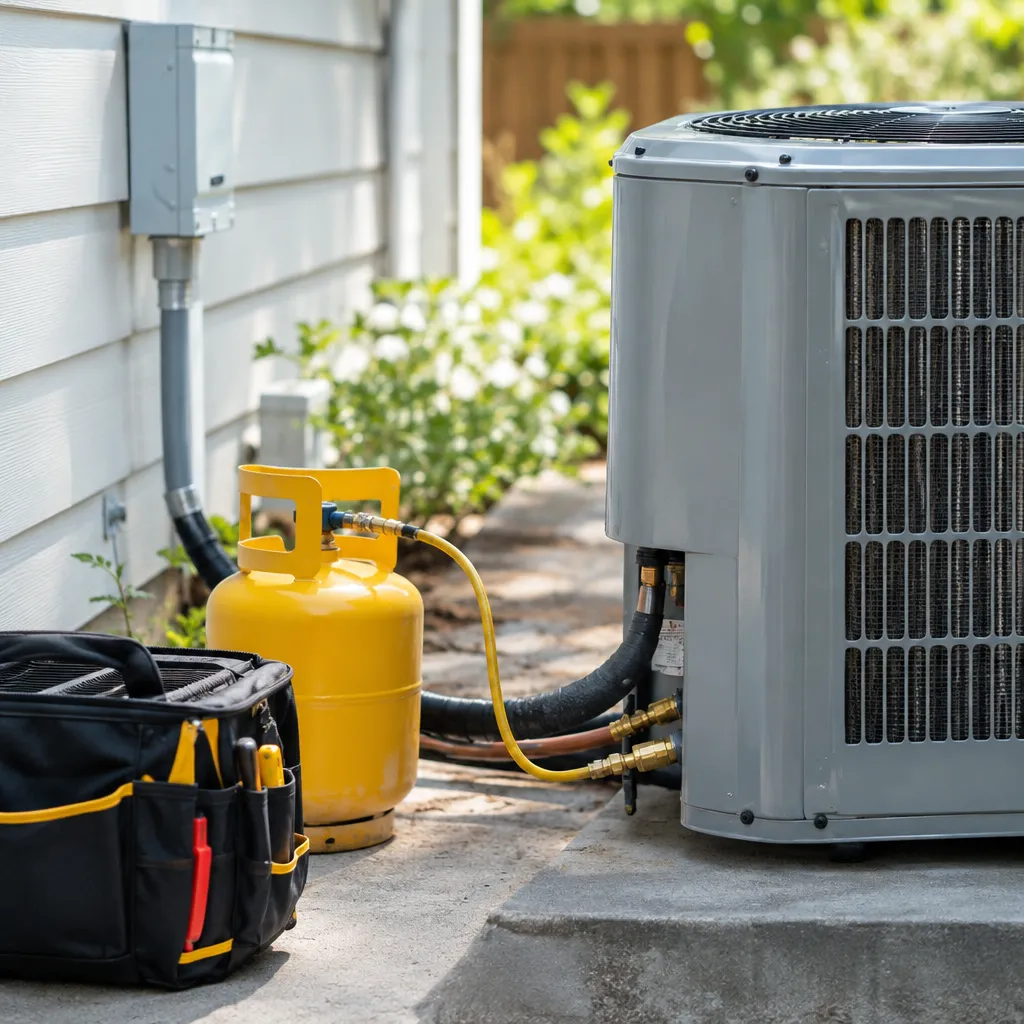
7. Keep clear of suspected gas, electrical, or refrigerant hazards
If you smell gas or suspect a leak, leave the area and contact your gas utility or emergency services from a safe location. Do not operate switches or use flames nearby. For sparks, exposed wiring, a burning odor, or suspected refrigerant leakage, stop troubleshooting and keep others away; arrange appropriate professional help.
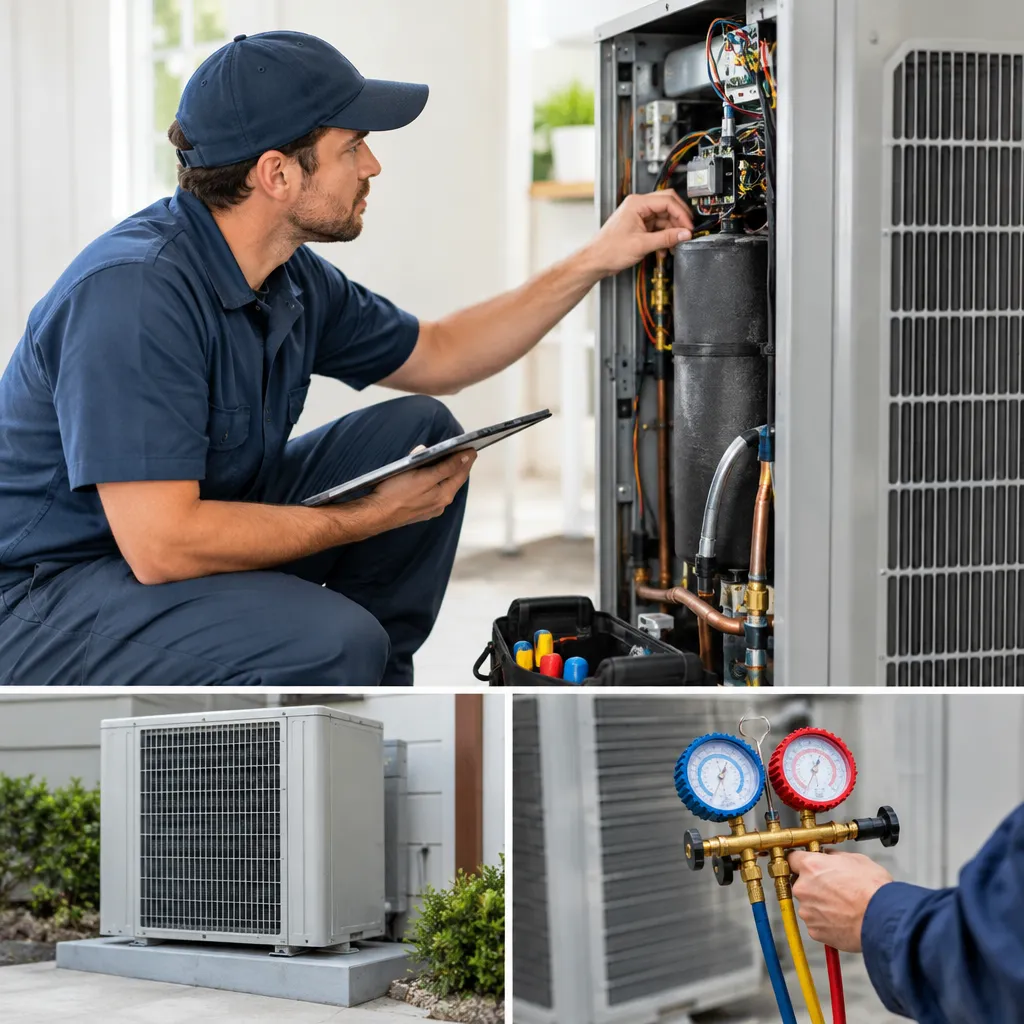
8. Arrange HVAC repair when basic checks do not explain the fault
Book a professional diagnosis if safe checks do not resolve the problem, a breaker trips again, the system repeatedly shuts down, or you see leaks, ice, damage, or warning signs. Share your notes on timing, thermostat settings, affected rooms, and sounds or odors. Avoid replacing parts based on a guess: the underlying cause may require testing.
HVAC Repair FAQ
How expensive is it to replace an HVAC system?
There is no single replacement cost: the total depends on the equipment and the work needed for your home. Request an itemized estimate based on an on-site assessment.
How many years should a HVAC system last?
Many HVAC systems last roughly 15 to 20 years, but lifespan varies by equipment, maintenance, and operating conditions. Age alone does not determine whether repair or replacement makes sense.
Can I fix my HVAC system myself?
You can safely check thermostat settings, filters, visible vents, and obvious outdoor obstructions. Leave wiring, refrigerant, internal components, and recurring electrical problems to qualified professionals.
What is the most common HVAC problem?
A dirty or restricted air filter is a common cause of airflow trouble, but similar symptoms can have other causes. Check the filter safely before assuming it is the only fault.
What should I tell an HVAC technician when booking a repair?
Describe whether heating, cooling, or both are affected, when the problem began, and what the system does. Mention unusual noises, smells, moisture, ice, breaker trips, and checks already completed.
Why does my HVAC system keep turning on and off?
Frequent cycling can result from thermostat or airflow issues, among other causes. Note how often it happens and whether rooms reach the set temperature; arrange diagnosis if basic checks do not help.
Is it safe to run an HVAC system that is making unusual noises?
A new grinding, banging, or persistent unusual noise can indicate a problem, so turn the system off if you can do so safely and arrange an inspection. Never keep running it if you notice burning smells or other hazards.
What does the $5,000 rule mean for HVAC?
The $5,000 rule is a rough repair-versus-replacement comparison: multiply the system’s age by the repair estimate, then compare the result with $5,000. Treat it as a rule of thumb, not a diagnosis or a substitute for an itemized estimate.
Recommended next steps
If the issue remains after safe checks, arrange a diagnosis and share your observations rather than attempting internal repairs. If you find a hazard, stop troubleshooting and seek appropriate help.