
When an air conditioner stops cooling, the symptom can point to where the problem is—but it rarely confirms the cause on its own. This guide covers safe first checks, what to expect from an air conditioner repair visit, and how to decide whether a repair diagnosis warrants a replacement discussion.
What your AC symptoms can tell you
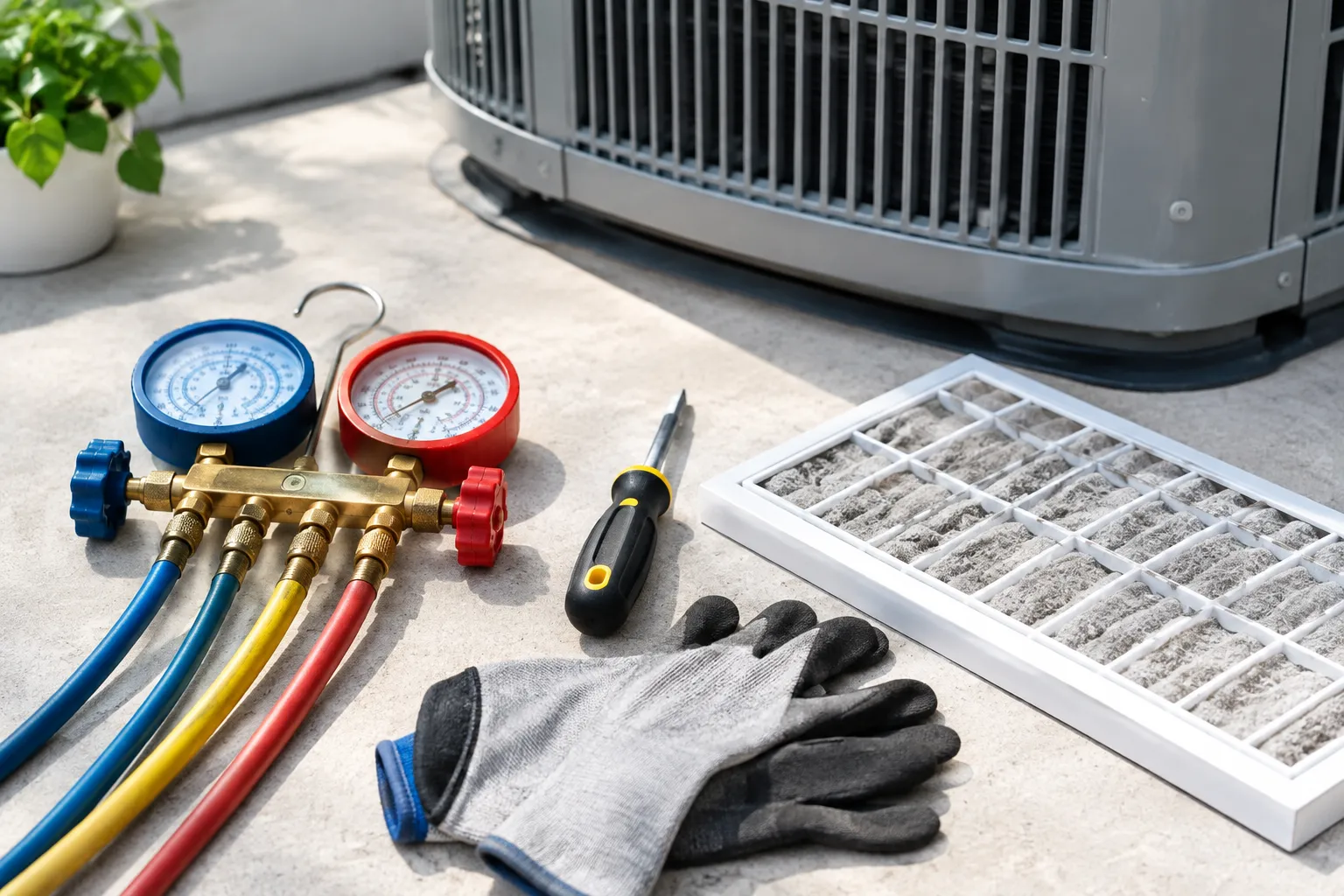
Note what the system is doing before you call for service: when the issue began, whether it affects the whole home or only certain rooms, and whether anything changed beforehand. These details can help a technician narrow down the possibilities, but the same symptom can have several causes.
Common observations include:
- Weak airflow may relate to a clogged filter, blocked return or supply vents, a blower issue, or another airflow restriction.
- Warm air can result from incorrect thermostat settings, airflow problems, an outdoor unit that is not operating, or a fault that needs testing.
- Unusual sounds—such as buzzing, rattling, grinding, or repeated clicking—can come from loose parts or an electrical or mechanical problem. Turn the system off if the noise is severe or sudden.
- Water around the indoor unit may indicate a drain or condensate problem. If water is spreading or near electrical equipment, switch the system off and arrange service.
- Short cycling, when the system repeatedly starts and stops, can have several causes, including airflow restrictions, control problems, or equipment faults.
Describe what you see and hear rather than guessing at a failed part. If you are keeping a running list of household problems, prioritize active leaks and other conditions that could cause further damage. Our home repair guides cover practical ways to assess home repairs and decide when to get help.
Safe checks to try before calling for repair
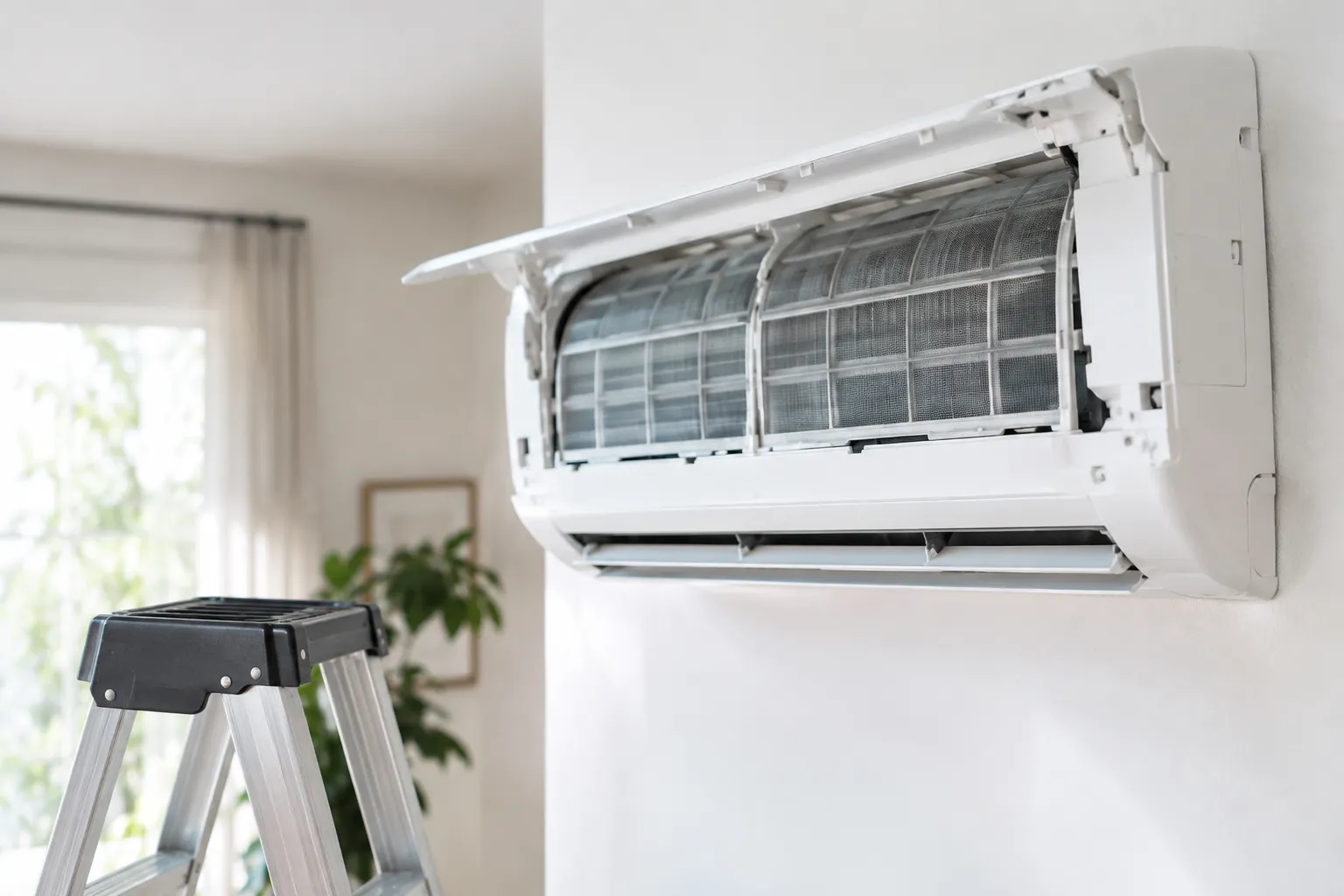
A few basic checks can rule out simple problems. Do not open equipment panels or handle wiring, refrigerant lines, or internal components. If you smell something burning, see smoke, hear loud electrical buzzing, or notice water near electrical parts, turn the system off if you can do so safely and contact a qualified technician.
- Check the thermostat. Confirm it is set to cooling, the temperature setting is below the current room temperature, and the fan setting is appropriate. If the display is blank, check whether the thermostat uses batteries.
- Inspect the air filter. If it is visibly clogged, replace it with the correct size and type for the system. A restricted filter can reduce airflow; do not run the system without a filter.
- Check vents and returns. Make sure supply vents and return grilles are not blocked by furniture, rugs, or curtains. Avoid closing many vents to try to force more cooling into other rooms.
- Look at the breaker once. If the air conditioner breaker has tripped, you may reset it once if there are no warning signs such as burning smells or visible damage. If it trips again, leave it off and call for service rather than repeatedly resetting it.
- Observe the outdoor unit from a safe distance. Check whether it is obstructed by objects or heavy debris, but do not reach inside, remove panels, or touch moving parts. Keep the area clear without attempting a repair.
After these checks, note whether airflow or cooling changes. For routine filter and upkeep reminders, see the air conditioner maintenance checklist. If the system still blows warm air, repeatedly shuts off, leaks, or makes concerning noises, arrange professional air conditioner repair instead of continuing to troubleshoot.
What to expect during an air conditioner repair visit
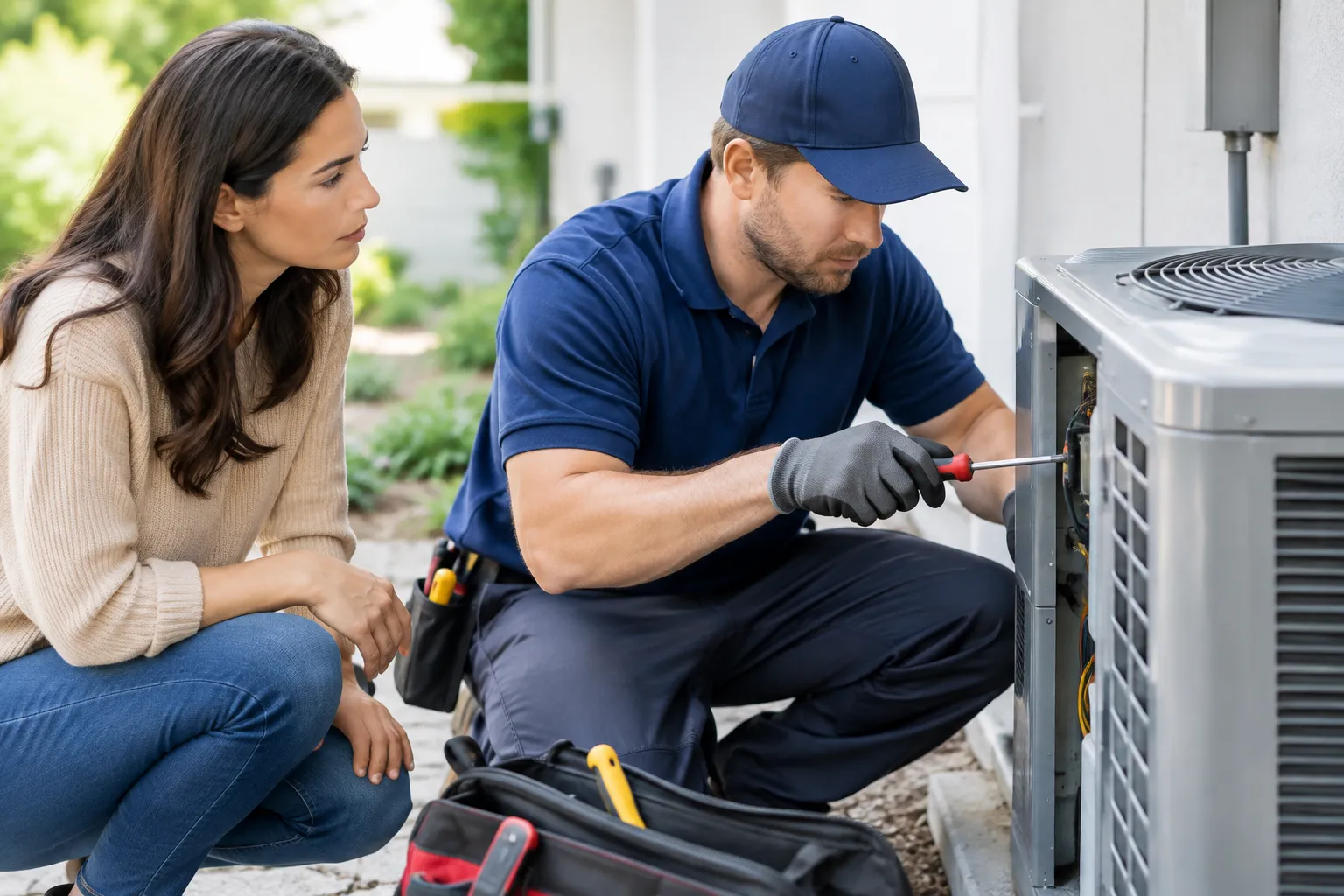
A technician will typically ask about the symptoms, when they started, and what you have already checked. Share details such as which rooms are affected, whether the system runs continuously, and whether you noticed water, odors, or unusual sounds. Mention any recent maintenance or work on the system if you know about it.
The technician may inspect accessible components and test system operation to identify the cause. Depending on the symptoms, the evaluation may include checking airflow, electrical controls, drainage, or other parts of the cooling system. Some problems require measurements or additional testing; a visible symptom alone may not reveal the faulty component.
Before work begins, ask for a clear explanation of:
- What was tested and what the findings show.
- Which component or condition is causing the problem, and how it relates to the symptoms.
- What repair is proposed and whether other work is recommended.
- Whether the system can be operated safely while you decide.
- What is included in the written estimate and any applicable repair warranty.
You do not need to approve work you do not understand. Ask the technician to explain the diagnosis in plain language and separate necessary repairs from optional recommendations. If the explanation is unclear, request the findings in writing. For ongoing care after the repair, use our guide to AC maintenance.
How to weigh repair against replacement
A repair can make sense when the fault is clear, the proposed work addresses it, and the rest of the system appears serviceable. Replacement merits discussion when the equipment is older, has recurring problems, has a major component failure, or needs repairs that seem disproportionate to the system’s condition. One factor alone does not settle the decision.
Ask the technician to explain the system’s age, condition, repair history, and any signs of related damage. If the diagnosis involves a major component, ask whether the repair is likely to address the underlying issue or whether other problems remain. A second opinion can be reasonable when the diagnosis is unclear, the recommendation is for extensive work, or you are being asked to decide on replacement without a clear explanation.
Compare the proposed repair and replacement options using the same questions:
- What exactly is being repaired or replaced?
- What is the condition of the remaining equipment?
- What work is included, and what is excluded?
- What warranty applies to the work or equipment?
- Are there safety, water-damage, or code concerns that need attention?
A commonly cited “$5,000 rule” is a rough screening tool that multiplies the system’s age by the estimated repair cost; if the result exceeds $5,000, some homeowners use it as a reason to explore replacement. It is not a technical standard or a substitute for comparing the system’s condition, repair scope, and written options.
Air Conditioner Repair FAQs
What is the average cost to repair an air conditioner?
There is no single average that applies to every air conditioner repair: the total depends on the diagnosis, parts, labor, location, and whether additional work is needed. Ask for an itemized estimate before authorizing the repair.
What is the most common AC repair?
There is no one repair that is most common for every system; frequent service needs can include electrical components, drainage, and airflow problems. The right repair depends on testing the equipment and identifying the cause.
What is the average lifespan of an air conditioner?
Many central air conditioners last about 15 to 20 years, though actual service life varies with installation, use, climate, maintenance, and repair history. Age is one factor to consider, not a replacement verdict by itself.
Why is my AC running but not cooling the house?
An AC can run without cooling effectively because of restricted airflow, incorrect thermostat settings, an outdoor-unit problem, or another system fault. Check the filter and thermostat, then arrange service if cooling does not return.
What does the $5,000 rule mean when deciding whether to replace an AC?
The $5,000 rule multiplies the system’s age by the estimated repair cost; a result above $5,000 is sometimes used as a prompt to compare replacement options. It is only a rough rule of thumb, not a technical standard.
What part of an air conditioner is most likely to fail?
There is no single part that is most likely to fail on every air conditioner; electrical, mechanical, and drainage components can all cause problems. A technician’s tests can identify which part, if any, has failed.
Can I keep running my air conditioner while I wait for a repair?
Only if the system is operating without warning signs and a technician has not advised you to turn it off. Stop using it if you notice burning smells, repeated breaker trips, severe noise, or water near electrical parts.
Should I get a second opinion on an air conditioner repair diagnosis?
A second opinion can help when the diagnosis is unclear, the proposed work is extensive, or replacement is recommended and you want another assessment. Share the first technician’s written findings so the next evaluation can address them.
Prepare your next step with clear information
Before arranging air conditioner repair, write down the symptoms, when they began, which rooms are affected, and what safe checks you tried. Take note of any leaks, noises, odors, or repeated shutdowns, and leave the system off if there are warning signs.
When a technician explains the findings, ask what caused the symptom, what work is proposed, and whether the remaining system has other concerns. Clear observations and a written diagnosis make it easier to compare options and decide what to do next.