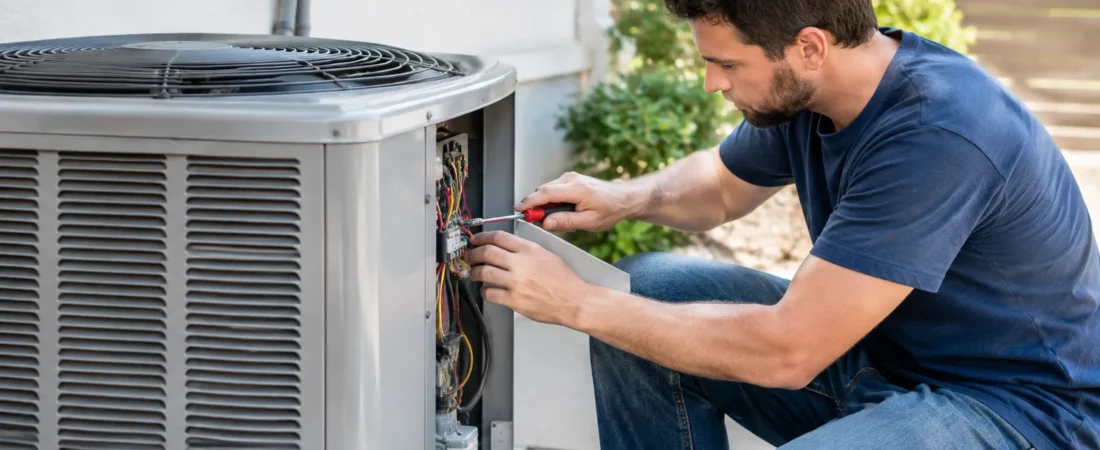
When an air conditioner stops cooling, the first useful step is not to start taking it apart. House Project Lab’s air conditioner repair guides help readers understand symptoms, make appropriate basic checks, and recognize when a problem needs professional diagnosis.
What House Project Lab’s air conditioner repair guides mean in practice
Our repair coverage is built around a practical question: what can a homeowner safely learn from the symptom, and what should happen next? A unit that will not start, for example, calls for a different initial assessment than one that runs but does not cool effectively. The aim is to help readers organize what they observe before choosing whether to continue troubleshooting or seek help.
That approach is different from treating every air conditioning problem as a do-it-yourself repair. A guide can clarify the limits of basic checks without encouraging readers to handle electrical components, refrigerant, or unfamiliar mechanical work. For a broader overview of symptoms and next steps, see our safe AC repair checks.
Key factors in House Project Lab’s air conditioner repair guides
The guides connect the reported symptom to a reasonable next step, rather than assuming a diagnosis. That distinction matters: several different problems can produce similar signs, and a homeowner’s observations alone may not identify the cause.
The core problem to understand
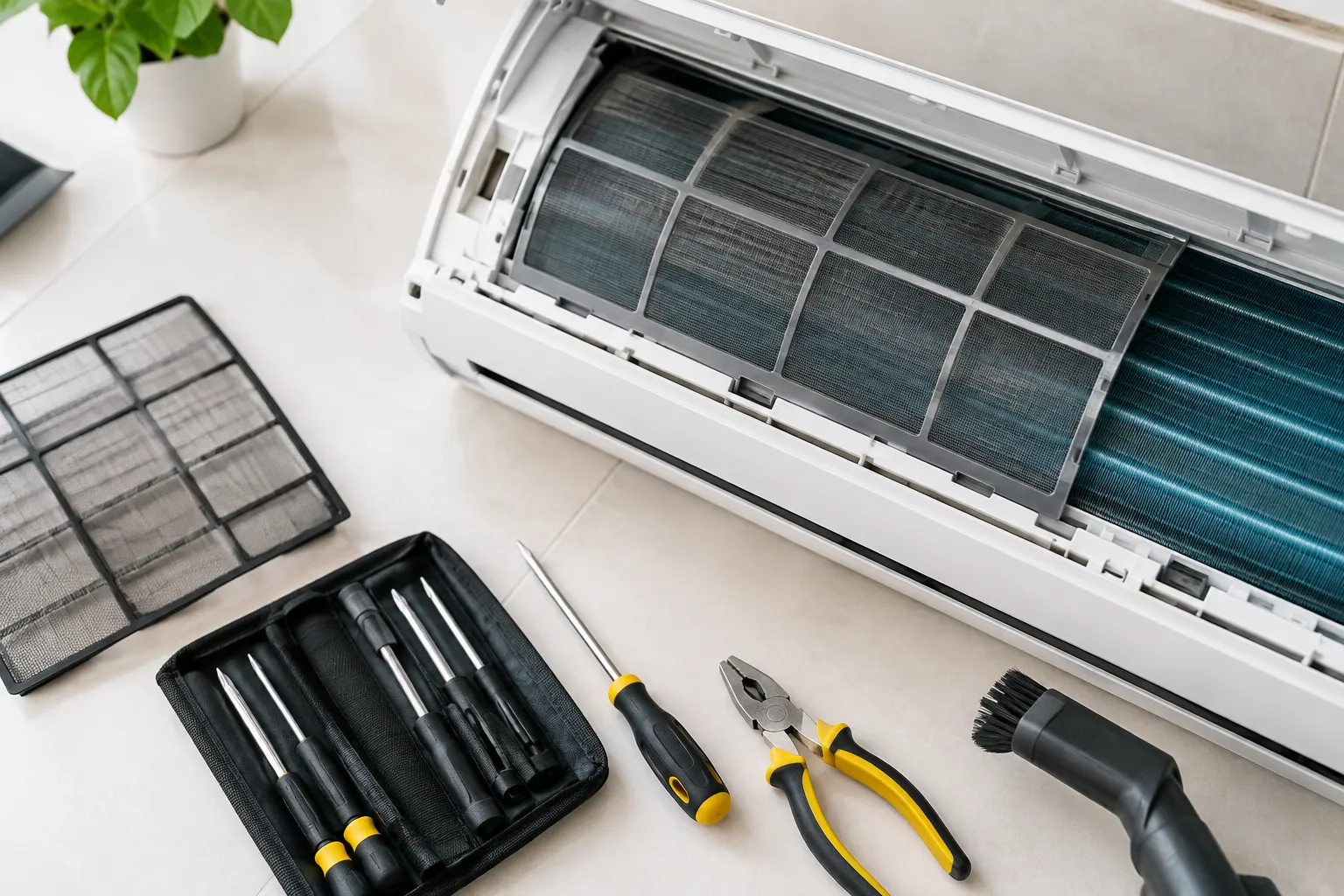
The first task is to describe what the system is doing: whether it starts, whether air comes through the vents, whether that air feels cool, and whether the problem is intermittent or persistent. These details help frame an AC repair question, but they are not proof of a particular fault.
A symptom-led approach also helps prevent unnecessary disassembly. If the signs point beyond routine homeowner checks, the useful next move may be to stop and arrange an assessment rather than trying parts or procedures at random.
The practical decision criteria
A useful guide separates low-risk observations from work that requires specialized knowledge. Readers can note the thermostat setting, check that the system has power at its normal controls, and look for an obvious obstruction around the outdoor unit without opening equipment panels. Before touching electrical components or attempting work involving refrigerant, stop and consult a qualified HVAC professional.
We shape House Project Lab’s approach around clear, homeowner-focused guidance: what to observe, what not to assume, and when uncertainty is itself a reason to pause. If the system is making unfamiliar sounds, repeatedly shutting down, or showing signs of damage, avoid escalating the work based on a guess.
Common mistakes to avoid
A common mistake is treating a symptom as a confirmed diagnosis. Another is continuing after a simple check fails to explain the problem. Repeatedly resetting equipment, opening panels, or replacing parts without a clear basis can add risk and make the original issue harder to assess.
It is also easy to underestimate scope. If a check reveals damaged wiring, water near electrical equipment, or a problem that requires access to internal components, stop. A repair that began as a quick investigation may no longer be appropriate for a DIY attempt.
How to apply House Project Lab’s air conditioner repair guides
Start by recording the symptom and when it occurs. Then review guidance that matches the situation, distinguish safe observations from repair work, and follow only the checks that fit your equipment and comfort level. Do not remove covers or work on wiring, refrigerant lines, or internal HVAC components.
If the guide does not resolve the uncertainty, use your notes to explain the issue when contacting a professional. Our overview of hvac repair offers additional context for considering safe checks before calling. For a specific system or safety concern, consult a qualified HVAC professional.
Recommended next steps
Write down the symptom, when it occurs, and any safe checks you have already made. Use the relevant guide to decide whether there is a clear, low-risk next step; if not, stop troubleshooting and contact a qualified HVAC professional.