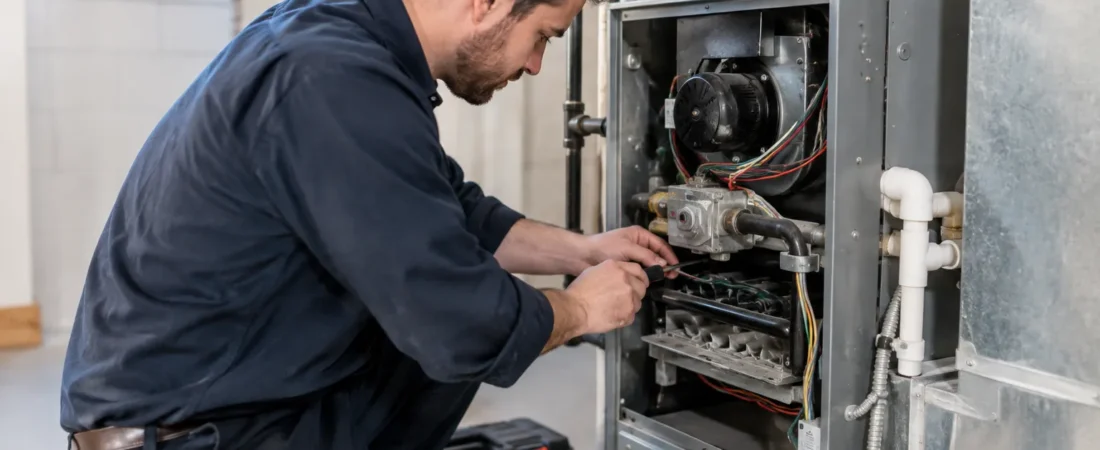
When heat stops, start HVAC heater repair troubleshooting with thermostat, filter, and visible supply checks; stop immediately for a gas odor or carbon monoxide alarm. If those basic checks do not restore heat, contact a qualified HVAC professional and share what you observed.
Start with Safe Thermostat, Filter, and Supply Checks
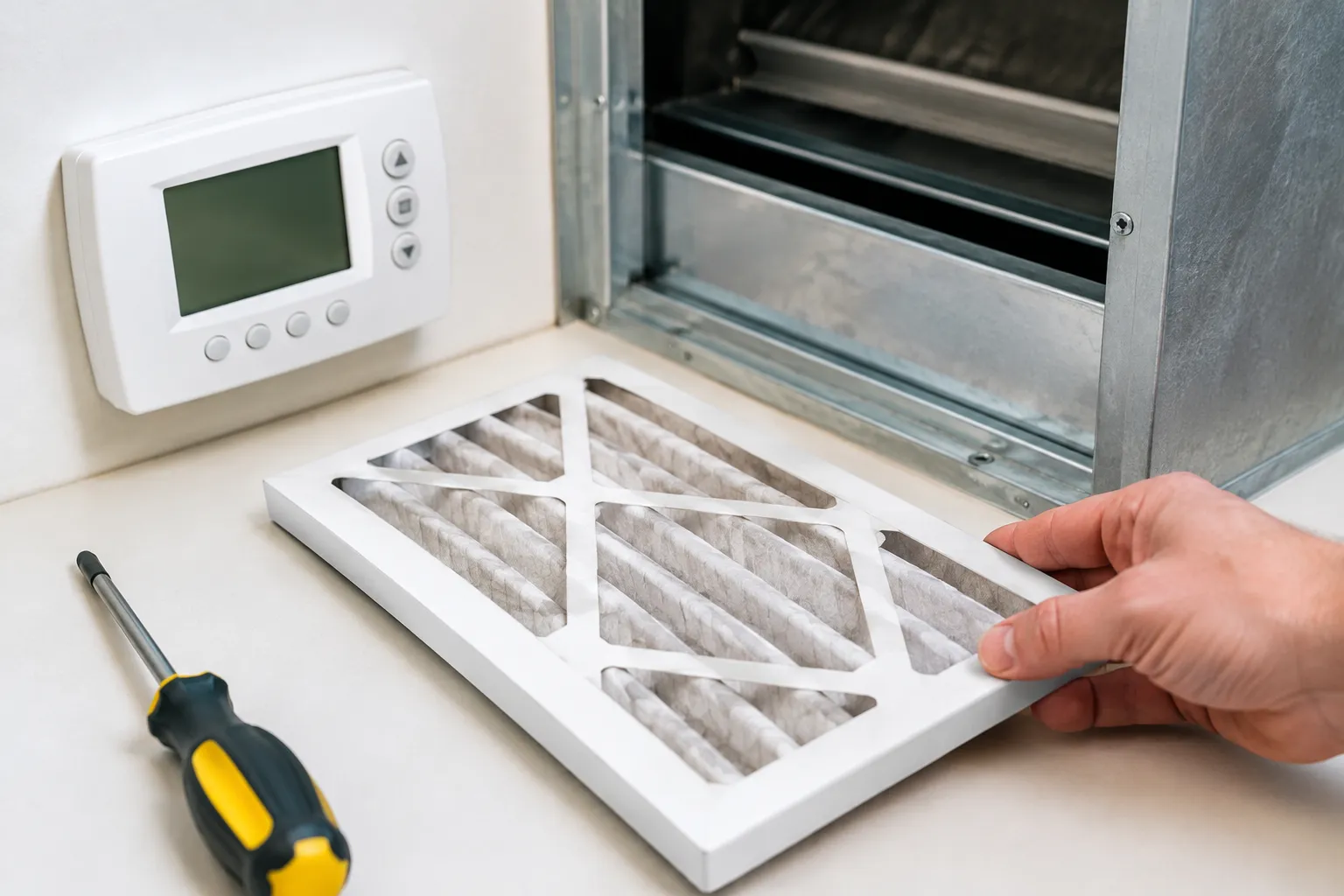
A thermostat setting, clogged filter, or visible interruption to power or fuel can explain lost heat; check these without opening the furnace or handling wiring, gas lines, or internal parts.
- Set the thermostat to Heat and raise the set temperature above the current room temperature. If it uses batteries, replace them if the display indicates they are low or blank.
- Check whether the thermostat has a schedule or setting that could be holding the temperature down. Give the system time to respond after correcting a setting rather than repeatedly changing it.
- Inspect the air filter according to the equipment’s instructions. If it is visibly dirty, replace it with the correct type and size shown on the old filter or equipment documentation. A restricted filter can reduce airflow and contribute to shutdowns.
- Make sure supply registers and return-air grilles are not blocked by furniture, rugs, or stored items. Do not remove furnace panels to look for a filter or inspect components.
- Look for obvious power interruptions, such as a thermostat display that is blank or a switch near the furnace that appears off. Only use a clearly identified, accessible switch as intended; do not remove covers or touch wiring. If a breaker has tripped, do not keep resetting it if it trips again.
- If your system uses fuel, note only visible conditions you can safely observe, such as an empty fuel tank if your household monitors one. Do not inspect or manipulate gas piping, valves, burners, or ignition parts.
Write down what you checked and what the system did: whether it started, made an unusual sound, or shut down again. These details help narrow the next step without encouraging risky trial and error. For seasonal upkeep, use this heating and cooling maintenance checklist as a starting point.
Know When to Stop Troubleshooting and Call for Help
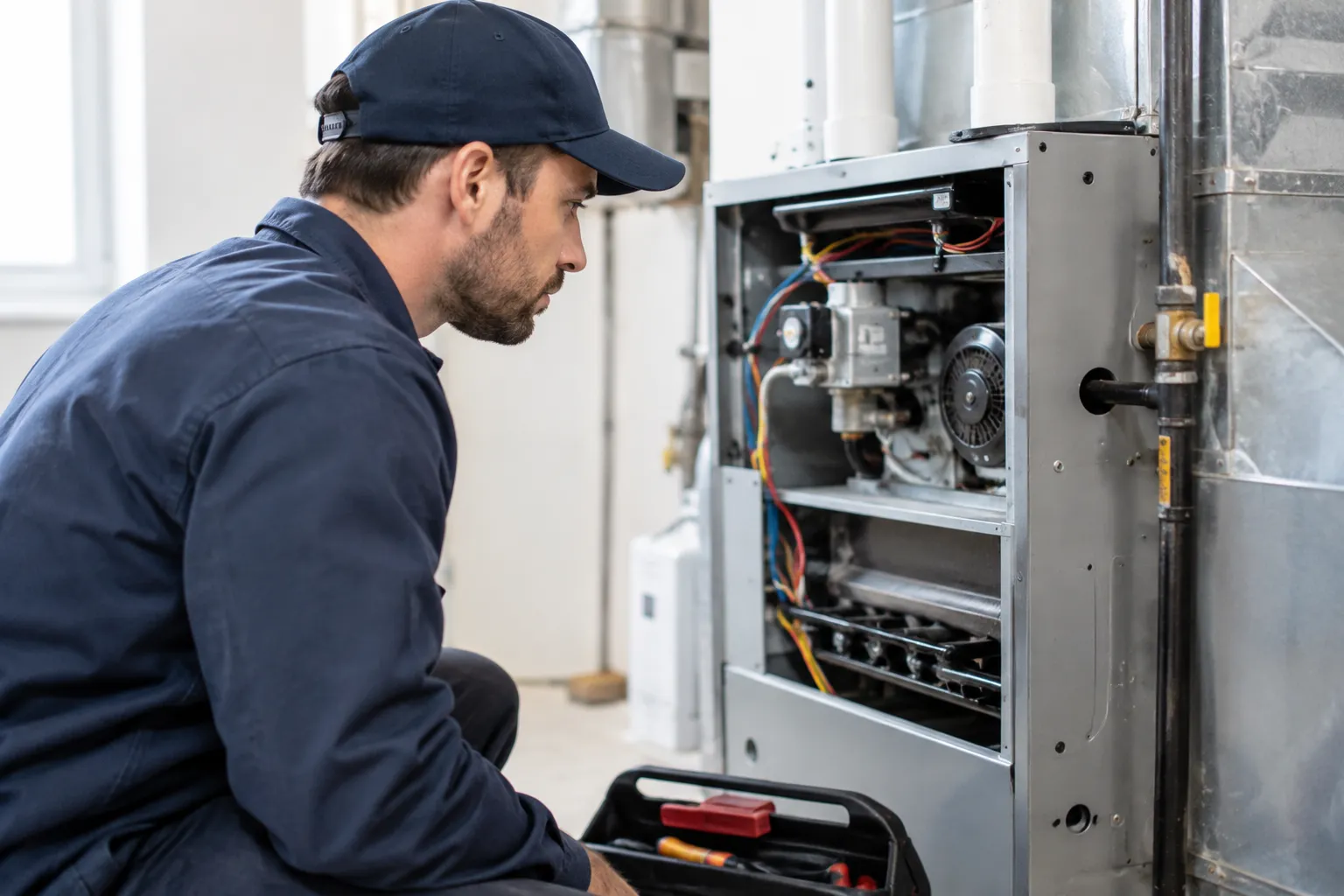
A gas odor, carbon monoxide alarm, or repeated ignition failure means stop troubleshooting; move to safety when needed and contact emergency services or a qualified HVAC professional.
If you smell gas, leave the building and contact the gas utility or emergency services from a safe location. Do not operate switches, use a phone inside, or try to locate the source. Follow instructions from emergency responders or the utility before re-entering.
If a carbon monoxide alarm sounds, get everyone outside and call emergency services. Do not assume the alarm is faulty because the furnace appears to be working, and do not re-enter until authorities say it is safe.
If the furnace tries and fails to ignite repeatedly, stop cycling the thermostat or resetting equipment. Repeated ignition attempts can indicate a problem that requires diagnosis; do not open the unit or attempt to light a pilot unless the manufacturer’s instructions specifically direct a homeowner to do so and no safety warning is present. If you are uncertain, leave the system off and call for help.
What Common Furnace Problems Can Stop the Heat?
Heat can stop when airflow is restricted, ignition fails, a safety control interrupts operation, or an internal component malfunctions; the symptom alone does not identify which part needs repair.
A dirty filter or blocked return can limit airflow. Some systems respond to restricted airflow by shutting down to protect equipment. Check the filter and accessible vents, but do not bypass a safety switch or run the furnace with panels removed.
An ignition or pilot problem can prevent the burner from lighting, leaving the system unable to produce heat. Failed ignition can involve components that require electrical or gas-system diagnosis, so avoid repeated resets or attempts to adjust the burner.
A safety switch may interrupt operation when the furnace detects a condition outside its operating limits. The switch is a warning, not an obstacle to defeat. If the unit shuts down again after a basic filter or thermostat check, leave the controls alone and arrange service.
Other faults can involve the blower, controls, sensors, or electrical connections. A blower problem may prevent heated air from moving through the home; a control or sensor fault may stop the heating sequence. Since several faults can produce similar symptoms, note what happens and let a technician diagnose the equipment.
When Does HVAC Heater Repair Need a Professional?
Call a qualified HVAC professional when safe basic checks do not restore heat, the system repeatedly shuts down, or diagnosis could involve electrical, gas, ignition, or internal components.
A persistent no-heat problem deserves professional diagnosis, particularly if the thermostat is set correctly and the filter and visible airflow obstructions have been addressed. Stop sooner if the system makes unusual sounds, produces an unusual odor, or starts and stops repeatedly.
Do not remove access panels, handle wiring, adjust gas components, or bypass a safety device. These actions can expose you to hazards or mask the fault. If the system uses refrigerant as part of a heat-pump setup, refrigerant-circuit work is not a homeowner repair; the EPA’s guidance on refrigerant service explains certification requirements for relevant work.
When you contact a professional, describe the symptom rather than guessing at a failed part. Include whether the system runs, whether air comes from the vents, how often it shuts down, and which basic checks you completed. This helps the technician plan the diagnosis without implying that you have identified the cause.
Should You Repair or Replace the Heating System?
Compare the system’s condition, repair history, efficiency, and diagnosis before choosing repair or replacement; the $5,000 rule can prompt questions, but it cannot decide the outcome on its own.
The $5,000 rule is a rough decision aid that multiplies a system’s age by the proposed repair cost; a result above $5,000 is often treated as a reason to consider replacement. It is not a universal standard, and it does not account for the system’s condition, current efficiency, household needs, or the scope of the work. Use it to organize a conversation, not as a substitute for a written diagnosis.
Ask what failed, whether the proposed repair addresses the underlying problem, and what condition the rest of the system is in. If the system has required repeated repairs, compare that history with the current repair recommendation. If it has otherwise been dependable and the issue is limited, repair may remain worth considering.
For a replacement discussion, request the reasoning behind the recommendation and compare the repair option with the proposed replacement scope. Do not approve a major decision based only on a symptom or a rule of thumb. A qualified professional should assess the specific system and explain the tradeoffs.
What Affects the Cost of Heater Repair?
Repair cost depends on the failed component, diagnostic work, system type, parts availability, labor, and service timing, so request an itemized estimate for your specific problem.
A straightforward part replacement and a fault that requires extended diagnosis are different scopes of work. The system type and the availability of a compatible part can also affect the repair plan. Timing may matter if service is requested outside a provider’s usual schedule, so ask whether that changes the estimate.
Before authorizing work, ask what the diagnostic fee covers, which parts and labor are included, and whether the technician will contact you before doing additional work. Request a written explanation of the identified problem and proposed repair. If replacement is suggested, ask for a separate scope so you can compare like with like.
Avoid judging a quote by the total alone. Check whether it describes the same repair, parts, and included work as another estimate. If the diagnosis is unclear, ask the provider to explain the evidence behind the recommendation.
What to Expect During a Qualified Repair Visit
A qualified repair visit should begin with a safety review and system diagnosis, followed by an explanation of the findings, repair options, and estimate before you decide how to proceed.
The technician may ask when the heat stopped, what the thermostat displayed, whether the furnace starts or shuts down, and what checks you already completed. Share observations rather than opening equipment to gather more information.
Next, the technician should examine the system and investigate the reported symptom using appropriate procedures. The exact checks depend on the equipment and fault. If the diagnosis involves fuel, electrical components, ignition, or other internal parts, leave that work to the professional.
Before authorizing a repair, ask what failed, how the proposed work addresses it, and what the estimate includes. If more than one option is available, ask about the tradeoffs and whether any recommended work can wait. You can request clarification before deciding; the technician’s explanation should help you understand the scope rather than pressure you to guess.
HVAC Heater Repair FAQ
Why is my HVAC not blowing heat?
A thermostat set incorrectly, restricted airflow, failed ignition, or an equipment fault can prevent warm air; check the thermostat and filter first, then call for service if the problem persists.
How much should a heater repair cost?
There is no single standard price for heater repair; the total depends on the diagnosis, system, parts, labor, and service timing, so request a clear estimate for your specific issue.
Contact an HVAC Professional With Your Checks and Symptoms
If safe basic checks do not restore heat, arrange HVAC service and provide a concise account of the system’s symptoms, what you checked, and any safety concerns.
- Stop troubleshooting and move to safety if you notice a gas odor or hear a carbon monoxide alarm.
- Record the thermostat setting, whether the system starts, whether air comes from the vents, and whether it shuts down again.
- List the safe checks you completed, including the filter inspection and any visible power or fuel concern.
- Contact a qualified HVAC professional and describe the symptoms without assuming which component failed.
- Review the diagnosis and written estimate, ask about unclear items, and decide whether to authorize the proposed repair or discuss replacement.