
DIY home improvement projects are changes or repairs you plan and complete yourself, from painting a room to installing simple storage. The best first project has a clear finish line, fits your skills and budget, and does not put you at risk if something goes wrong.
A sensible starting point is to:
- Fix active water problems before cosmetic issues.
- Choose a small, visible task with straightforward steps.
- Check tools, materials, time, and local requirements before buying supplies.
- Stop and get qualified help if you uncover damage or work involving structural, electrical, gas, or plumbing systems.
Choose a DIY project that fits your skills and goals

Before choosing among DIY projects for home improvement, decide what you want the project to do. Are you trying to make a room more comfortable, improve storage, prevent damage, or refresh its appearance? A clear goal helps rule out projects that look appealing but do not solve your most important problem.
Next, consider the work’s scope. A project with one defined task—such as repainting a small room—usually has fewer unknowns than a renovation that involves opening walls, moving plumbing, or replacing multiple finishes. If you have a growing repair list, put active leaks, drainage problems, and other sources of ongoing damage ahead of decorative updates. Water can damage materials and allow a small repair to grow.
Estimate the time and skill the work will require, including preparation and cleanup. A project that appears to take an afternoon may also involve measuring, surface repair, drying time, trips for supplies, or putting the room back together. Be realistic about how much disruption your household can manage.
A quick fit check can help:
- Can you explain the project’s steps from start to finish?
- Can you identify the materials and tools each step requires?
- Is the work limited to a part of the home you can safely access?
- Do you have a way to handle a mistake, delay, or hidden damage?
- Can you stop without leaving the home unsafe or exposed to weather?
If you are comparing home improvement do it yourself projects, start with the ones that match your goal and experience—not simply the ones that look easiest in a short video. For more options and practical guidance, explore our home improvement guides and home improvement ideas.
Beginner DIY projects to try in different rooms
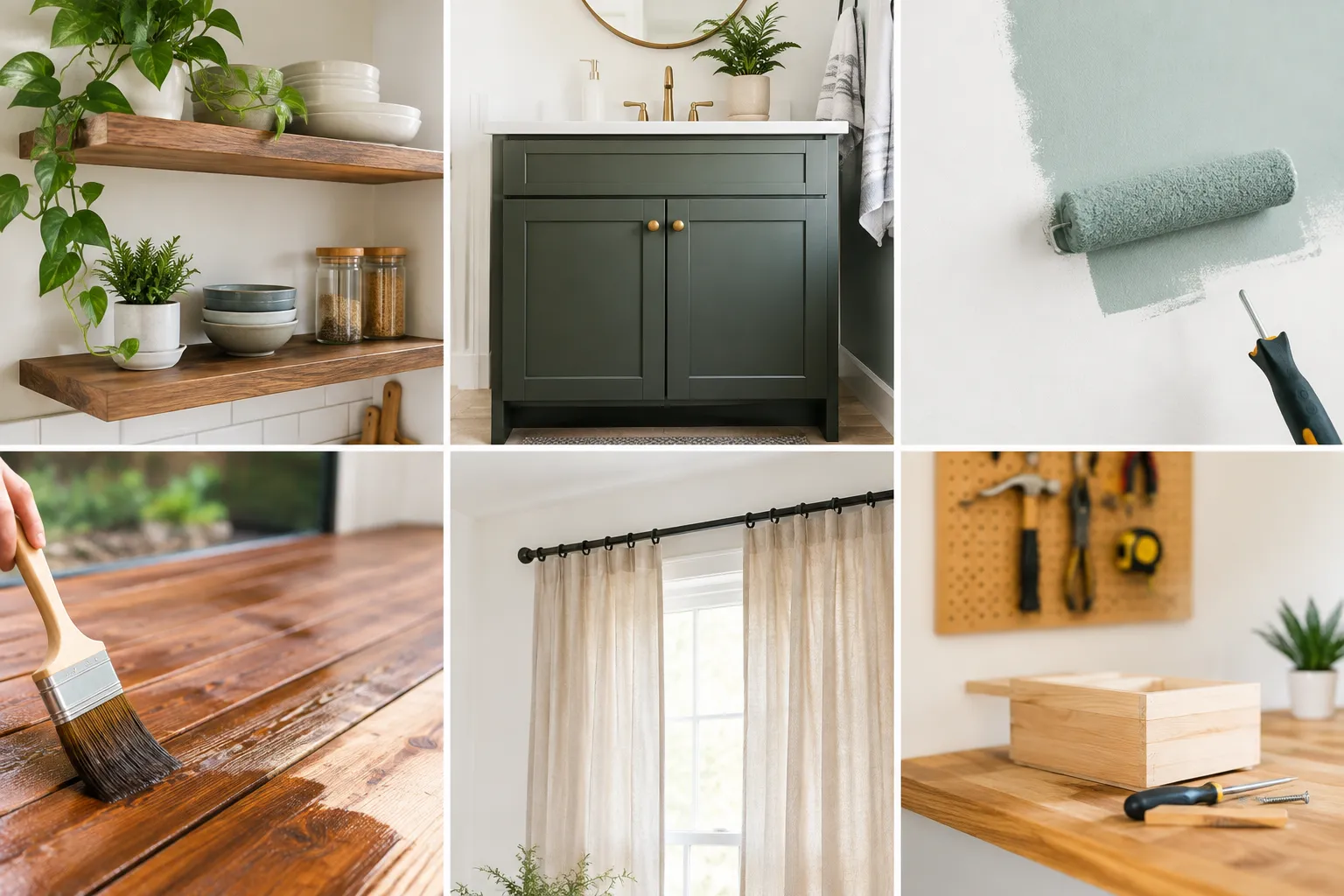
Beginner-friendly home improvements projects often refresh a surface, improve organization, or make a space more useful without changing the home’s structure or systems. The examples below are starting points, not a promise that every version is suitable for every home. Check the condition of existing materials before covering or removing them.
Quick updates for kitchens and bathrooms
Changing cabinet knobs or pulls can refresh a kitchen or bathroom without altering the cabinets. Measure the existing hole spacing before choosing replacements. If new hardware uses different holes, filling and refinishing the old holes may take more work than expected.
Other contained ideas include adding drawer organizers, arranging open shelves, or refreshing a small area with paint suited to the surface and room conditions. Follow the product label for surface preparation, ventilation, application, and drying time. In a bathroom, do not paint over active moisture or peeling caused by a leak; find and address the moisture source first.
Adding storage can be a useful project, but confirm how shelves will be supported and what is behind the wall before drilling. Avoid treating plumbing or electrical work as a simple extension of a cosmetic project. If the task involves moving a sink, opening a wall near wiring, or modifying water lines, check local rules and consider a licensed professional.
Bedroom and living room improvements
Painting is a common way to change the feel of a room, but careful preparation matters as much as applying the paint. Protect floors and furniture, clean and repair the surface, and check whether the existing finish needs a specific primer. Plan for ventilation and allow the coating to dry as directed before moving furniture back.
Simple shelving can add useful storage or display space. Decide what the shelf will hold, choose an appropriate mounting method, and locate suitable support before drilling. A shelf that is secure for light decor may not be suitable for heavier items.
Other possible projects include updating removable cabinet or furniture hardware, organizing cords, or adding simple trim where the surface is sound and measurements are precise. Light-fixture changes are different: they involve electrical work. If you are not qualified to do that work safely or are unsure about the wiring, do not proceed; ask a licensed electrician.
Entryway and outdoor projects
An entryway can become easier to use with a bench, hooks, a shoe tray, or a small storage system. Before mounting anything, check wall construction and fasten items securely for their intended use. Keep walkways and exits clear.
For a small outdoor area, consider cleaning and arranging existing furniture, refreshing planters, or improving storage for garden tools. A basic curb-appeal project might involve tidying beds or repainting a suitable exterior feature, provided the surface is sound and the product is rated for outdoor conditions.
Take a close look before scraping, sanding, digging, or covering old materials. Deterioration, pests, water intrusion, or unfamiliar coatings can change the work and its safety requirements. If you find rot or damage that extends beyond the surface, pause to assess the full scope instead of hiding it under a new finish.
Build a basic toolkit before you start

You do not need a workshop full of tools to begin DIY projects for home improvement. Choose tools for the task you have selected, and borrow or rent specialty equipment when it is needed rather than buying it without a plan.
A basic kit for many small household tasks may include:
- Tape measure, pencil, and a level
- Screwdrivers or a multi-bit driver
- Hammer and utility knife
- Adjustable wrench for appropriate, non-specialized tasks
- Pliers and a small selection of fasteners
- Safety glasses, work gloves, and a dust mask suited to the task
- Drop cloths, rags, and a bucket for preparation and cleanup
Tool needs vary by project. Painting calls for different supplies than assembling storage or repairing a small section of trim. Read instructions for the materials and tools you plan to use, and check that protective equipment is appropriate for the hazard. A basic dust mask is not a substitute for specialized respiratory protection where hazardous dust or fumes may be present.
Before starting, inspect tools for damage and learn how to use them safely. Keep children and pets away from the work area, secure loose clothing and hair around tools, and use a stable step stool or ladder appropriate to the task. Do not use damaged cords, improvise electrical repairs, or work on energized wiring.
Routine HVAC care has different limits from general DIY. A homeowner may be able to complete simple maintenance tasks described by the equipment manufacturer, but repairs involving electrical components, refrigerant, or internal system parts may require a qualified technician. Use our air conditioner maintenance checklist to review routine upkeep.
Plan materials, budget, and time realistically

A plan reduces avoidable rework and makes it easier to decide whether a project is manageable. Start by writing down the intended result and the steps required to reach it. Then measure the work area and note the condition of the surfaces. For a repair, look for signs that the visible damage may extend beyond what you can see.
Create a materials list based on measurements and product instructions. Confirm quantities, compatibility, and preparation requirements before purchasing. For example, a coating must be suitable for the surface and conditions where it will be used. Keep packaging and instructions available until the work is complete in case you need to check drying times or cleanup directions.
Build a project budget around more than the main material. Consider:
- Preparation supplies and surface repairs
- Fasteners, protective coverings, and cleanup materials
- Tool purchase, rental, or borrowing
- Disposal of old materials
- Replacement materials in case of a cutting or measuring mistake
- A contingency for discoveries that change the scope
Costs vary with the project, the home, and material choices, so compare current local prices and calculate from your own measurements. Do not commit your entire available budget to the first purchase if opening or removing materials might reveal damage.
Set a timeline that includes preparation, work, drying or curing time, and cleanup. If the room must remain usable, decide how the work will affect daily routines. A project can stretch beyond a weekend when materials need extra drying time, supplies are unavailable, or hidden problems appear. Break the task into stages and decide in advance where you will pause safely if the scope changes.
Prepare the space before starting: move or cover belongings, protect floors, provide ventilation where product directions call for it, and keep a clear path to an exit. Take photos before dismantling anything complex, and label removed parts when that will help with reassembly. If you uncover rot, mold-like growth, a leak, or unexpected wiring, stop and reassess rather than continuing on the original schedule.
Know when permits or professional help are needed
Permit requirements depend on your location and the scope of the work. Before beginning, contact your local building department or check its official guidance to find out whether the project needs a permit, inspection, or licensed contractor. Do this before demolition or purchasing materials for work that could be regulated.
Cosmetic work such as painting or changing hardware is often more contained than projects that alter structure or building systems, but do not assume a task is permit-free based only on its appearance. Rules can differ by location and by what the work changes. If you are unsure, describe the exact project to the building department and ask what applies.
Consider professional help for work involving:
- Removing or altering walls, framing, or other structural elements
- New circuits, changes to fixed wiring, or electrical work you cannot safely verify
- Gas piping or appliances
- Moving or modifying plumbing
- Roof or exterior work where a fall or water intrusion is a concern
- Suspected hazardous materials, extensive rot, or damage whose cause is unclear
Stop if you discover a leak, unstable framing, damaged wiring, or a repair that keeps expanding. Take photos, limit access to the affected area if needed, and get an assessment before covering the problem or continuing. Calling for help is a project decision, not a failure: it can prevent a small, understood task from turning into more damage or a safety risk.
DIY Home Improvement FAQs
What is the easiest DIY home renovation project?
For many beginners, painting a small, sound room or changing cabinet hardware is a manageable starting point because the work can stay limited and visible. Choose the option that fits your surfaces, tools, and preparation needs.
What are some good DIY projects I can do at home?
Good beginner projects include painting, organizing an entryway, adding simple storage, or replacing cabinet hardware. Check wall conditions and project instructions first, and avoid tasks that require unfamiliar electrical, plumbing, gas, or structural work.
What home renovation projects can I do for under $10,000?
The possibilities depend on local labor and material costs, the home’s condition, and project scope. Compare current estimates for contained updates such as painting, storage improvements, or hardware changes, and set aside funds for unexpected repairs.
What does the 30% rule mean in home renovation?
The “30% rule” is an informal budgeting idea, not a universal building standard; people may use it to refer to keeping a renovation within a portion of a home’s value or adding a contingency. Confirm what a source means before using it to set your budget.
Which home upgrades are often not worth the cost?
An upgrade may not be worthwhile if it costs more than its practical benefit to you, does not solve a real problem, or requires ongoing upkeep you do not want. Compare the full cost with your needs rather than assuming a project will pay for itself.
Is it cheaper to build a home or remodel one?
Neither option is always cheaper; the comparison depends on land, local construction costs, the existing home’s condition, and how much work a remodel requires. Get project-specific estimates that include permits, materials, labor, and likely repairs.
How can I tell whether a DIY project will actually save money?
Compare materials, tools, disposal, and your time with a qualified contractor’s estimate, and include the cost of correcting likely mistakes. DIY may save on labor for contained work, but hidden damage or specialized work can change the calculation.
Which home improvements may add the most value when selling?
There is no guaranteed improvement that adds a specific amount of value; buyer preferences, condition, location, and market conditions all matter. Prioritize sound repairs and ask a local real estate professional which updates are relevant to your home and area.
Pick one project and prepare to begin
Choose one project with a clear goal and a finish line you can describe. Write down the steps, check the surface and surrounding area, confirm tools and materials, and ask the local building department about permits if the work may affect structure or building systems.
Before beginning, decide what would make you stop: a leak, rot, unfamiliar wiring, a permit requirement, or work that exceeds your skills. Keep the project contained, follow product and tool instructions, and do not cover damage before you understand its cause. A careful first project is not the biggest one on your list; it is the one you can plan, complete, and leave safe.